
Campaign finance dynamics in recent cycles have highlighted how undisclosed contributions move through nonprofit channels and hybrid vehicles, shaping outcomes in competitive congressional districts without direct voter visibility into donor sources. Independent trackers document this spending as a recurring element in both primaries and generals, with notable concentration in battlegrounds where control of the House or Senate often hinges on narrow margins.
The legal framework allowing limited disclosure stems from longstanding tax provisions and court precedents that balanced advocacy rights against transparency mandates. This setup lets certain organizations engage politically while shielding contributor details, a pattern that has held across multiple election cycles regardless of which party holds power. The Supreme Court’s 2010 Citizens United decision marked a watershed moment, removing restrictions on independent political spending by corporations and unions, which accelerated the growth of organizations designed to exploit disclosure loopholes while maintaining tax-exempt status.
501(c)(4) Organizations and Layered Funding
Social welfare nonprofits can conduct advocacy that stops short of their main activity, filing minimal donor data with the IRS. Analyses from recent cycles show these groups directing substantial resources toward issue ads and turnout efforts in targeted districts. When layered with Super PACs that must report some contributors but can accept upstream grants from opaque sources, the result is multiple degrees of separation that complicate tracing ultimate influence.
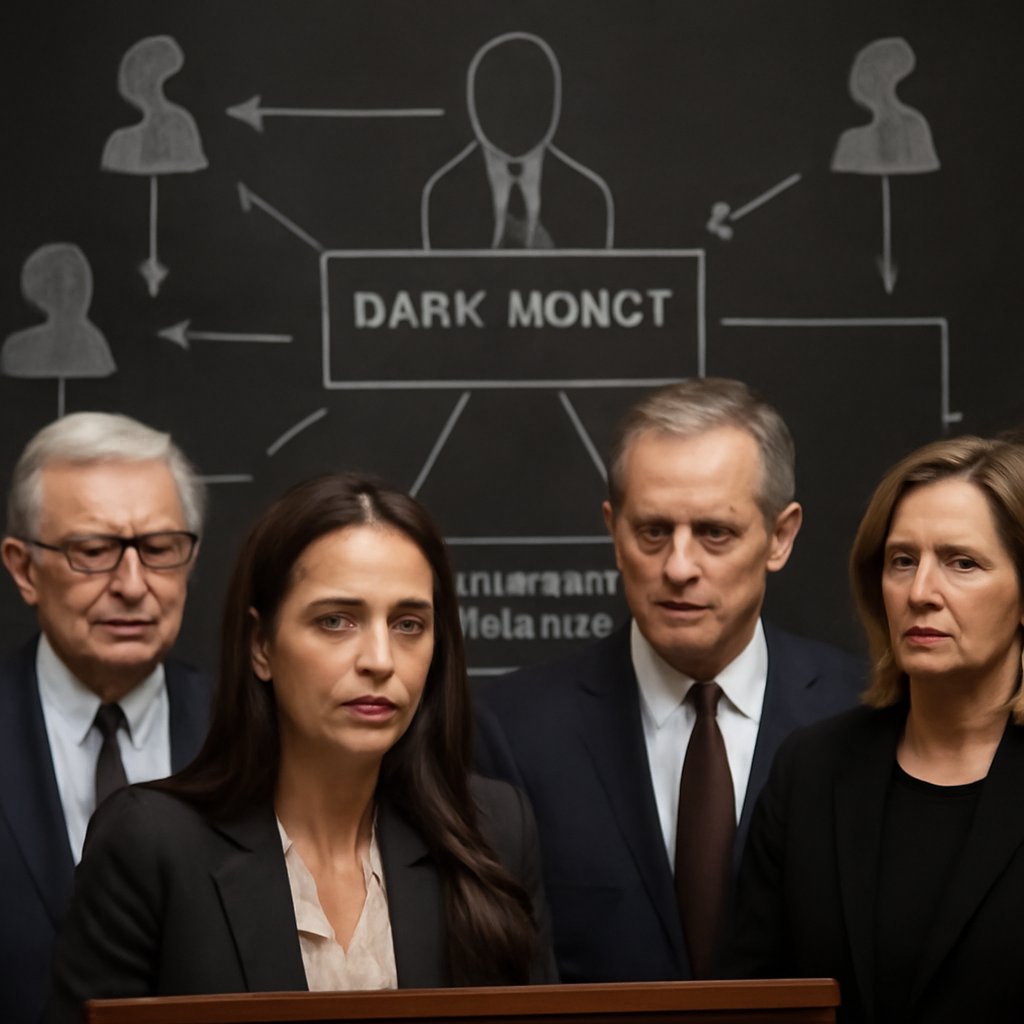
The mechanics of this layering operate through shell structures where one 501(c)(4) transfers funds to another, or routes money through limited liability corporations (LLCs) that have no formal disclosure requirements whatsoever. A donor writing a check to an LLC can remain completely anonymous, with that money then funneled to a 501(c)(4), which in turn funds a Super PAC’s media buys. By the time the advertisement appears on television, the original source has vanished behind three or four organizational entities. IRS regulations permit 501(c)(4)s to spend unlimited funds on political activity as long as it doesn’t constitute their primary purpose—a threshold that remains largely unpoliced due to resource constraints at the agency.
Research from campaign finance watchdog groups indicates that a single dark money organization can spend tens of millions in a cycle while disclosing fewer than a dozen major donors to any public database. This contrasts sharply with candidate committees, where every contribution above $200 must be itemized with the donor’s name, address, and employer, creating a public record accessible within days.
Spending Patterns on the Electoral Map
Aggregated data place hundreds of millions in annual undisclosed expenditures, with sharp spikes in the closing weeks before Election Day. These flows cluster in swing states and House battlegrounds involving vulnerable incumbents or open seats, following historical precedents where outside money amplified in low-turnout environments. The polling data here paints a complicated picture: while aggregate national surveys often show limited direct voter awareness of funding sources, granular demographic breakdowns in key suburban and rural districts reveal shifts in turnout models that correlate with late media saturation.
When you model this electorally, the per-voter impact appears comparable across chambers despite differing totals—House races in compact districts can match the intensity of larger Senate statewide efforts. A House district with 400,000 voters receiving $5 million in dark money ads experiences a different saturation level than a Senate race in a state with 5 million voters receiving $20 million. The concentration effect matters; smaller, more homogenous districts can tip from modest spending levels, while Senate races require larger absolute figures to achieve equivalent messaging penetration.
Historical patterns from prior midterms indicate such spending frequently targets moderate candidates in both parties during primaries, accelerating turnover in competitive zones. This dynamic has measurable consequences: districts that experienced sudden spending surges saw higher rates of incumbent defeat or voluntary retirement compared to similarly competitive districts without such intervention. The timing of these expenditures—typically compressed into the final 60 days—minimizes opportunity for counter-messaging from candidate committees operating on smaller budgets.
Recruitment Incentives and Policy Alignment
Access to these networks can lower barriers for aligned candidates while raising them for others building from traditional small-donor bases. A candidate with strong backing from dark money networks can launch a credible campaign with minimal fundraising infrastructure of their own, since outside groups handle much of the media spending. This advantage proves especially pronounced in primary elections, where name recognition is lower and persuasion is more fluid. Conversely, candidates without such backing must invest heavily in early fundraising or risk being outspent once dark money groups mobilize.
Post-election, legislative focus in committees handling regulation, taxation, and energy has often tracked themes advanced by high-volume issue groups, consistent with trends observed since the expansion of independent expenditures. Members who benefited from substantial dark money support during their campaigns frequently serve on committees where policy decisions directly affect their funders’ interests. While correlation does not prove causation, voting patterns on regulatory matters show notable alignment between recipients of dark money support and the policy priorities of the groups funding them, particularly in industries like energy, telecommunications, and pharmaceuticals.
Bipartisan examples include accelerated retirements or primary challenges in districts experiencing sudden spending surges. When a member votes against the preferences of major dark money funders in their district, subsequent cycles often see challenger recruitment and funding suddenly materialize from previously inactive networks. This pattern suggests sophisticated coordination between external funding sources and recruitment strategies, though proving explicit coordination remains legally complex given coordination restrictions between outside groups and candidates.
The Role of Trade Associations and Membership Organizations
Beyond traditional nonprofits, trade associations and membership organizations function as additional dark money conduits. Unlike 501(c)(4)s, trade associations registered as 501(c)(6) entities have even fewer disclosure requirements. A pharmaceutical trade group can spend millions on election-related activities while disclosing virtually nothing about funding sources or recipient candidates. This vehicle proves particularly attractive for business-oriented dark money because it maintains the facade of industry representation while functioning as a political spending arm.
Membership dues flowing into these organizations are not itemized anywhere; a company pays its annual dues, and the organization’s leadership decides how much goes to political spending. Voters have no way of knowing whether their healthcare premiums are partially funding political campaigns, or which specific candidates benefit from industry group spending.
Disclosure Gaps and Enforcement Challenges
Jurisdictional divides between the FEC and IRS create enforcement lags, preserving pathways for multi-entity transfers. The FEC, responsible for enforcing campaign finance law, operates with a budget roughly equivalent to a mid-sized police department covering an activity involving billions of dollars. The IRS, responsible for ensuring 501(c)(4)s comply with the “primary purpose” rule, has minimal staff dedicated to political organization oversight. This structural understaffing means investigations move slowly and violators face delayed consequences, if any.
Proposals for threshold-based donor reporting or transfer restrictions have surfaced repeatedly, yet progress stalls along familiar partisan lines. Transparency advocates propose requiring disclosure of donors above certain thresholds to 501(c)(4)s and other tax-exempt groups, while opponents argue such requirements constitute invasive information collection. Other proposals would require organizations receiving dark money to disclose their sources before spending funds in elections, but this too faces constitutional challenges and partisan opposition from whichever party benefits most from opacity in a given cycle.
Tracking organizations note parallel growth in outside spending relative to candidate committees in both chambers, a shift that echoes earlier realignments in campaign finance without clear partisan monopoly. In some cycles, Democratic-aligned dark money networks outspent Republican counterparts; in others, the reverse occurred. The structural advantage flows to whichever coalition can attract more large donors to undisclosed conduits at any given moment.
Understanding the Voter Impact
Overall, these patterns underscore a structural evolution in how resources reach the electoral map, with implications for polling accuracy in demographics where turnout proves decisive. Voters in competitive districts often see dramatically different advertising messages than their counterparts in safe districts, creating parallel political realities shaped by invisible funding sources. This fragmentation complicates efforts to build shared understanding of political issues and candidates, as different segments of the electorate receive information funded by different anonymous networks with different agendas.