
Competitive gubernatorial contests in battleground states expose more than voter mood swings—they highlight how money flows through state-level power structures, often deciding whose priorities shape taxation, education funding, and regulatory oversight. While analysts pore over approval ratings, unemployment gaps, and suburban trends, campaign finance records reveal the quieter machinery at work: who bankrolls the visibility on infrastructure projects and who gets drowned out.
As a Latina journalist covering Washington accountability, I’ve seen how these state races serve as testing grounds for national donor strategies, with lobbying disclosures frequently showing industry groups pouring resources into executive contests that influence everything from energy policy to border-related spending.
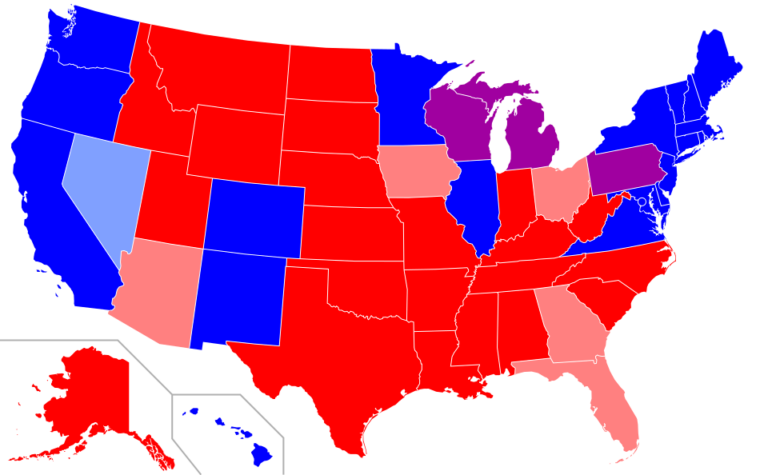
Pennsylvania stands out for its razor-thin margins, where rural conservative pockets clash with growing suburban blocs around Philadelphia and Pittsburgh. Voter-file data shows independent moderates tipping scales under three points, but the financial disclosures tell a story the press releases don’t: manufacturing and energy sector donors have consistently backed incumbents whose records align with favorable tax treatments, creating a feedback loop that correlates with employment metrics in those corridors.
Arizona’s rapid demographic shifts—rising shares of college-educated residents in urban and exurban zones alongside entrenched rural voters—alter traditional alignments. Polling aggregates flag border security and water management as flashpoints, yet lobbying filings from real-estate and agribusiness interests disclose heavy spending aimed at candidates who can steer state budgets away from stricter resource regulations.
Aggregated surveys across cycles confirm that governors polling below 45 percent approval face steeper challenger odds. Demographic splits by education level matter, with turnout models now factoring early and absentee voting patterns. Key blocs include suburban women aged 35-54, working-class independents in manufacturing areas, and Latino participation rates in expanding metros—groups whose mobilization often hinges on which side can sustain ad buys through the final weeks.
Incumbents draw on name recognition and appointment powers, but state unemployment running more than 1.5 points above national averages erodes those edges in regression models. Challengers push cost-of-living and public-safety messages, seeking crossover endorsements to expand reach. Here, the numbers from campaign finance disclosures are stark: established officeholders frequently maintain better than 2-to-1 fundraising advantages, allowing them to frame narratives around projects while opponents struggle for equivalent visibility.
The 2024 and 2026 cycles underscore how gubernatorial contests in swing states increasingly mirror presidential dynamics. Wisconsin, Michigan, and Nevada have emerged as laboratories where both parties test messaging strategies months before statewide federal elections. Early voting infrastructure, voter registration drives, and ground-game operations built for governor’s races often remain in place for subsequent contests, creating structural advantages that ripple across the political calendar. Campaign operatives from both parties treat these races as recruitment pipelines—successful candidates frequently transition to Congress or higher office, while staffers gain experience managing media buys and voter contact at scale.
Economic conditions function as a baseline predictor in gubernatorial races. Research from state political tracking firms shows that when gross state product growth lags national averages by more than two percentage points over a two-year period, incumbent approval ratings typically decline by 4-6 points. This effect proves particularly pronounced in manufacturing-dependent states where factory closures or automation shifts hit hard and visibly. Pennsylvania and Michigan voters in 2024 weighted jobs and wages heavily, with exit polling revealing that kitchen-table issues outweighed cultural messaging among persuadable voters by roughly 2-to-1 margins.
Healthcare policy has become an unexpected flashpoint in several swing-state governor’s races, diverging from traditional assumptions that health issues fade below economic concerns. State Medicaid expansion decisions, prescription drug affordability, and maternal healthcare access generate substantial voter interest, particularly among suburban women and Latino families. Candidates in Arizona and Nevada who emphasized healthcare accessibility logged measurable gains in early polling, suggesting that state-level health bureaucracy—less visible than federal decisions but more directly felt—resonates with midterm voters.
Education funding disputes tied to teacher salaries and school choice initiatives shape contests in ways national media often underreport. Wisconsin and Pennsylvania governor’s races both hinged partly on competing visions for K-12 accountability and charter school expansion. Teachers’ union spending and parent activism around curriculum issues have grown more sophisticated, with micro-targeted digital campaigns reaching specific neighborhoods where school-aged population density runs high. These operations occur largely outside the national news cycle but substantially influence local voting patterns.
Demographic divergence within swing states creates strategic complexity. Arizona’s Phoenix metro area now accounts for roughly 60 percent of state population but maintains distinct political preferences from rural counties that once anchored statewide victories. This geographic spread forces candidates to invest heavily in multiple media markets, each with different cost structures and audience composition. Nevada’s rapid urbanization around Las Vegas and Reno similarly concentrates electoral power in media-expensive zones, raising the financial bar for viable campaigns.
Third-party and independent candidates periodically reshape swing-state gubernatorial dynamics in unexpected ways. While rare winners, strong independent showings can signal voter dissatisfaction with both major-party establishments and occasionally force general-election runoffs or shift coalition strategies. Tracking independent registration trends in Arizona and Nevada reveals pockets where unaffiliated voters now comprise 25-30 percent of active electorate, compared to 15-20 percent a decade ago.
Turnout models have grown increasingly granular, incorporating not just historical participation but also micro-level demographic and behavioral predictors. Data scientists working for state-level campaigns now factor in variables like previous primary participation, donation history, and social-media engagement alongside traditional voter-file metrics. These sophisticated models inform where each campaign allocates field organizers and determines which voter segments receive high-frequency contact. The camps with superior modeling infrastructure—typically those with stronger fundraising—can identify persuadable voters more efficiently, multiplying their advantage in close contests.
These outcomes carry weight beyond state lines. Unified executive-legislative control speeds tax-code changes and education standards, while national party committees watch for signals on future recruitment. Lobbying records from prior cycles show how outside spending in these contests often previews larger federal influence operations, underscoring why tracking every dollar remains essential to understanding who truly holds the levers.
Sources
- Reuters Politics – Comprehensive coverage of US political races and elections
- AP News Elections Hub – Associated Press election coverage and data
- NPR Politics – In-depth reporting on US political campaigns and races
- Politico 2024 Elections – Real-time election analysis and polling data
- Politico Magazine – Long-form political journalism and analysis