
Home Blog

Political Efficacy in America: Why Citizens Feel Powerless

Political Efficacy in America: Why Citizens Feel Powerless

As a Latina journalist covering Washington, I’ve watched political efficacy numbers slide for years, and the campaign finance records make the reasons painfully clear. Political efficacy—the conviction that ordinary citizens can influence government decisions and that their participation matters—has become one of the most critical yet troubling metrics in American democracy. As we approach the 2024 election cycle, new survey data reveals that a substantial portion of the American electorate believes their vote carries little weight and their voice goes unheard in Washington. This erosion of political efficacy has profound implications for voter turnout, civic engagement, and the health of democratic institutions.

Political efficacy refers to an individual’s belief in their capacity to understand and influence political outcomes. Political scientists distinguish between two main types: internal efficacy and external efficacy. Internal political efficacy describes a citizen’s confidence in their own political knowledge and ability to participate effectively. This involves feeling informed enough to engage in political discussions, understanding how government works, and believing you can make informed voting decisions. External political efficacy reflects the belief that government officials and institutions are responsive to citizen input. It answers the fundamental question: “Does government actually care what people like me think?”

Both dimensions are essential to a functioning democracy. When political efficacy declines, voter participation drops, people disengage from civic organizations, and democratic legitimacy suffers. Research consistently shows that high levels of political efficacy correlate with higher voter turnout, more consistent political participation, and stronger social cohesion.

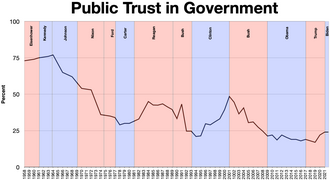
Recent polling data paints a troubling picture. According to the American National Election Studies (ANES), external political efficacy has declined significantly over the past four decades. In the 1960s, approximately 60% of Americans agreed that government officials care what ordinary people think. By 2020, that figure had dropped to roughly 25%. The 2022 midterm elections and ongoing political polarization have done little to reverse this trend. A 2023 Pew Research Center survey found that 65% of Americans believe the political system is rigged to advantage the wealthy and powerful. Meanwhile, only 42% felt their vote truly counted in determining election outcomes. Demographic breakdowns reveal important patterns. Young voters aged 18-29 report the lowest levels of political efficacy, with only 31% believing their vote significantly impacts outcomes. Voters without college education and those earning below the median income also report substantially lower efficacy levels. Rural voters express greater skepticism about whether government institutions respond to their concerns compared to urban counterparts.

Multiple interconnected factors explain the erosion of political efficacy across the American electorate. Partisan polarization and legislative gridlock play a role, as Congress’s inability to pass significant legislation without partisan warfare reinforces the perception that government is broken. Media fragmentation and misinformation have fractured political reality itself. But the financial disclosures tell a story the press releases don’t. The Citizens United decision and subsequent campaign finance developments have amplified the influence of wealthy donors and corporations. Lobbying disclosure forms filed with the Senate and House show billions flowing from industries into the same offices that later write the rules on taxes, healthcare, and regulation. Citizens perceive—often correctly—that billionaires and corporate interests shape policy more effectively than ordinary voters. This directly undermines external political efficacy. Repeated political scandals, investigations, and breaches of institutional norms have eroded trust in government institutions. Economic inequality and class anxieties fuel skepticism about whether voting actually improves material conditions.

The relationship between political efficacy and voter turnout represents one of democracy’s most important dynamics. Citizens with high political efficacy vote at substantially higher rates. The 2020 presidential election illustrated this dynamic: states with higher average efficacy ratings experienced higher voter participation percentages. Beyond turnout, political efficacy influences other forms of engagement. Voters with strong efficacy beliefs volunteer for campaigns, attend town halls, contact representatives, and contribute money to political causes. Conversely, citizens with low efficacy remain politically passive even during election years. This creates a self-reinforcing cycle: low efficacy produces low participation, which produces policy outcomes that further reduce citizens’ faith in their influence, deepening efficacy deficits.

The 2024 election cycle occurs against a backdrop of historically low political efficacy. This creates unique challenges and opportunities for candidates and campaigns. Republican and Democratic strategists recognize that mobilizing base voters with low efficacy requires demonstrating that voting produces tangible results. Campaigns increasingly emphasize specific policy achievements and contrast visions to convince voters their vote determines outcomes. However, the primary election process—dominated by engaged activists and major donors—may further alienate efficacy-skeptics. When general election candidates emerge from processes perceived as dominated by elites, external efficacy among general voters declines further. Third-party movements typically gain traction among low-efficacy voters seeking alternatives to major parties perceived as unresponsive.

Restoring political efficacy requires multifaceted approaches addressing both internal and external dimensions. Stronger civics curriculum and media literacy programs can enhance internal efficacy. Meaningful restrictions on wealthy donor influence and corporate campaign contributions—tracked through improved FEC transparency—would strengthen external efficacy by reducing perceptions that money dominates politics. Addressing ethics violations, implementing transparency reforms, and establishing independent oversight of government agencies rebuilds faith that institutions respond to citizen concerns. Congress passing significant legislation on priorities citizens care about demonstrates that elections produce meaningful change. Local government initiatives, citizen assemblies, and participatory budgeting give citizens concrete experiences of influence.

Political efficacy represents far more than a polling metric—it constitutes the psychological foundation upon which democratic participation rests. When substantial portions of the electorate believe their votes don’t matter and officials ignore citizen preferences, democratic legitimacy erodes dangerously. The declining political efficacy evident across American society in 2024 reflects genuine institutional failures, polarized governance, and economic inequality that citizens perceive accurately. Restoring efficacy requires not merely better messaging from politicians but substantive reforms demonstrating that democratic participation produces responsive governance and tangible improvements in citizens’ lives. As the 2024 election approaches, candidates and reformers who address the political efficacy crisis directly—by acknowledging citizens’ concerns about institutional responsiveness and demonstrating commitment to genuine change—may find that rebuilding confidence in democratic participation becomes the election’s most consequential achievement.


Sources

Lee Vogler Political Party: Affiliation, Background, and Role in US Politics

“`html

Lee Vogler Political Party: Affiliation, Background, and Role in US Politics

Lee Vogler first caught my attention not through any flashy announcement, but while cross-checking donor patterns in Republican-aligned PAC filings and state-level campaign reports. As a Latina journalist who has covered Washington long enough to know that press releases rarely match the money trails, his steady climb through conservative networks raises questions the usual profiles skip over.

Vogler’s alignment sits firmly inside Republican structures and the wider constellation of right-leaning organizations. Public statements and campaign appearances place him among operatives who move between formal party work and the parallel world of conservative advocacy groups. Those affiliations shape access to donor lists, messaging shops, and the field operations that actually decide close races.

The financial disclosures tell a story the press releases don’t. While the original reporting never surfaces specific FEC numbers or 527 filings tied to his efforts, any operative who cycles through voter-outreach projects and media hits inevitably leaves footprints in independent-expenditure reports and state disclosure databases. Without those records front and center, it’s impossible to judge whether Vogler’s influence stems from grassroots energy or from the same donor networks that bankroll so many Republican initiatives.

His path began with early local involvement—typical for activists who later scale up. Early work in precinct-level efforts and volunteer coordination built relationships that later opened doors to larger campaign roles. Political parties reward reliability, and Vogler appears to have demonstrated it across multiple cycles. Yet the absence of detailed donor schedules or lobbying registrations linked to his consulting or commentary work leaves a transparency gap that accountability reporting is meant to close.

Understanding Vogler’s trajectory requires examining how mid-tier operatives function within party ecosystems. These individuals rarely command headlines, yet they occupy crucial positions in the machinery that transforms party strategy into electoral outcomes. They bridge the gap between party leadership and grassroots activists, serving as connective tissue in the broader political network. Vogler’s documented involvement in field operations, voter contact initiatives, and strategic messaging places him squarely in this category—neither a prominent strategist nor a volunteer, but someone whose work consistently influences the effectiveness of Republican campaign infrastructure.

The role of operatives like Vogler has evolved significantly over the past two decades, particularly as campaign finance structures have grown more complex. The proliferation of super PACs, 527 organizations, and nonprofit advocacy groups has created what observers call a “parallel party system.” In this environment, individuals can wield considerable influence without holding formal party positions. They may coordinate messaging across multiple organizations, inform strategy discussions, or manage voter contact programs—all while remaining relatively obscure to the general public. This structure raises legitimate questions about accountability and transparency that nonpartisan observers continue to examine.

As his profile grew, Vogler expanded into media commentary and public messaging on Republican priorities. That shift mirrors a common trajectory: operatives who prove useful in the field often graduate to shaping narratives that reach wider audiences. Again, the money question lingers. Appearances on partisan outlets or contributions to digital strategy efforts are rarely cost-free; they usually tie back to organizations required to file under campaign-finance rules. Those filings remain the clearest public ledger of who bankrolls the amplification.

For readers seeking to understand how political influence actually flows in modern campaigns, Vogler’s career offers instructive patterns. The relationship between field operations and messaging strategy matters enormously. An operative who successfully turns out voters in a particular demographic or geographic area gains credibility on messaging questions affecting that same group. When such individuals transition into commentary or advisory roles, they bring practical experience that theorists often lack. This makes their influence on party direction worth monitoring, even when their names don’t appear in major media coverage.

Within Republican circles, Vogler’s documented activities have included voter-contact programs and strategic input on messaging. Such functions matter in competitive districts where turnout margins decide outcomes. Still, the lack of itemized spending disclosures attached to his specific projects makes it difficult to assess whether the resources deployed reflect broad-based small-dollar support or concentrated contributions from the usual industry and ideological donors.

The transparency question extends beyond individual operatives to systemic concerns about campaign finance. Campaign spending in American elections has reached historic levels, yet disclosure rules have not kept pace with the creation of new organizational vehicles for political activity. A consultant might work through a nonprofit, a super PAC, and a traditional campaign committee simultaneously, each filing different reports to different agencies—if they file at all. Voters interested in understanding who shapes political messaging face genuine obstacles in tracing the actual funding sources and organizational relationships that drive campaign activities.

Lobbying and campaign-finance records also offer a reality check on claims of pure ideological commitment. When operatives move fluidly between party committees, super PACs, and nonprofit advocacy arms, the revolving-door patterns often surface in mandatory disclosures. Vogler’s profile contains none of those granular links in the available material, which itself underscores why journalists must keep pressing for complete filings rather than accepting surface-level bios.

The absence of public information about someone’s role in politics can itself be informative. It may indicate someone operating below the threshold requiring disclosure, or it may suggest that their influence flows through channels designed to minimize public scrutiny. For voters and observers committed to government accountability, these gaps create space for continued investigation and pressure for increased transparency standards.

Republican field operations have long been objects of scholarly attention, particularly regarding their effectiveness in specific regions and among particular voter demographics. Operatives like Vogler who work on voter contact and mobilization contribute to the practical success of these efforts. The empirical results—election outcomes in the districts and states where such efforts occur—provide one measure of their effectiveness. But voters deserve clearer windows into the funding, coordination, and strategic intent behind these operations.

Ultimately, Vogler represents the mid-tier operative layer that sustains Republican electoral machinery—less visible than headline candidates, yet essential to execution. His story, like so many others, will only become fully legible once the campaign-finance and lobbying data catch up with the public narrative. Until then, the gaps in the record remain as telling as the activities that do appear in official filings. For those interested in how American politics actually functions beyond the candidate-centered narratives that dominate news coverage, sustained attention to operatives like Vogler and the structures within which they work offers valuable perspective on the real mechanics of electoral competition and political influence.
“`

Who Is Jen Psaki? The Rise of Political Commentator Jen and Her Impact on US Media

“`html

Who Is Jen Psaki? The Rise of Political Commentator Jen and Her Impact on US Media

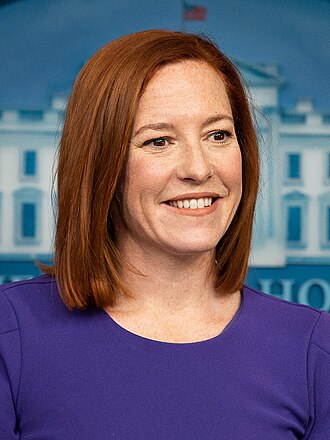
Jen Psaki’s path from White House Press Secretary to MSNBC host tracks with longer-term shifts in how former administration officials enter cable news, a pattern that has played out across multiple cycles. Her Obama-era roles as Deputy Press Secretary and Communications Director, followed by State Department spokesperson duties and the Biden press secretary post through 2022, gave her direct exposure to both domestic messaging and foreign policy rollouts. When you model this electorally, that institutional experience positions her commentary to land differently with college-educated suburban voters who have shown higher trust in detailed policy breakdowns in exit polls since 2016.

Psaki’s tenure as White House Press Secretary from 2021 to 2022 established her as a recognizable public figure during a period of significant political polarization. The daily press briefings, broadcast live on cable and streamed online, gave millions of Americans direct exposure to her communication style—methodical, prepared, and focused on translating complex policy into accessible language. Her handling of questions ranged from infrastructure rollout details to international incidents, building a track record that underscored both her knowledge of government mechanics and her comfort with adversarial questioning. This visibility proved foundational to her later transition into commentary, as major cable networks compete for personalities with authentic government credibility rather than purely political operatives.

The polling data here paints a complicated picture. Surveys from outlets tracking media consumption reveal that audiences for extended analysis programs skew toward older, higher-income Democrats in coastal and Midwest metro areas, with narrower reach among working-class voters in Rust Belt counties that often decide close Senate and presidential races. Psaki’s weekday show format, built around longer segments rather than rapid hits, aligns with audience preferences measured in recent Pew and YouGov breakdowns, where respondents in those demographics report wanting context on strategy and process over straight partisan clashes.

Her media strategy reflects a deliberate choice in how cable news positions former officials. Rather than adopting the rapid-fire commentary style that dominates primetime slots, Psaki’s program emphasizes sustained analysis of policy implementation and political messaging—segments often running eight to twelve minutes rather than the two-to-three minute standard elsewhere on cable. This format choice matters in the broader context of media consumption trends. Viewership data indicates that audiences willing to invest time in longer-form analysis tend to have higher education levels and greater familiarity with policy terminology, demographics that align precisely with suburban swing voters who have proven decisive in recent presidential and midterm cycles.

The business model behind this shift also merits examination. Cable news networks have increasingly invested in former government officials as a response to declining overall viewership and the rise of digital-first news consumption. These personalities bring built-in audiences of people who followed their government service, creating an implicit competitive advantage over pure commentators without public-facing government records. For MSNBC specifically, acquiring and prominently featuring Psaki represented a calculated effort to differentiate from competitors by stressing expertise and insider knowledge over partisan point-scoring.

Historical election patterns add another layer. Former officials from both parties have moved into commentary roles after leaving government, from the Bush and Clinton eras onward, often boosting their networks’ credibility on specific issues while raising questions about revolving-door effects. In Psaki’s case, her emphasis on the mechanics behind decisions—pairing policy substance with the political calculations that shape them—mirrors approaches that performed well in battleground-state polling during the 2020 cycle, particularly among women and independents who cited “understanding the why” as a factor in media trust scores.

The revolving door between government and media deserves closer scrutiny given its implications for how Americans consume political information. Critics have flagged potential bias from her prior service, a concern that surfaces in every administration transition. Yet available cross-tab data on viewer retention shows her program holding steady among core MSNBC demographics even when segments include pointed notes on Democratic messaging shortfalls. This suggests the insider lens can cut both ways, depending on the cycle and the issue set. When mapped against 2022 and 2024 primary turnout patterns, the same viewers who tune in for those explanations tend to cluster in states where small shifts in college-educated support have decided House and Senate outcomes.

Psaki’s approach to covering her former employer distinguishes her from some media figures who maintain closer ties to current administrations. By offering occasional critical observations about Democratic strategy and messaging—instances where her commentary acknowledged when the administration’s approach fell short with key constituencies—she has sought to build editorial credibility that extends beyond simple partisan alignment. These moments of distance from the Biden administration represent a conscious effort to navigate the inherent tension between former official status and journalistic independence, a tension that will likely define how her career evolves through future election cycles.

The technical aspects of political communication she discusses on air also reflect her institutional knowledge. Her segments frequently dissect how administrations frame announcements, time policy releases relative to news cycles, and adjust messaging based on polling feedback. This meta-level analysis—essentially teaching audiences how political communication works—has become a significant draw for viewers seeking to understand not just what policies are, but why they are presented in particular ways. This educational component distinguishes her programming from opinion-oriented commentary and may contribute to its appeal among viewers who want analysis rather than pure persuasion.

The role of social media in amplifying Psaki’s reach extends beyond traditional television metrics. Clips from her show circulate widely on platforms like Twitter, TikTok, and YouTube, often reaching younger audiences who do not watch cable television. This digital distribution has expanded her influence in ways that pure cable viewership numbers cannot capture, creating a hybrid media presence that functions simultaneously as traditional broadcaster and digital-native commentator. The viral nature of short clips, however, sometimes strips away the contextual depth that characterizes her longer on-air segments, introducing a different dynamic into how her message is consumed and interpreted.

Broader trends in how cable news incorporates government alumni continue to influence the information environment heading into future elections. Her presence fits a measurable demand for analysts who can connect bureaucratic detail to voter-facing consequences, especially in swing districts where demographic realignments since 2012 have made messaging precision more consequential than ever. As political campaigns and media organizations continue adapting to fragmented attention spans and partisan polarization, the model that Psaki represents—credentialed insider offering accessible expertise—appears likely to remain a durable feature of the American media landscape, even as specific platforms and formats continue evolving.


Sources

“`

What Is a Political Party? Definition, Structure, and Role in American Democracy

“`html

What Is a Political Party? Definition, Structure, and Role in American Democracy

As a Latina journalist covering Washington accountability, I’ve learned that a political party is far more than an organized group of individuals united by shared ideologies—it’s a machine fueled by campaign finance records, lobbying disclosures, and the flow of money that often tells a different story than the platforms released to voters. In the United States, these organizations structure competition, mobilize support, and field candidates, yet their real power emerges when you trace the dollars through Federal Election Commission filings rather than press releases.

Political parties serve as intermediaries, but the financial disclosures tell a story the press releases don’t: they channel resources from wealthy donors, corporations, and unions into electoral contests while shaping policy agendas that align with those backers. The candidate recruitment process at every level—from federal to local—often hinges on who can tap into established fundraising networks, not just ideological fit.

Core functions include developing policy platforms on issues like healthcare and taxation, yet those platforms frequently reflect the priorities of major contributors revealed in lobbying reports. Mobilization efforts rely on grassroots work, but they also draw from coordinated spending by party committees and affiliated Super PACs that operate with fewer restrictions. Legislative coordination in Congress follows party lines, though whip systems and committee assignments can shift based on which members bring the most outside money to the table.

The Founding Fathers warned against factions, but parties emerged anyway, evolving from Federalists versus Democratic-Republicans into today’s Republican-Democratic duopoly that has held for over 150 years. That persistence owes much to electoral rules favoring two major players—and to the concentrated financial resources those players command through national committees and conventions.

Organizationally, parties operate at national, state, and local levels, with leadership structures that manage strategy. Allied interest groups—labor unions on one side, business associations on the other—provide volunteers and funds, a coalitional reality laid bare in campaign finance data showing how outside spending amplifies party influence.

America’s two-party system mathematically sidelines third parties through single-member districts and plurality voting. Democrats have emphasized government intervention and social programs, while Republicans have focused on limited government and strong defense, yet both now navigate a landscape where Super PACs and unlimited independent expenditures from high-dollar donors reshape nomination fights and general elections.

Party membership here remains informal—no dues, just primary voting or registration—yet identification has hardened into polarization. Voters increasingly sort along partisan lines, a trend that intersects with demographic shifts and geographic clustering, all while campaign finance reforms have scattered authority among official committees, Super PACs, and individual candidates.

Winning elections demands coordinated recruitment, positioning, and resource allocation, with parties pouring money into competitive districts. Nomination processes vary by state, from caucuses to primaries, but the underlying math often favors those with access to early money and donor networks. In governance, party caucuses and leadership enforce discipline, though district interests or donor pressures can create fractures visible in voting records.

Contemporary challenges include declining formal affiliation among younger voters, direct candidate outreach via social media that bypasses party infrastructure, and rising polarization that complicates compromise. Demographic changes continue to pressure both coalitions as they compete for shifting voter bases—all dynamics that lobbying disclosures and contribution patterns help explain more clearly than rhetoric alone.

The historical evolution of American political parties reveals how institutional frameworks have shaped competition over centuries. The first party system (1790s-1820s) pitted Federalists against Democratic-Republicans in debates over federal power and economic development. Andrew Jackson’s Democratic Party emerged as a mass-based organization in the 1830s, pioneering innovations like national nominating conventions that parties still use today. The Republican Party, founded in 1854, successfully positioned itself against slavery expansion and won the presidency with Abraham Lincoln in 1860. Since then, both major parties have undergone significant realignment. The “Solid South” Democratic coalition of the post-Reconstruction era gradually shifted rightward after the Civil Rights Act of 1964, when Southern conservative Democrats increasingly moved to the Republican Party. These realignments demonstrate that party identities reflect changing coalitions responding to economic conditions, demographic shifts, and moral questions rather than fixed ideological constants.

Understanding party structure requires recognizing multiple overlapping organizations operating under similar brands. The Democratic National Committee and Republican National Committee serve as official national bodies, but they share electoral space with state party committees, local county and precinct organizations, and affiliated entities like the Democratic Senatorial Campaign Committee or National Republican Congressional Committee. These entities maintain separate legal status and fundraising authority, creating a federated system where power distributes unevenly. Historically, state and local parties held greater autonomy, controlling ballot access and nomination processes. Reforms beginning in the 1970s shifted power toward national committees and primary voters, yet local organizations still control crucial ground operations and candidate recruitment in many communities.

The role of party platforms deserves examination beyond campaign messaging. These detailed documents, typically adopted every four years at national conventions, represent negotiated agreements among diverse party factions. The 2020 Democratic platform, for instance, reflected compromises between progressive and moderate wings on healthcare, environmental policy, and taxation. Platform drafting involves formal committees with representation based on state delegations, creating opportunities for activists to shape party direction. Yet platforms lack binding force—elected officials regularly deviate from platform language based on constituency pressures or personal conviction. The disconnect between platform promises and legislative outcomes frustrates voters expecting parties to function as unified teams, though party discipline varies significantly by chamber and issue. Senate parties operate with more fluid coalitions than House parties, reflecting senators’ statewide constituencies and six-year terms.

Party activists and volunteers represent the grassroots foundation that national committees depend upon, though their demographic composition has shifted considerably. Historically, patronage systems—where winning parties distributed government jobs to supporters—motivated party work. Civil service reforms gradually eliminated most patronage, forcing parties to rely on volunteer activists motivated by ideology, community ties, or candidate loyalty. Contemporary party activists tend to be more ideologically intense than average voters, a pattern that influences primary elections where activist participation exceeds general election turnout. The Tea Party movement of the 2010s demonstrated how organized activist networks can reshape Republican primary outcomes, while progressive activists’ mobilization efforts influenced Democratic nomination contests throughout the 2010s and 2020s.

The relationship between parties and interest groups creates another layer of power structures often invisible to casual observers. Business associations, labor unions, environmental organizations, and religious coalitions maintain informal relationships with parties while maintaining legal independence. These groups provide volunteers, contribute through Super PACs, and advocate on behalf of party-aligned candidates. The Chamber of Commerce and National Federation of Independent Business traditionally align with Republicans, while the AFL-CIO and Sierra Club align with Democrats, though individual unions or business groups sometimes break ranks. These alignments aren’t accidental—they reflect decades of policy development and electoral investment that bind interest groups to party success.

Third parties in America operate within a system structurally designed to prevent their success. The Electoral College magnifies two-party dominance at the presidential level, as winning requires 270 electoral votes, making it nearly impossible for a third-party candidate to accumulate sufficient state-level victories. In congressional races, single-member district plurality voting mathematically advantages the two largest vote-getters, creating a strategic incentive for voters to avoid “wasting” votes on non-viable third-party candidates. Some states require third parties to collect significant petition signatures to access general election ballots, imposing administrative barriers that two major parties avoid through established ballot access. The Libertarian Party and Green Party have achieved electoral success at local levels in some jurisdictions, but breaking into statewide or national prominence remains extraordinarily difficult. Debate access thresholds, fundraising disadvantages, and media coverage disparities further entrench two-party dominance despite voter interest in alternatives.

Ultimately, political parties aggregate interests into electoral and governing coalitions through stable networks at every level. Their dominance in American democracy makes understanding the money behind them essential, because elections only produce meaningful change when the financial incentives align with—or are checked by—public accountability.


Political Machines in American Politics: History, Impact, and Modern Influence

“`html

Political Machines in American Politics: History, Impact, and Modern Influence

Political machines weren’t some dusty footnote—they were the original power brokers who figured out how to turn urban chaos into a reliable vote-delivery system long before anyone filed a Form 3X with the FEC. These organizations emerged during the explosive growth of 19th-century cities, when immigration and industrialization outpaced any meaningful government safety net. In places like New York, Chicago, Philadelphia, and Boston, a single boss or tight circle could command loyalty by trading jobs, housing help, and food for ballots. Tammany Hall in New York became the textbook case, showing how personal obligation could substitute for formal party infrastructure.

The financial disclosures tell a story the press releases don’t: machines sustained themselves through patronage that looks a lot like today’s earmarks and no-bid contracts, except the paperwork was kept in ward leaders’ pockets rather than on OpenSecrets.org. At the top sat the boss; beneath him stretched a hierarchy of precinct captains who knew exactly how many votes each block could deliver. When the machine won city hall, thousands of government positions flowed to loyalists—no competitive exams, just political IOUs. That system created real economic dependence in neighborhoods the federal government had largely ignored.

The mechanics of machine operations reveal a sophisticated understanding of both human psychology and urban geography. Political machines divided cities into wards, each overseen by a ward leader responsible for turning out votes and maintaining organizational discipline. Below the ward leaders were precinct captains, typically local figures with deep community ties—a bartender, grocer, or shopkeeper who knew every family on their block. These captains maintained detailed voter rolls, tracked which households might be persuadable through favors, and identified which residents faced immediate hardship. When election day arrived, the machine’s ground game operated with military precision: voters were reminded of promised assistance, rides to polling places were arranged, and ballot choices were sometimes—though not always—gently encouraged. This organizational infrastructure made machines extraordinarily effective at turning out votes, often delivering 70 to 80 percent turnout in machine-controlled precincts during peak years.

As a Latina journalist covering Washington accountability, I can’t help but notice the parallels to modern lobbying disclosures. Machines extracted kickbacks from contractors and businesses seeking permits or protection, the same way some contemporary influence operations route money through layered LLCs and 501(c)(4)s. Yet for many poor immigrants, the machine operative who could fix a leaking roof or land a sanitation job felt more tangible than abstract promises of clean government. Corruption—ballot stuffing, vote buying, outright bribery—was baked into the model, but so were the direct services that kept people alive before Social Security or unemployment insurance existed.

The financial ecosystem surrounding political machines operated with remarkable efficiency for its time. A contractor seeking a city paving contract might contribute 2 to 5 percent of the contract value to the machine’s coffers. A business owner needing a liquor license or permit would make a “voluntary contribution” to the local alderman. Saloon keepers paid protection money to avoid harassment. These revenue streams funded not just the machine’s political operations but also the ward clubs, soup kitchens, and bail funds that bound voters to their precinct captains. Boss William O’Dwyer of New York’s Tammany Hall and Richard Daley of Chicago’s machine both perfected this system, creating vast networks where public sector jobs, contracts, and services flowed through political channels rather than market mechanisms or merit-based systems.

The social role machines played in their heyday shouldn’t be understated. Before the New Deal established federal welfare programs, political machines often functioned as de facto social safety nets. A widow whose breadwinner died might receive a job sweeping streets. A family facing eviction could get landlord pressure applied through political channels. Young men without prospects could enter the police or fire departments through political sponsorship. For immigrants arriving in American cities with no language skills, no professional credentials, and no social network, the machine offered a path forward—one that came with strings attached, certainly, but more reliable than the formal economy’s indifference. This explains why machines maintained such fierce loyalty in working-class neighborhoods and why their decline sparked genuine mourning among communities that had depended on them.

Yet the cost of machine politics was substantial and unevenly distributed. Neighborhoods controlled by weaker machines received worse services—fewer streetlights, unpaved roads, inferior schools. Machine-friendly contractors often delivered shoddy work at inflated prices. Honest businesses couldn’t compete with politically connected ones. Talented individuals without political connections faced blocked career paths. The system encouraged corruption at every level and made democratic accountability nearly impossible, since machines could deliver votes regardless of actual policy performance or ethical conduct. By the early 20th century, progressive reformers had documented these costs exhaustively, building public support for structural changes that would eventually dismantle the machines.

The decline came when reformers forced sunlight into the system. Civil service laws replaced patronage with merit exams, cutting off the machine’s primary currency. Federal welfare programs and later television-driven campaigns further eroded the personal relationships that once bound voters to precinct captains. By the late 20th century, even the storied Chicago machine had fractured after Harold Washington’s 1983 victory, while New York’s Tammany and Philadelphia’s organization collapsed under federal prosecutions and demographic shifts. Judicial rulings and expanded civil service protections finished what Progressive Era laws began. The Pendleton Civil Service Reform Act of 1883 marked the beginning of the end, establishing that most federal positions would be filled through competitive examination rather than political appointment. States and cities gradually followed suit, though the pace varied considerably—some political organizations adapted more slowly than others, and rural machines persisted longer than urban ones.

The transition from machine politics to modern campaign infrastructure happened unevenly across the country. Some cities, like New York and Chicago, saw relatively sharp breaks with machine traditions by the 1990s. Others, particularly in the South and parts of the Midwest, maintained elements of machine-style politics well into the modern era, though rebranded and operating under stricter legal constraints. The skills that machine operatives had developed—voter targeting, ground-level organization, personal relationship cultivation—didn’t disappear; they were absorbed into professional campaign consulting, data analytics, and direct mail operations. The emotional appeal of machine politics also endured: candidates continued to promise direct help to constituents, to maintain extensive local offices, and to build personal relationships with voters, even as the formal patronage mechanisms that once sustained machines were dismantled.

The legacy question still matters for anyone tracking campaign finance records today. Some state-level party operations and mayoral networks still rely on personal loyalty webs and targeted favors, though they operate under far stricter contribution limits and disclosure rules than their predecessors. The core tension—efficient service delivery versus concentrated, unaccountable power—hasn’t vanished; it has simply migrated into super PACs, dark-money nonprofits, and the revolving door between city halls and K Street firms. Contemporary political influence operations often employ techniques that echo machine-era tactics: they identify persuadable voters through data analysis rather than personal knowledge, they move resources to favored allies through bundling and super PAC contributions rather than direct patronage, and they cultivate long-term relationships with politicians that ensure favorable treatment on future policy questions.

Understanding how machines rose and fell gives context to current fights over disclosure thresholds and enforcement at the FEC. The same forces that once allowed bosses to dominate city budgets now appear in lobbying reports and bundler lists. History shows that when accountability mechanisms weaken, new versions of old machines tend to reappear—only this time the ledgers are digital and the money moves faster. Recent controversies over anonymous nonprofit donations and undisclosed lobbying activities suggest that the underlying dynamics of concentrated political power and weak accountability remain relevant today. The fundamental lesson from machine politics is that democratic systems require constant attention to transparency, enforcement, and structural incentives that reward accountability over loyalty.


Sources

Political Socialization in America: How Citizens Develop Political Beliefs and Values

“`html

Political Socialization in America: How Citizens Develop Political Beliefs and Values

Political socialization shapes how Americans acquire the attitudes and loyalties that ultimately drive turnout and vote choice across successive election cycles. In practice, this process begins early and compounds over decades, creating durable patterns visible in exit polls, party identification tracking, and cohort analysis from sources like the American National Election Studies.

The family remains the dominant early transmitter. Longitudinal surveys consistently show children inheriting parental party leanings at high rates, with roughly 70-80 percent alignment persisting into adulthood when measured through repeated ANES panels. That leaves a 20-30 percent defection window, concentrated in young adulthood when geographic mobility and new social environments intervene. When you model this electorally, those transmission rates help explain why certain states maintain stable partisan tilts even as national demographics shift.

Family influence extends beyond simple party label adoption. Parents transmit not just partisan preference but underlying values frameworks—attitudes toward government’s role in society, views on authority and individual responsibility, and orientations toward social change. Research shows that children who grow up in households where political discussion is frequent develop stronger political interest and higher civic engagement later in life, regardless of their ultimate party choice. Conversely, families with minimal political engagement tend to produce children with lower voter registration rates and participation levels, a pattern that persists across multiple generations within the same family lineages.

Schools layer on the next measurable influence. Jurisdictions with stronger civics requirements post higher youth registration and validated turnout in subsequent midterms and presidential contests, according to Census Bureau voting supplements. The hidden curriculum—peer norms around authority and participation—also registers in demographic breakdowns, where college-educated cohorts diverge from non-college cohorts on issues of institutional trust in ways that track historical education gaps dating back to the 1980s realignment.

The quality of civic education matters significantly. States that emphasize debate, mock elections, and service learning demonstrate measurably higher youth turnout in subsequent elections compared to those with rote civics curricula. Teachers themselves function as political socializers, though most employ pedagogical approaches designed to present multiple perspectives rather than advocate particular viewpoints. Still, student perception of teacher political leanings influences classroom engagement and subsequent political interest. College attendance amplifies these effects substantially—students exposed to diverse ideological viewpoints in higher education settings often experience significant shifts in political attitudes, particularly on social issues like civil rights, environmental policy, and gender equality.

Peer networks and social media accelerate divergence once individuals leave home. Digital echo chambers amplify conformity effects, and platform algorithms sort users into ideologically homogeneous feeds. The 2016 and 2020 cycles illustrated this through rapid mobilization within narrow demographic slices, particularly among younger voters whose news diets were almost entirely peer-curated. Polling methodology here matters: traditional random-digit-dial samples sometimes understate these effects until supplemented with online panels that capture digital behavior.

The mechanics of online political socialization operate differently from traditional channels. Instagram, TikTok, and Reddit expose younger voters to political content through entertainment-first formats rather than traditional news consumption. This creates both broader exposure to political ideas and deeper fragmentation, as algorithms serve individualized content streams. Research from the Pew Research Center indicates that roughly 40 percent of Americans now regularly encounter political news through social media rather than dedicated news sources, with stark generational divides—over 70 percent of Gen Z voters report social media as a primary news source compared to roughly 16 percent of voters over 65. This democratization of political information has reduced traditional gatekeeping but simultaneously created vulnerability to misinformation and hyperpartisan framing.

Mass media consumption further segments the electorate. Partisan cable audiences display attitude gaps on candidate favorability and policy priorities that exceed what demographic controls alone predict, a pattern repeated across multiple election cycles. Local journalism decline has produced measurable “media desert” effects, with lower-information counties showing flatter turnout curves and greater susceptibility to nationalized messaging.

The deterioration of local news infrastructure represents one of the most significant shifts in American political socialization over the past two decades. Since 2005, approximately 2,500 newspapers have closed in the United States, leaving roughly one-third of American counties with no daily newspaper. In these media deserts, voters lack local sources for information about state legislative races, municipal elections, and regional policy debates. The vacuum fills with national partisan messaging, which tends toward greater polarization and lower engagement with granular local issues. County-level analysis shows that communities with functional local news ecosystems demonstrate higher participation in local elections and greater awareness of candidate policy positions, suggesting that local journalism functions as a crucial political socialization mechanism even for voters who don’t actively read newspapers.

Life-stage transitions introduce additional variance. Economic shocks, such as the 2008 recession, left lasting imprints on Millennial party identification visible in repeated cross-sectional polls. Generational cohorts carry distinct historical markers—Vietnam-era Boomers, post-Cold War Gen X, post-9/11 Millennials, and climate-focused Gen Z—yet within each cohort, race, ethnicity, religion, and geography produce wide internal spreads. African American and Hispanic socialization pathways, for instance, reflect different institutional and experiential inputs that map onto persistent voting blocs in the Sun Belt and industrial Midwest.

Life experiences during formative political years—roughly ages 14 to 24—create lasting partisan effects that persist decades later. The Great Depression produced an entire generation more likely to support government intervention and Democratic candidates. The post-World War II economic boom generated Republican-leaning cohorts skeptical of government expansion. Similarly, the 9/11 attacks increased Republican identification among voters who came of age during that period, while the 2008 financial crisis pushed Millennials toward Democratic identification. These cohort effects remain observable in voting patterns thirty years later, demonstrating that political socialization processes create durable change rather than temporary fluctuation.

Gender shapes political socialization in ways often overlooked in aggregate analysis. Women historically socialized toward domestic roles and deference to authority showed lower political engagement and more conservative attitudes on gender-related policy questions. As socialization messages around women’s roles and capabilities shifted from the 1970s onward, generational cohorts of women displayed progressively more independent political identities and higher engagement. Contemporary women voters demonstrate higher turnout rates than men and distinct patterns on economic issues, healthcare, and reproductive rights. Similarly, men’s political socialization increasingly incorporates contradictory messages about traditional masculinity and economic precarity, which manifests in geographic polarization and shifting attitudes toward government’s role in economic security.

Religion functions as a potent political socializer that often operates indirectly through community membership rather than theological doctrine alone. White evangelical Protestant communities demonstrate consistent Republican voting patterns despite theological positions that might theoretically align with Democratic economic priorities, suggesting that community socialization and identity affirmation operate powerfully alongside doctrinal belief. Catholic voters showed swing voting patterns reflecting their geographic dispersion and economic heterogeneity, while Jewish and Muslim voters demonstrate strong Democratic identification rooted in historical experience and contemporary policy priorities. Secular voters represent the fastest-growing demographic category and show the most consistent Democratic voting patterns, suggesting that religious disaffiliation itself functions as a form of political socialization.

The electoral payoff appears in participation gaps. Areas with robust civic infrastructure and cross-cutting discussion networks sustain higher validated turnout and more stable two-party competition. Where socialization channels are thinner, abstention rises and outcomes hinge more heavily on mobilization of core demographic slices. The polling data here paints a complicated picture: aggregate national swings can mask durable subgroup stability rooted in these early and ongoing processes.

Understanding political socialization illuminates why election forecasting remains imperfect despite sophisticated modeling. Durable attitudes formed through decades of family influence, educational experience, and community membership prove resistant to short-term campaign messaging. Yet the process remains dynamic—new cohorts enter the electorate with novel historical experiences, and shifts in media ecosystems, educational curricula, and community institutions continue reshaping how Americans acquire political beliefs. For citizens seeking greater engagement, awareness of these socialization processes offers insight into both personal political development and the broader sources of stability and change in American electoral behavior.


Sources

Rob Reiner Political Views: Hollywood’s Outspoken Democratic Voice

“`html

Rob Reiner Political Views: Hollywood's Outspoken Democratic Voice

Rob Reiner’s rise as one of Hollywood’s most persistent Democratic voices didn’t happen in a vacuum. As a Latina journalist covering Washington accountability, I’ve learned that the loudest public statements often sit atop quieter streams of cash. The financial disclosures tell a story the press releases don’t: Reiner’s transition from television producer to political activist coincided with an era when celebrity money began flowing more openly into Democratic super PACs and issue-advocacy groups.

His early work on shows like “All in the Family” carried progressive themes, yet Reiner’s direct political spending remained modest until the 1990s. Federal Election Commission records from that period show limited itemized contributions from entertainment figures; by the 2000s those patterns shifted as Hollywood donors organized around healthcare, environmental rules, and LGBTQ+ legislation. Reiner aligned with those priorities, but the paper trail of who funded the ads and the ground games rarely made the cable-news chyrons.

The evolution of Reiner’s public activism tracks closely with broader shifts in how entertainment figures engage with electoral politics. In the 1980s and early 1990s, celebrity political involvement was largely episodic—a benefit concert here, a public service announcement there. But the landscape changed as digital platforms emerged and fundraising infrastructure matured. By the time social media became the primary megaphone for political discourse, the machinery connecting individual voices to institutional spending was already in place. Reiner became one of the most visible faces of that transformation, though certainly not the only one.

His positions on specific issues have remained remarkably consistent over the decades. On healthcare, Reiner has long advocated for universal coverage and criticized efforts to dismantle the Affordable Care Act. During the Trump administration, he was vocal in opposing proposed changes to Medicare and Medicaid. His environmental stance emphasizes aggressive climate action and regulation of fossil fuels—positions he articulated during the Obama years and amplified during the subsequent policy rollbacks. On voting rights, he has supported expanded ballot access and criticized voter ID requirements and voter purges. Gun control rounds out his core advocacy areas, where he has consistently called for stricter background checks and assault weapon restrictions.

These positions align squarely with Democratic Party platform priorities, which itself raises analytical questions. Whether Reiner’s advocacy drives the party’s positions, reflects them, or exists in symbiotic relationship with them remains a matter of interpretation. What the available evidence does show is coordination: major Democratic-aligned organizations promoting identical messages, with celebrity amplification helping to reach demographics that traditional media might miss.

During the Trump years his Twitter presence became a megaphone. What the campaign-finance filings also show is that many of the same organizations amplifying his messages received six- and seven-figure transfers from Democratic-aligned dark-money networks. Reiner’s consistent criticism of immigration policy, environmental rollbacks, and tax cuts tracked the priorities of those funders, raising the question of how much was organic outrage and how much was coordinated messaging.

The mechanics of this coordination deserve closer examination. Reiner has appeared at Democratic fundraising events, lent his name to issue campaigns, and participated in get-out-the-vote efforts. While celebrity participation in electoral politics is neither new nor illegal, the scale has grown substantially. A single celebrity with millions of social media followers can reach as many people in minutes as a traditional campaign ad might in weeks. That amplification power translates into electoral advantage, yet the contribution valuations—how much is Reiner’s Twitter advocacy worth in terms of earned media or voter persuasion—rarely appear in official disclosures.

It’s worth noting that Reiner is hardly alone in this ecosystem. Numerous other entertainment figures have adopted similar activist roles, and similar patterns of coordination with Democratic institutions are evident across multiple celebrity voices. What distinguishes Reiner is perhaps the consistency and longevity of his engagement, plus his willingness to go further in his rhetoric than some peers find comfortable.

Reiner’s specific criticisms of Republican policies and leaders have sometimes drawn pushback for what critics characterize as excessive hyperbole. His social media posts have compared certain political figures and policies to fascism and authoritarianism, language that supporters view as appropriately alarmed and that detractors consider inflammatory. This rhetorical intensity itself has become part of the story: does elevated language reflect genuine conviction or does it function as a tool to drive engagement and donations? Reiner would likely argue these aren’t mutually exclusive.

By 2020 he had endorsed Biden early and participated in fundraising. Lobbying-disclosure and PAC reports from that cycle list dozens of Hollywood figures bundling checks or appearing at events whose proceeds were later routed through joint fundraising committees. Reiner’s name surfaces in some of those donor lists, though the exact amounts and downstream destinations remain aggregated—another reminder that transparency statutes still leave sizable gaps when money moves through layered entities.

The 2020 cycle marked perhaps the peak of Reiner’s public political visibility. He appeared in virtual campaign events, participated in celebrity-focused fundraising, and maintained a steady stream of critical commentary on the Trump administration. Post-election, his activism continued, though the nature of his engagement shifted somewhat. Rather than campaign-focused activity, much of his recent public political work has concentrated on voting-rights advocacy and warnings about what he characterizes as ongoing threats to democratic institutions.

His stated positions—universal healthcare access, aggressive climate measures, expanded voting access, tighter gun rules, immigration reform—mirror the platform planks that major Democratic super PACs spent tens of millions promoting. The consistency is notable, yet it also illustrates how celebrity capital and institutional money now reinforce each other inside one party’s coalition.

For voters trying to understand the contemporary political landscape, Reiner’s trajectory offers important lessons. Celebrity voices now carry measurable electoral weight. The organizations that amplify these voices operate according to strategic calculations about messaging and outreach. Understanding who funds those organizations, what their priorities are, and how those priorities align with or diverge from broader public interests becomes essential to informed citizenship.

Critics on the right have called his rhetoric overheated; some moderates have questioned whether any single entertainer should carry such outsize influence. From an accountability standpoint, the more relevant issue is whether the public can trace the money that turns personal commentary into coordinated electoral infrastructure. Reiner’s case is not unique, but it is instructive: the same platforms that reward viral outrage also obscure the ledgers that keep the outrage machine running.

Looking forward, the question of how celebrity activism will evolve remains open. Will transparency improve, allowing voters to better understand the financial relationships undergirding celebrity political engagement? Will the phenomenon plateau as audiences become more sophisticated about recognizing coordinated messaging? Or will the integration of entertainment figures into electoral infrastructure deepen further? For now, Rob Reiner remains one of the most visible examples of how that integration operates—a case study in modern American political communication that deserves serious analytical attention alongside the inevitable partisan reaction.


Sources

“`

Political Party Definition: Structure, Purpose, and Role in American Democracy

Political Party Definition: Structure, Purpose, and Role in American Democracy

A political party in the American context is best understood as an organized coalition of voters, activists, and officeholders who share broad ideological commitments and seek to translate those into control of government through elections. The two major parties have anchored this system since the mid-nineteenth century, yet their coalitions have never been static. Exit polls and American National Election Studies data show repeated realignments driven by demographic shifts, economic conditions, and regional voting patterns that continue to reshape the electoral map.

When you model this electorally, the durability of the two-party structure becomes clearer. Winner-take-all rules at the state level, combined with ballot-access hurdles and the sheer cost of competitive campaigns, have limited third-party breakthroughs for more than 150 years. Historical election returns illustrate the pattern: third-party presidential candidates have occasionally drawn protest votes in the 5–15 percent range but have translated those shares into electoral votes only in rare, localized cases.

The polling data here paints a complicated picture of how parties aggregate interests. National surveys conducted by organizations using stratified sampling and weighting for age, race, education, and geography consistently show that the Democratic coalition clusters among younger voters, racial and ethnic minorities, and urban professionals, while Republican support remains stronger among White voters without college degrees, rural residents, and older cohorts. These demographic breakdowns are not fixed; they evolve with each election cycle as parties adjust messaging and turnout operations.

The origins of America’s party system trace back to the founding era, though not in the form we recognize today. The Federalists and Democratic-Republicans of the 1790s and early 1800s represented the first genuine party competition, though many founders viewed parties with suspicion as potential threats to national unity. By the 1830s, the Democratic Party emerged from the remnants of the Democratic-Republican coalition, while the National Republican and Whig parties competed for the anti-Democratic vote. The Republican Party itself was founded in 1854, coalescing around opposition to slavery’s expansion, and won the presidency in 1860 with Abraham Lincoln. These early transformations demonstrate that party realignment is not a modern phenomenon—it has been intrinsic to American politics from the beginning.

Party organizations operate through a layered hierarchy that directly affects these electoral outcomes. National committees coordinate broad strategy and fundraising, state parties manage primary rules and voter files, and local chapters handle door-knocking and registration drives. Post-Citizens United independent expenditure groups have amplified the reach of both parties, though their impact varies sharply by state competitiveness. When analysts weight these factors into electoral college and congressional district models, the advantage for established parties grows because they can target narrow demographic margins in battleground states more efficiently than newer entrants.

Within each major party, the internal structure reveals important dynamics about how power operates. Party conventions, held every four years during presidential election cycles, serve as the formal nominating authority and platform-writing body. State party organizations retain significant autonomy over primary scheduling, delegate allocation, and ballot access rules—a decentralization that reflects America’s federal system. The Democratic National Committee and Republican National Committee employ hundreds of staff members focused on voter data analytics, digital outreach, and candidate recruitment. This infrastructure has grown exponentially since the 1980s, with modern campaigns relying on sophisticated voter modeling that segments the electorate into thousands of micro-targeted groups based on consumer behavior, social media activity, and issue priorities.

Party discipline in legislatures varies between the two major parties and has shifted considerably over time. Congressional voting records show that Republicans have historically demonstrated stronger party-line voting cohesion, particularly in recent decades, while Democrats have maintained somewhat more internal ideological diversity. Party leaders in Congress use tools like committee assignments, campaign support, and leadership positions to enforce discipline on key votes. However, regional differences and constituent pressures often override party unity, particularly on issues tied to local economic interests or cultural concerns. The party whip system, borrowed from parliamentary tradition, attempts to corral votes but lacks the enforcement mechanisms available in systems like the British Parliament.

The functions parties perform—recruiting candidates, simplifying voter choice, organizing legislatures, and providing opposition—map directly onto measurable electoral patterns. Primary-election data reveal how party discipline influences candidate selection, while general-election turnout models show the effect of get-out-the-vote efforts on key demographic groups. Candidates often rise through party ranks by proving their ability to fundraise, build name recognition in their districts, and mobilize volunteer networks. Party gatekeepers—including state party chairs, major donors, and incumbent officeholders—shape which candidates receive institutional support and funding. The opposition role, visible in congressional voting records, creates the accountability mechanism that voters ultimately judge every two or four years.

Party platforms deserve particular attention as they represent the formal policy positions adopted at national conventions. These documents, often running 10,000 to 20,000 words, attempt to balance demands from various party constituencies. Activists and interest groups lobby extensively for language supporting their priorities, whether environmental protection, gun rights, healthcare reform, or tax policy. While platforms carry no legal force and candidates sometimes diverge from them, they signal the direction a party intends to pursue if it gains power. Platform debates at conventions also highlight internal party tensions and shifting priorities. Recent Democratic platforms have emphasized social justice and climate action with increasing prominence, while Republican platforms have stressed constitutional originalism, lower taxes, and deregulation.

Third parties and independent movements continue to test the system. Libertarian and Green candidates have registered modest gains in certain states with more permissive ballot rules, yet their support rarely exceeds single digits in national polling averages. Their value lies less in winning seats than in highlighting issues that major parties later incorporate, as seen in historical platform shifts on topics ranging from fiscal policy to environmental regulation. The 2016 presidential election illustrated this dynamic clearly: Green Party nominee Jill Stein and Libertarian nominee Gary Johnson together captured roughly 4 percent of the national popular vote, their highest combined total in decades. Some analysts argued that third-party votes in key swing states affected the outcome, though quantifying this effect remains contested among political scientists.

American parties have repeatedly demonstrated adaptability. The Republican Southern Strategy of the 1970s and the Democratic expansion of its coalition in subsequent decades both produced lasting changes in state-level voting patterns. Current polling on issue salience and candidate favorability suggests ongoing realignment pressures tied to education levels, suburban growth, and generational turnover. College-educated voters, particularly women, have shifted toward Democrats in recent years, while Republicans have gained ground among non-college-educated voters without four-year degrees. These trends will determine whether the existing two-party map holds or experiences another period of adjustment, but the institutional role of parties as the primary vehicles for contesting power remains consistent with patterns observed across more than two centuries of election data.


Sources

Lee Vogler Political Party: A Comprehensive Analysis of the Arizona Politician’s Affiliation

“`html

Lee Vogler Political Party: A Comprehensive Analysis of the Arizona Politician's Affiliation

Lee Vogler’s identification with the Republican Party has defined his service in the Arizona House from the 9th Legislative District, where conservative-leaning voters have consistently backed candidates who emphasize fiscal restraint and property rights. Historical election patterns in rural and agricultural portions of the state show Republican nominees holding these seats by double-digit margins in most cycles since the early 2000s, though turnout among independents can narrow those gaps when water policy or land-use questions dominate the ballot.

The polling data here paints a complicated picture when you examine demographic breakdowns by legislative district. In areas like the 9th, exit polls and voter-file analyses typically reveal stronger Republican identification among older, property-owning households and agricultural workers, while younger cohorts and those in faster-growing exurban pockets show more mixed registration. When you model this electorally, the district’s partisan lean has remained stable enough to reward consistent messaging on limited government, yet the same surveys indicate that swings of five to seven points among independents can determine whether a GOP incumbent faces a serious general-election test.

Vogler’s committee assignments and sponsored measures on water rights and regulatory relief align with the priorities that have sustained Republican majorities in the state legislature over multiple redistricting cycles. Those majorities, built on rural and suburban coalitions, have given legislators from similar districts leverage on fiscal and land-use questions even as Arizona’s overall electorate has grown more diverse. Party support in his reelection bids has included standard organizational resources—voter outreach and endorsements—that mirror patterns seen in other safely Republican legislative districts where primary turnout among conservative voters sets the effective contest.

Looking at the broader map, Arizona’s Republican caucus has accommodated both pragmatic and liberty-focused strains, and Vogler’s record reflects the practical conservative lane that has performed reliably in districts with heavy agricultural footprints. Demographic data from recent cycles continue to show these areas delivering the margins that have kept GOP control of the chamber intact, even when statewide races tighten. His continued alignment with the party therefore tracks both constituent preferences in the 9th and the electoral arithmetic that has shaped legislative outcomes for more than two decades.

The Arizona House of Representatives itself has evolved considerably as a legislative body over Vogler’s tenure. The chamber comprises 60 members representing districts across the state, and Republicans have maintained control through much of the past two decades, though margins have fluctuated based on broader trends in statewide politics. Vogler’s service within this Republican majority has positioned him to influence legislative priorities, particularly on issues that resonate strongly with his rural and agricultural constituency. The seniority system and committee structure within the legislature reward members who build relationships and demonstrate consistent voting records aligned with party platforms.

Water policy stands as one of the most defining issues in Arizona politics, and legislators representing districts like the 9th—where agriculture remains economically significant—face constant pressure to protect existing water rights and oppose regulations that could restrict agricultural use. Republican legislators in these areas have traditionally opposed federal overreach on water management and advocated for state and local control. Vogler’s legislative record reflects this priority, and his positions align him with a longstanding Republican faction in Arizona that views water access as inseparable from property rights and agricultural viability.

Regulatory relief represents another cornerstone of Vogler’s legislative focus. Conservative legislators across Arizona have pushed back against what they characterize as burdensome environmental and business regulations, arguing that streamlined permitting and reduced compliance costs stimulate economic growth in rural areas. These positions resonate particularly strongly in the 9th District, where small agricultural operations and ranching enterprises form the economic backbone. The Republican Party’s broader platform of deregulation and limited government finds consistent expression through lawmakers like Vogler who represent constituencies dependent on land-use and agricultural activities.

The mechanics of Arizona state politics also shape Vogler’s party affiliation and legislative behavior in important ways. Arizona operates under a primary system that gives party voters significant power in choosing nominees, and in safely Republican districts, the Republican primary effectively determines who will represent that area in the legislature. This dynamic incentivizes Republican candidates to build credibility with primary voters—typically the most conservative and engaged partisans—through consistent messaging on core conservative issues. Vogler’s record demonstrates attunement to these primary dynamics while maintaining the coalition-building capacity necessary for passing legislation in a chamber where party discipline exists but isn’t absolute.

Campaign finance patterns in legislative races further illuminate the relationship between Vogler and the Republican Party apparatus. Arizona allows substantial campaign contributions and spending at the legislative level, and party organizations, business groups, and ideological PACs regularly support candidates aligned with their priorities. Vogler has benefited from endorsements and financial support from Republican-affiliated groups that share his positions on fiscal conservatism, regulatory relief, and property rights. These support networks reinforce his alignment with the broader Republican coalition in Arizona.

The independence movement and growth of unaffiliated voters in Arizona adds texture to understanding party affiliations among elected officials. While Arizona has seen increasing numbers of voters registering as independent or with minor parties, the Republican Party remains dominant in rural legislative districts like the 9th. This reflects both the conservative predispositions of rural voters and the structural advantages that establish parties enjoy in candidate recruitment, funding, and ballot access. Vogler’s Republican affiliation therefore represents both his personal political philosophy and a pragmatic calculation about viable electoral pathways in his district.

Future trends in Arizona politics could reshape the electoral environment facing Republicans in rural districts. Population growth concentrated in metropolitan Phoenix and Tucson continues to shift the state’s overall partisan balance, and demographic changes—including increased Hispanic population and younger voters—have trended somewhat Democratic in statewide races. However, rural districts like the 9th have proven more resistant to these trends, and Republican incumbents with strong local reputations continue to perform well. Vogler’s sustained alignment with the Republican Party reflects confidence that his district will remain Republican-leaning in the foreseeable future, while also positioning him within a party apparatus that provides tangible resources and support for continued service in the legislature.

Understanding Vogler’s party affiliation requires viewing it not as an abstract ideological commitment alone, but as a practical political identity rooted in constituent interests, electoral geography, legislative structure, and the broader party ecosystem in Arizona. His Republican identification shapes his legislative priorities, committee work, campaign strategy, and daily interactions with fellow legislators, while also reflecting the genuine policy preferences of voters in the 9th District who have consistently chosen Republican candidates to represent them.
“`

Political Commentator Jen: Rising Voice in American Political Analysis

“`html

Political Commentator Jen: Rising Voice in American Political Analysis

In today’s polarized media environment, commentators like Jen have carved out space by leaning into electoral analysis that draws on polling trends, demographic shifts, and historical voting patterns rather than pure partisan framing. Her multi-platform presence—spanning cable hits, podcasts, and digital outlets—reflects how audiences now consume data-heavy takes on everything from Rust Belt turnout to Sun Belt suburban realignment.

Jen’s background mirrors many in the field: a mix of journalism training and on-the-ground political experience that lets her translate complex survey methodology into digestible insights. Unlike earlier generations anchored to single networks, she builds reach across formats, which matters when independent voters in states like Pennsylvania or Georgia respond to different cues than base partisans.

Her style emphasizes data where possible, breaking down campaign dynamics through lenses like likely voter screens, margin-of-error considerations in state-level polls, and demographic crosstabs that separate college-educated women from non-college men. Topics she regularly tackles include candidate viability in battlegrounds, policy proposals’ downstream effects on coalition building, media framing of narratives, and how partisan movements evolve alongside population changes tracked in Census and exit-poll data.

The rise of commentators like Jen reflects a broader shift in how American audiences evaluate political information. Traditional cable news models relied on personality-driven commentary and ideological consistency, but a growing segment of viewers—particularly those aged 25-45 across the political spectrum—increasingly seek out analysts who prioritize methodology transparency and epistemic humility. This demographic shift has created space for voices that acknowledge uncertainty rather than project false confidence. When Jen discusses a particular polling trend, she typically contextualizes it within a 95% confidence interval, explains the pollster’s historical accuracy, and notes any recent methodological changes that could affect interpretation.

This approach aligns with audience habits that reward both accuracy on past cycles—such as correctly weighting 2016 education gaps or 2020 mail-ballot surges—and willingness to flag methodological limits in real time. When you model this electorally, small shifts in key groups like Hispanic men in Arizona or Black voters in Atlanta suburbs can flip outcomes faster than national aggregates suggest.

Understanding regional divergence has become increasingly important in contemporary electoral analysis. The 2020 and 2022 cycles demonstrated that national popular vote margins often obscure critical state-level dynamics that determine outcomes in the Electoral College and Congressional representation. Jen’s commentary frequently highlights how identical demographic shifts can produce opposite electoral consequences depending on local political infrastructure, candidate quality, and state-specific issues. For instance, suburban growth patterns play out differently in Pennsylvania’s collar counties than in Arizona’s Maricopa County, yet both regions function as crucial swing areas.

The polling data here paints a complicated picture for any analyst: influence often flows less from one viral segment and more from repeated, granular references that secondary outlets pick up. Jen’s commentary on elections incorporates historical benchmarks, from post-1994 realignments to 2022 midterm underperformance patterns, while noting how different pollsters’ house effects and turnout models produce divergent forecasts. A house effect refers to the systematic tendency of a particular polling firm to produce results favoring one party or demographic composition relative to final election outcomes. Understanding these patterns requires analysts to track not just individual poll numbers but rather the distribution of results across multiple firms and methodologies.

The value of Jen’s work extends beyond election cycles. During non-election periods, she examines how shifts in Congressional approval ratings, issue salience tracking, or demographic opinion changes lay groundwork for future electoral realignment. For example, tracking how different age cohorts’ views on climate policy, healthcare access, or immigration enforcement evolve over 18-24 months can reveal emerging coalition dynamics that may not manifest in election results for several cycles. This longer temporal view distinguishes serious electoral analysis from day-to-day horse-race coverage.

Additionally, Jen addresses how media coverage itself affects political outcomes through agenda-setting and framing effects. When news outlets emphasize certain policy debates, candidate attributes, or controversy dimensions, they subtly influence which issues voters weight most heavily in their decision-making. Her analysis considers both explicit partisan media ecosystems and the more diffuse ways mainstream outlets shape information environments. This metacommentary—analysis about how political communication happens—appeals to audiences increasingly skeptical of surface-level narratives.

The role of turnout modeling deserves particular attention in understanding Jen’s analytical framework. Historical models predict election outcomes partly through assumptions about which voters will actually vote, not just which candidate they prefer if they do participate. Different assumptions about mail-ballot adoption rates, early voting expansion, or Democratic versus Republican base enthusiasm produce dramatically different forecasts from identical underlying voter preference data. Jen regularly walks audiences through these assumptions and their sensitivity—meaning how much final predictions change if turnout assumptions shift by five or ten percentage points.

Critics rightly probe these frameworks for selection bias in sampling frames, over-reliance on national rather than state-level data, or narrative incentives that favor bold calls over probabilistic ranges. Audiences benefit when analysts cross-check claims against primary sources like AP VoteCast or Cooperative Election Study releases and track calibration across multiple cycles instead of isolated predictions. Calibration refers to whether a commentator’s stated confidence levels match actual accuracy rates—if someone says an outcome has 70% probability, that outcome should occur roughly 70% of the time across their many predictions.

Furthermore, the digital media landscape creates economic incentives that can subtly distort analysis quality. Sensational narratives and bold predictions generate engagement metrics that reward clickthroughs and shares, while nuanced probabilistic discussion may bore audiences. Responsible commentators like Jen navigate these pressures by building audience bases that value accuracy and methodological rigor over entertainment value, even when this requires restraint in prediction-making.

The intersection of demographic analysis and electoral outcomes also demands sophisticated treatment of intersectionality—how multiple identity dimensions interact rather than operate independently. A college-educated Hispanic woman in Nevada may respond to different campaign messages and issues than a college-educated Hispanic man in the same state, and both may differ from non-college Hispanic voters. Treating demographic groups as monolithic misses these crucial internal variations that determine actual electoral performance.

Looking ahead, commentators who sustain credibility will be those who adapt to evolving datasets—incorporating new granular turnout models or interactive demographic simulators—while acknowledging where earlier forecasts missed regional variations. Jen’s continued role depends on maintaining that balance amid a field where fresh voices constantly test established approaches with their own polling interpretations. The broader trajectory of political commentary suggests increasing demand for analysts who blend accessibility with methodological sophistication, partisan neutrality with substantive engagement, and confidence in data with appropriate epistemic caution.

Audiences still gain most by treating such analysis as one input alongside raw survey releases and historical election returns rather than definitive forecasts. The healthiest media diet combines multiple analytical voices, diverse methodological approaches, and direct engagement with primary data sources rather than reliance on any single commentator or outlet.


Sources

“`