

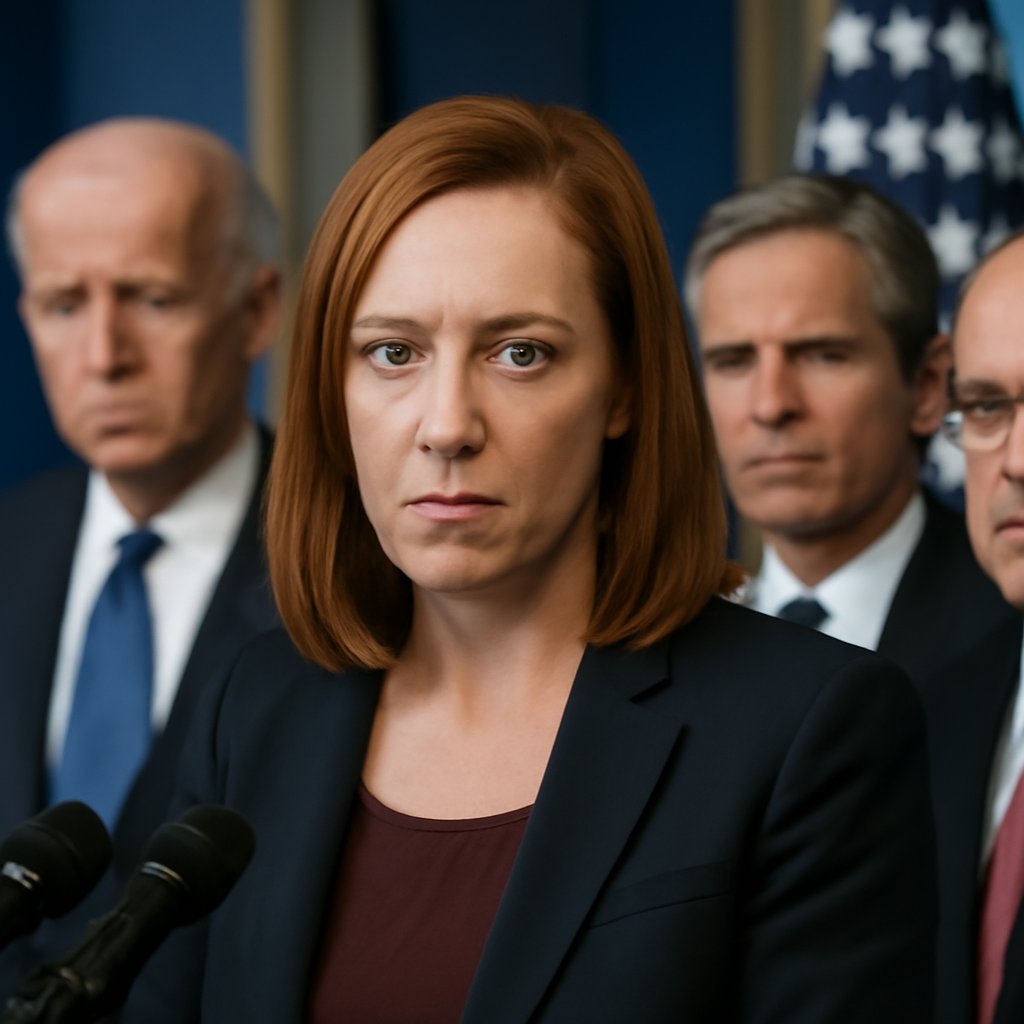
Jen Psaki’s path from White House Press Secretary to MSNBC host tracks with longer-term shifts in how former administration officials enter cable news, a pattern that has played out across multiple cycles. Her Obama-era roles as Deputy Press Secretary and Communications Director, followed by State Department spokesperson duties and the Biden press secretary post through 2022, gave her direct exposure to both domestic messaging and foreign policy rollouts. When you model this electorally, that institutional experience positions her commentary to land differently with college-educated suburban voters who have shown higher trust in detailed policy breakdowns in exit polls since 2016.
Psaki’s tenure as White House Press Secretary from 2021 to 2022 established her as a recognizable public figure during a period of significant political polarization. The daily press briefings, broadcast live on cable and streamed online, gave millions of Americans direct exposure to her communication style—methodical, prepared, and focused on translating complex policy into accessible language. Her handling of questions ranged from infrastructure rollout details to international incidents, building a track record that underscored both her knowledge of government mechanics and her comfort with adversarial questioning. This visibility proved foundational to her later transition into commentary, as major cable networks compete for personalities with authentic government credibility rather than purely political operatives.
The polling data here paints a complicated picture. Surveys from outlets tracking media consumption reveal that audiences for extended analysis programs skew toward older, higher-income Democrats in coastal and Midwest metro areas, with narrower reach among working-class voters in Rust Belt counties that often decide close Senate and presidential races. Psaki’s weekday show format, built around longer segments rather than rapid hits, aligns with audience preferences measured in recent Pew and YouGov breakdowns, where respondents in those demographics report wanting context on strategy and process over straight partisan clashes.
Her media strategy reflects a deliberate choice in how cable news positions former officials. Rather than adopting the rapid-fire commentary style that dominates primetime slots, Psaki’s program emphasizes sustained analysis of policy implementation and political messaging—segments often running eight to twelve minutes rather than the two-to-three minute standard elsewhere on cable. This format choice matters in the broader context of media consumption trends. Viewership data indicates that audiences willing to invest time in longer-form analysis tend to have higher education levels and greater familiarity with policy terminology, demographics that align precisely with suburban swing voters who have proven decisive in recent presidential and midterm cycles.
The business model behind this shift also merits examination. Cable news networks have increasingly invested in former government officials as a response to declining overall viewership and the rise of digital-first news consumption. These personalities bring built-in audiences of people who followed their government service, creating an implicit competitive advantage over pure commentators without public-facing government records. For MSNBC specifically, acquiring and prominently featuring Psaki represented a calculated effort to differentiate from competitors by stressing expertise and insider knowledge over partisan point-scoring.
Historical election patterns add another layer. Former officials from both parties have moved into commentary roles after leaving government, from the Bush and Clinton eras onward, often boosting their networks’ credibility on specific issues while raising questions about revolving-door effects. In Psaki’s case, her emphasis on the mechanics behind decisions—pairing policy substance with the political calculations that shape them—mirrors approaches that performed well in battleground-state polling during the 2020 cycle, particularly among women and independents who cited “understanding the why” as a factor in media trust scores.
The revolving door between government and media deserves closer scrutiny given its implications for how Americans consume political information. Critics have flagged potential bias from her prior service, a concern that surfaces in every administration transition. Yet available cross-tab data on viewer retention shows her program holding steady among core MSNBC demographics even when segments include pointed notes on Democratic messaging shortfalls. This suggests the insider lens can cut both ways, depending on the cycle and the issue set. When mapped against 2022 and 2024 primary turnout patterns, the same viewers who tune in for those explanations tend to cluster in states where small shifts in college-educated support have decided House and Senate outcomes.
Psaki’s approach to covering her former employer distinguishes her from some media figures who maintain closer ties to current administrations. By offering occasional critical observations about Democratic strategy and messaging—instances where her commentary acknowledged when the administration’s approach fell short with key constituencies—she has sought to build editorial credibility that extends beyond simple partisan alignment. These moments of distance from the Biden administration represent a conscious effort to navigate the inherent tension between former official status and journalistic independence, a tension that will likely define how her career evolves through future election cycles.
The technical aspects of political communication she discusses on air also reflect her institutional knowledge. Her segments frequently dissect how administrations frame announcements, time policy releases relative to news cycles, and adjust messaging based on polling feedback. This meta-level analysis—essentially teaching audiences how political communication works—has become a significant draw for viewers seeking to understand not just what policies are, but why they are presented in particular ways. This educational component distinguishes her programming from opinion-oriented commentary and may contribute to its appeal among viewers who want analysis rather than pure persuasion.
The role of social media in amplifying Psaki’s reach extends beyond traditional television metrics. Clips from her show circulate widely on platforms like Twitter, TikTok, and YouTube, often reaching younger audiences who do not watch cable television. This digital distribution has expanded her influence in ways that pure cable viewership numbers cannot capture, creating a hybrid media presence that functions simultaneously as traditional broadcaster and digital-native commentator. The viral nature of short clips, however, sometimes strips away the contextual depth that characterizes her longer on-air segments, introducing a different dynamic into how her message is consumed and interpreted.
Broader trends in how cable news incorporates government alumni continue to influence the information environment heading into future elections. Her presence fits a measurable demand for analysts who can connect bureaucratic detail to voter-facing consequences, especially in swing districts where demographic realignments since 2012 have made messaging precision more consequential than ever. As political campaigns and media organizations continue adapting to fragmented attention spans and partisan polarization, the model that Psaki represents—credentialed insider offering accessible expertise—appears likely to remain a durable feature of the American media landscape, even as specific platforms and formats continue evolving.
Sources
- Reuters Politics – Comprehensive coverage of U.S. political news and events
- AP News – U.S. Politics – Associated Press reporting on American political developments
- NPR Politics – National Public Radio’s political news coverage and analysis
- Politico – In-depth political reporting and commentary on U.S. politics and media