

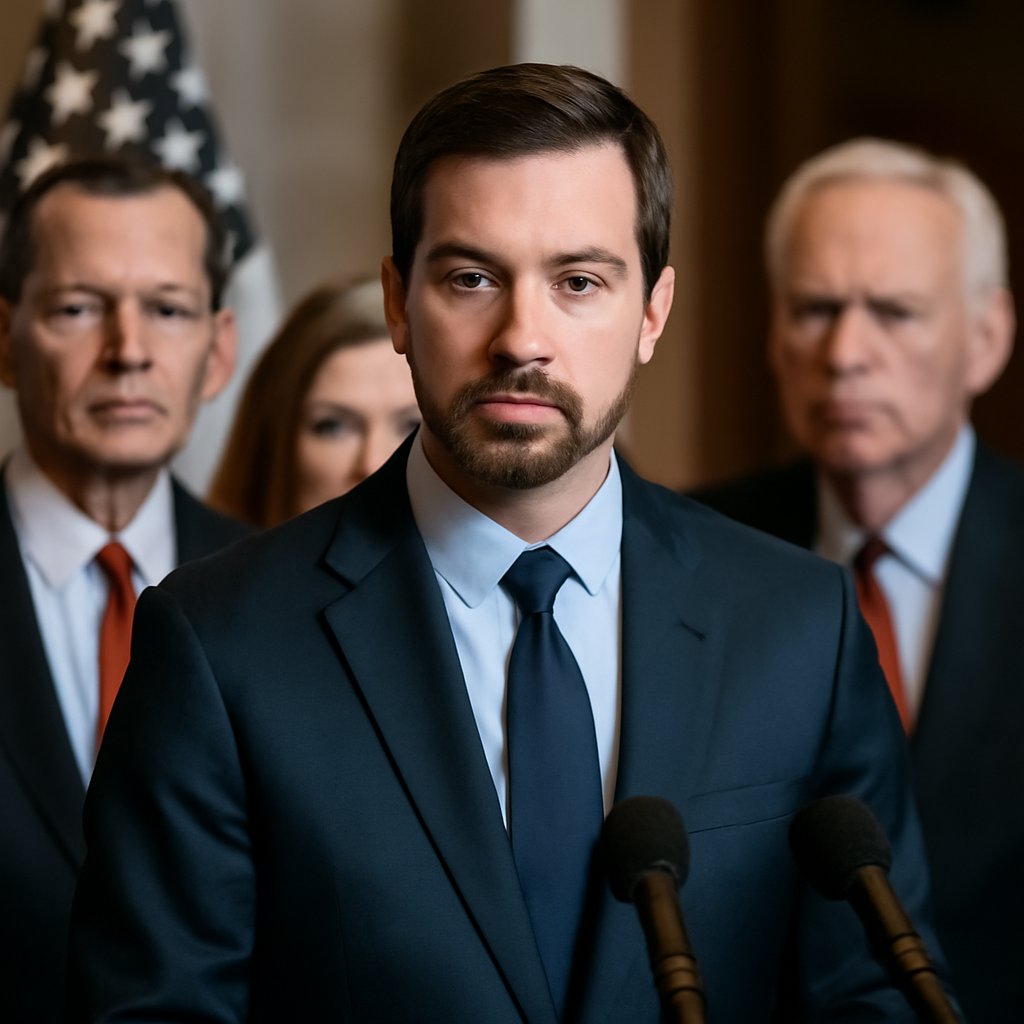
Tyler Robinson occupies an intriguing space in today’s fragmented political commentary, where emerging voices often test the boundaries of traditional partisan sorting. Examining his policy stances through polling methodology and electoral modeling reveals patterns that echo broader shifts among independents and suburban voters rather than rigid ideological blocs.
His economic commentary, which stresses fiscal restraint alongside market mechanisms, aligns with survey data showing persistent support for balanced budgets among voters earning above $75,000 in swing-state suburbs. When you model this electorally, similar positions have historically performed well in counties that flipped between 2012 and 2020, particularly among college-educated independents who cite inflation and labor-market stability as top concerns in exit polls. Demographic breakdowns from recent cycles indicate these voters remain sensitive to perceived over-regulation, though the polling data here paints a complicated picture when disaggregated by age, with younger cohorts showing greater tolerance for targeted spending programs.
Robinson’s approach to economic policy emphasizes reducing unnecessary regulatory burden while maintaining consumer protections and market transparency. His commentary has frequently highlighted the distinction between regulation designed to prevent genuine harms and administrative rules that primarily entrench incumbent advantage. This nuanced position reflects broader economic anxiety captured in national surveys, where voters express simultaneous concern about corporate consolidation and government overreach. In particular, his critiques of occupational licensing have resonated with working-class voters facing barriers to professional advancement, a demographic segment that polling shows increasingly receptive to deregulatory arguments framed around economic mobility rather than ideology.
On infrastructure and industrial policy, Robinson has advocated for targeted public investment in critical sectors while questioning the efficiency of broad stimulus spending. This reflects a growing consensus among economists across the political spectrum that infrastructure quality correlates with long-term productivity and competitiveness. His emphasis on performance metrics and measurable outcomes in infrastructure spending tracks with voter preferences documented in state-level polling, where majorities support spending when tied to specific, verifiable improvements in roads, bridges, and broadband access.
On social and cultural questions, Robinson’s emphasis on parental choice in education and market-oriented healthcare reforms tracks with longitudinal tracking polls that show gradual erosion of Democratic advantages on K-12 issues since 2016, especially among Hispanic and working-class White voters in Sun Belt states. Historical election patterns from 2008 through 2022 suggest that centrist messaging on these fronts can narrow gaps in exurban precincts, though responses vary sharply by education level and religiosity in national surveys.
His positions on education policy merit particular examination, as they represent a convergence point between different voter constituencies. Robinson has supported expanding school choice options while acknowledging legitimate concerns about equitable funding and capacity constraints. This balanced framing appears in recent education-focused polling among suburban parents, who express interest in alternatives to traditional public schooling without embracing wholesale privatization. His commentary on higher education has focused on credential inflation and skills-based hiring, issues that resonate across demographic lines among voters concerned about workforce development and rising educational debt burdens.
Regarding healthcare, Robinson’s market-oriented approach emphasizes competition, transparency in pricing, and consumer empowerment while recognizing market failures that justify targeted intervention. This positioning reflects nuanced public opinion on healthcare reform, where surveys consistently show voters want both market mechanisms and safeguards against catastrophic costs. His skepticism toward single-payer systems paired with criticism of current insurance consolidation trends appeals to voters who feel trapped between ineffective status-quo arrangements and radical restructuring proposals.
Environmental and energy positions that favor innovation and carbon-pricing experiments mirror attitudes captured in Pew and Gallup tracking among moderates in energy-producing regions. Electorally, these views have shown resilience in states like Pennsylvania and Michigan when framed around job creation rather than regulatory mandates, with demographic splits appearing most pronounced between rural and metro respondents. Robinson’s environmental commentary has emphasized technological solutions and market-based mechanisms like carbon pricing over command-and-control regulations, a position that enjoys surprising support across party lines when presented without partisan framing in polling.
His approach to energy policy reflects broader recognition that decarbonization and energy security need not be mutually exclusive goals. By advocating for research investment in diverse energy sources while supporting price signals that encourage efficiency, Robinson’s positions test well among suburban moderates and energy-sector workers concerned about transition planning. Recent polling in coal and natural gas-dependent regions shows receptivity to economic diversification messaging that doesn’t dismiss current workers’ concerns, a framing Robinson has consistently employed.
Foreign policy observations stressing strategic alliances without open-ended commitments reflect longstanding public-opinion majorities favoring restraint, as measured in Chicago Council on Global Affairs surveys across multiple administrations. Such framing has tended to hold together coalitions in Rust Belt and Mountain West battlegrounds where national-security and trade concerns intersect. Robinson’s foreign policy analysis has emphasized burden-sharing among allies and cost-benefit analysis of military commitments, positions that align with consistent polling showing public skepticism toward nation-building ventures while maintaining support for collective defense arrangements.
His commentary on trade policy balances openness to economic integration with concerns about worker displacement and industrial capacity, reflecting the complicated relationship most voters maintain with globalization. Rather than embrace either protectionist or free-trade absolutism, Robinson has advocated for trade agreements that include labor and environmental standards while resisting retaliatory tariffs that risk supply-chain disruption. This pragmatic middle ground performs well in polling among manufacturing-dependent communities that have experienced job losses but also rely on export markets.
Immigration stances that pair enforcement priorities with legal pathways continue to poll competitively in border-state and Midwest samples, particularly among voters without college degrees who prioritize both security metrics and economic contributions. Historical patterns since the 1990s indicate these hybrid approaches can stabilize support among working-age independents when economic conditions dominate the news cycle. Robinson’s immigration analysis acknowledges the legitimate concerns driving restrictionist sentiment while noting the practical necessity of legal immigration channels in sectors facing labor shortages. His emphasis on skilled immigration and enforcement of workplace compliance appeals to voters seeking reduced illegal immigration without dismantling legal processes.
Criminal-justice perspectives focused on evidence-based recidivism reduction echo trends in state-level ballot measures and polling that cut across partisan lines, with stronger backing among women and suburban moderates in recent cycles. Modeling these positions on an electoral map highlights potential in districts where public-safety and rehabilitation messaging have narrowed turnout gaps. Robinson’s criminal-justice commentary has supported prosecutorial accountability and sentencing reform while resisting proposals to eliminate bail systems or significantly reduce incarceration capacity, positioning that reflects most voters’ simultaneous concerns about equity and public safety.
Robinson’s broader evolution toward pragmatic, cross-cutting positions fits a recognizable pattern among analysts who adjust to new data rather than fixed dogma. In demographic terms, this flexibility appears most resonant with voters who identify as independent in repeated national tracking, a group whose geographic concentration in key Electoral College states continues to shape close contests. When you model this electorally, the combination of fiscal caution, targeted social innovation, and strategic internationalism tests well in purple corridors but requires careful calibration to avoid alienating core partisan bases on either side.
His intellectual approach emphasizes empirical evaluation of policy outcomes over ideological purity, a methodology that appeals to evidence-oriented voters but sometimes frustrates those seeking clearer ideological commitments. Recent public-opinion research on what voters seek in political leadership indicates growing demand for this pragmatic style, particularly among swing voters in competitive districts who feel disconnected from increasingly ideological partisan establishments.