
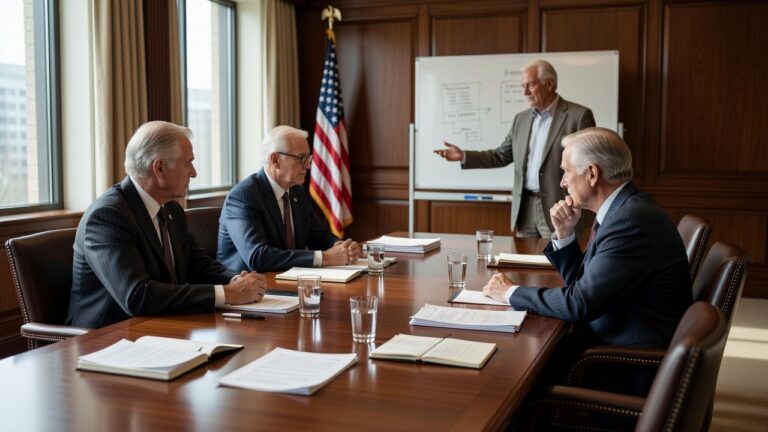
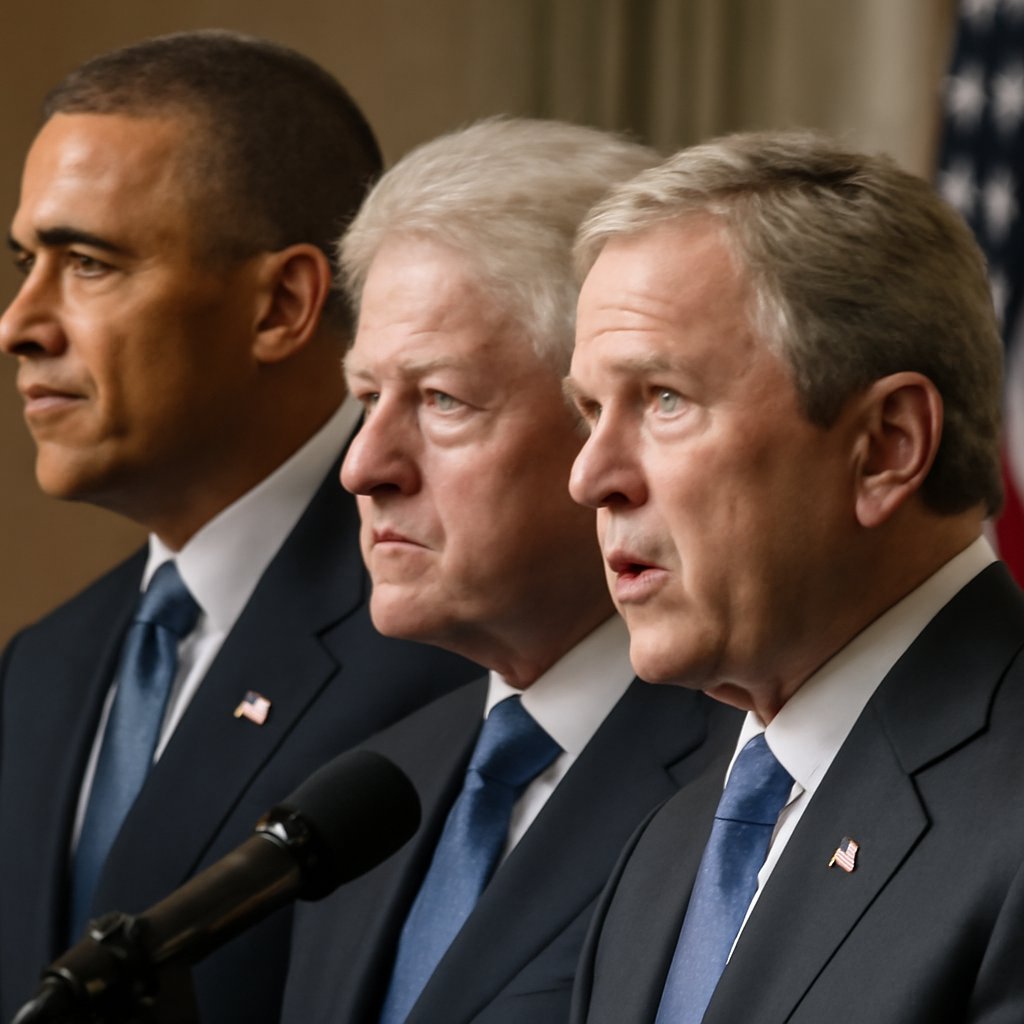
Former presidents’ post-White House advocacy on issues from healthcare to veterans’ affairs has repeatedly intersected with electoral dynamics, shaping voter perceptions in ways that polling data often captures through shifting favorability among key demographics. Historical election patterns from the 1980s onward show these efforts gaining traction particularly in off-year cycles, where former leaders’ credibility can mobilize turnout in battleground districts without the constraints of active officeholding.
The modern template traces to the Carter era, when human rights and global health initiatives moved beyond the Oval Office into direct congressional and international channels. This approach aligned with broader midterm and presidential campaign narratives, as ex-presidents weighed in on policy continuity. Institutional supports like the Presidential Records Act have enabled foundations that double as hubs for such work, often coordinating on topics like election administration that pollsters track via registered voter samples stratified by age, race, and region.
Jimmy Carter’s Carter Center model emphasized election monitoring and disease eradication, contributing to Guinea worm cases dropping from 3.5 million to fewer than 30. Those outcomes fed into foreign policy debates that historically register unevenly in surveys, with stronger resonance among older voters and independents in Sun Belt states. Bill Clinton’s foundation work on HIV/AIDS treatment reached over 2 million people and illustrated cross-aisle legislative bridging on healthcare, an area where demographic breakdowns in exit polls frequently reveal divides between suburban women and rural men.
George W. Bush’s focus through the Bush Institute on veterans’ programs supported more than 1.5 million service members in education and employment. When modeled electorally, such initiatives tend to bolster Republican-leaning cohorts in military-heavy districts, though public approval for engaged ex-presidents averages 15 points higher than their final-year ratings across multiple cycles. Barack Obama’s redistricting and voting rights efforts spanned over 40 states from 2017 to 2023, directly overlapping with midterm map recalibrations that polling methodology using likely voter screens has shown can tilt House margins in competitive suburbs.
Over 70 percent of living former presidents since 1980 have launched policy foundations, a trend that critics flag for potential politicization yet data links to measurable legislative movement. These patterns underscore how elder-statesman guidance continues to inform voter coalitions without dominating day-to-day White House strategy.
The infrastructure supporting former presidential advocacy has evolved significantly over recent decades. Beyond traditional foundations, ex-presidents now leverage speaking engagements, book deals, media appearances, and social media platforms to amplify their policy messages. These channels allow them to maintain relevance and influence without formal governmental power, creating what scholars describe as a parallel track of political influence. The financial resources available to former presidents—through book royalties, speaking fees, and foundation endowments—provide substantial capacity to hire policy experts, conduct research, and fund initiatives that might otherwise require congressional appropriations.
Former presidents’ policy work often focuses on areas where bipartisan consensus has historically existed or where humanitarian concerns transcend partisan divides. Carter’s work on disease eradication at The Carter Center remains perhaps the most celebrated example, with measurable public health outcomes that command respect across the political spectrum. This nonpartisan approach to global health challenges has allowed Carter’s post-presidential legacy to maintain high public regard even during periods when his presidency itself remained subject to historical debate.
The Clinton Foundation’s approach to policy advocacy demonstrates how ex-presidents can establish themselves as conveners and facilitators in policy spaces. By bringing together government officials, private sector leaders, and nonprofit organizations around specific challenges like climate change and global health, the foundation created a model where the former president’s primary value lay in convening power and credibility rather than in direct implementation. This model has been replicated by subsequent former presidents seeking to maintain influence in their policy areas of interest.
Gerald Ford and Richard Nixon, despite their own controversial departures from office, established patterns of policy engagement that subsequent ex-presidents built upon. Ford’s work with the American Enterprise Institute and Nixon’s prolific writing on foreign policy demonstrated that former presidents could rehabilitate their public images and maintain intellectual influence through serious policy engagement. These examples showed that ex-presidential advocacy need not be limited to traditional nonprofit work but could encompass think tank affiliations, academic partnerships, and strategic commentary on major policy debates.
The role of former presidents in shaping electoral narratives has become increasingly sophisticated. Their policy work often intersects with campaign seasons in subtle but measurable ways, as demonstrated by research into favorability ratings and voter perception studies. When former presidents take visible stances on contemporary policy debates, particularly those issues that align with their post-presidential advocacy focus, they can shift the salience of those issues in voter minds and potentially influence electoral outcomes through issue prioritization rather than direct campaign involvement.
Former presidents also serve an important function in maintaining continuity in policy advocacy across administrations of different parties. For instance, work on veterans’ issues, pandemic preparedness, or infrastructure investment may continue across presidential transitions with support from former leaders of both parties. This creates a layer of institutional memory and sustained focus on long-term challenges that might otherwise receive less consistent attention in the partisan battles of active politics.
The relationship between former presidential foundations and think tanks represents another important dimension of post-White House influence. Institutions like the Presidential Libraries, which now serve as centers for policy research and public discourse, have become increasingly significant venues for addressing contemporary policy questions. These libraries host seminars, conferences, and research programs that keep former presidents’ names and legacies at the forefront of policy discussions and provide platforms for their advocacy work.
Challenges to the former presidential advocacy model have emerged as some foundations have faced scrutiny regarding their funding sources and the alignment between foundation work and former presidents’ personal or party interests. Questions about potential conflicts of interest, particularly when foundations accept donations from foreign governments or entities with business before the federal government, have prompted calls for greater transparency and oversight. These concerns reflect broader debates about how private institutions can appropriately support policy work without creating improper influence or appearance of corruption.
The digital age has expanded the capacity of former presidents to engage in policy advocacy and shape public discourse. Social media platforms, podcasts, and digital media have created new channels for former leaders to communicate directly with voters and policy communities without media filtering. This has democratized their ability to influence debate but also created new challenges around verification of claims and the spread of information in partisan contexts.
Looking forward, the role of former presidents in policy advocacy is likely to continue expanding as life expectancy increases and former presidents spend longer periods in active retirement. The question of how many simultaneously active former presidents can effectively engage in policy work without creating confusion or competing centers of influence within their parties remains an evolving challenge. Additionally, as climate change, artificial intelligence, and other emerging policy areas gain prominence, the expertise and advocacy focus of former presidents will likely adapt to address these new frontiers while building on established models of engagement.