
“`html
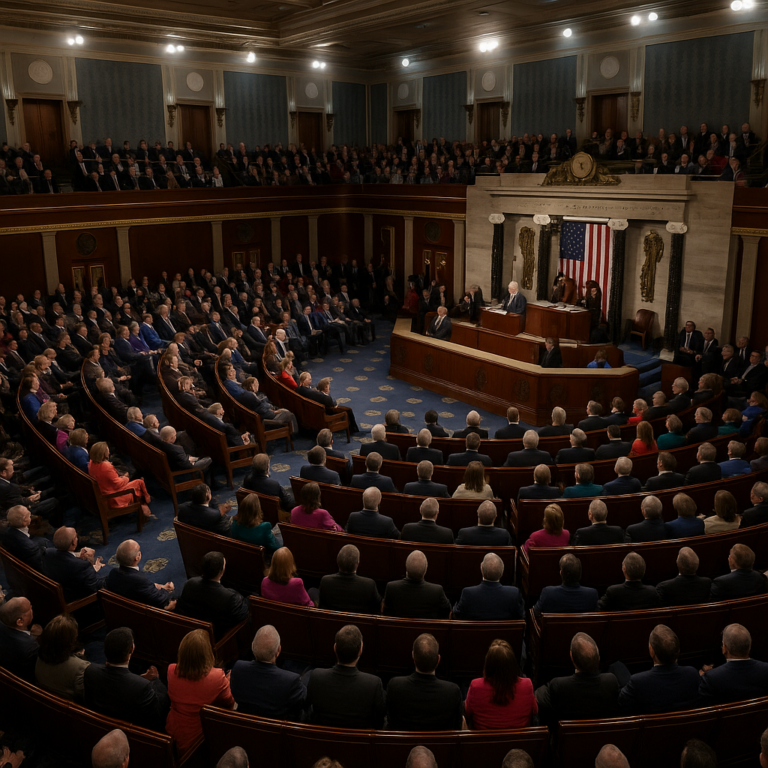
The annual ritual of the State of the Union has always been more than ceremonial rhetoric; it is a calculated platform where presidential priorities collide with congressional power and the steady flow of campaign cash that follows every major policy signal. From George Washington’s 1790 and 1791 in-person deliveries—where he pressed for a national bank and foreign policy backing—to the prime-time productions of recent decades, these addresses have shaped legislative agendas that lobbyists immediately descend upon, their disclosures revealing the real money trails behind the applause lines.
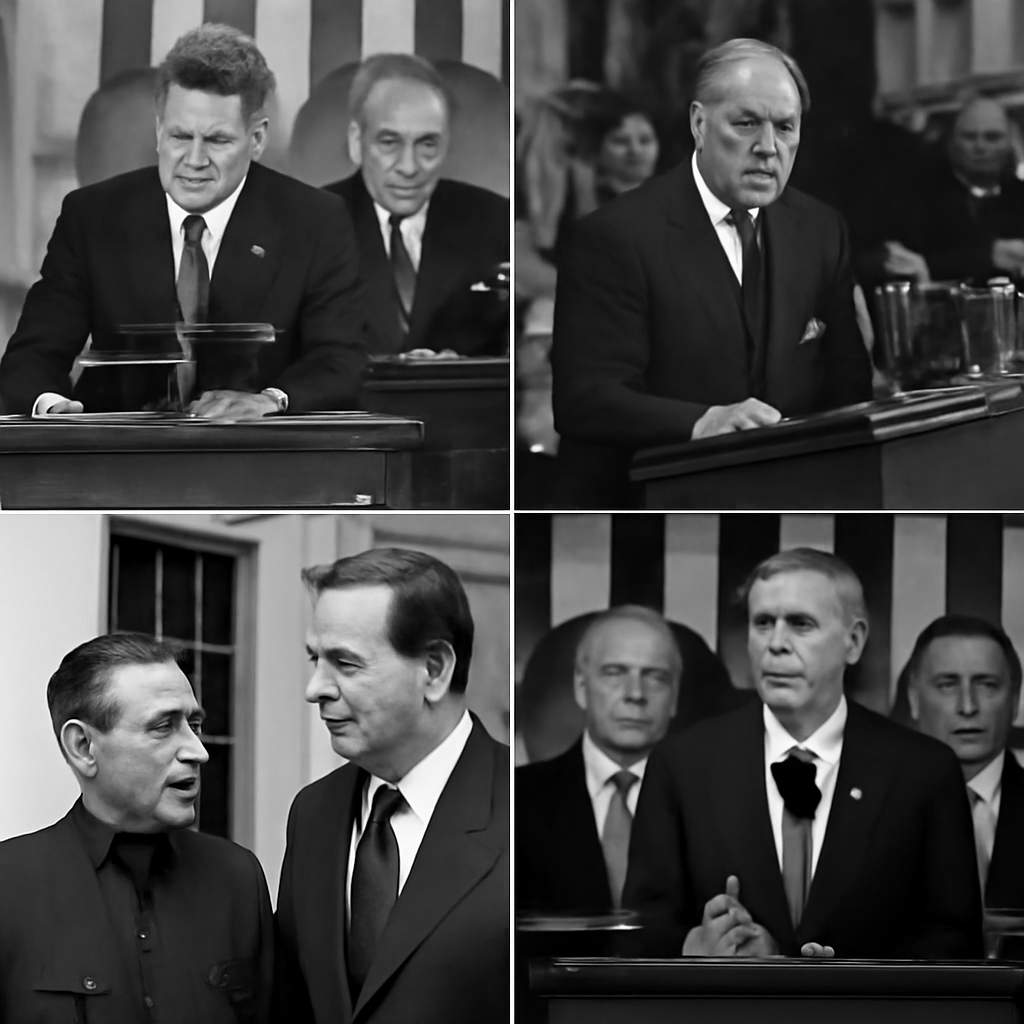
Washington’s emphasis on a strong central government and frontier security set the template for executive agenda-setting that persists today. Thomas Jefferson shifted to written messages, a custom that held until Woodrow Wilson resumed live delivery in 1913 to tighten direct accountability with Congress. These early fiscal and defense-focused speeches foreshadowed the modern reality where policy announcements trigger immediate lobbying surges, as campaign finance records routinely show increased contributions from affected industries in the quarters following such addresses.
The evolution of the State of the Union reflects broader shifts in how presidents communicate with both Congress and the American public. In the 19th century, the speech functioned primarily as a formal accounting of executive actions and legislative recommendations. By the 20th century, technological advances—particularly radio and television—transformed it into a mass media event designed to reach voters directly. Franklin D. Roosevelt leveraged radio to speak intimately to citizens during economic crisis, establishing a precedent that modern presidents have refined into carefully choreographed television spectacles complete with advance publicity, invited guests, and coordinated social media campaigns.
Franklin D. Roosevelt’s 1941 Four Freedoms speech reframed the address as a global call, paving the way for the Atlantic Charter and later international commitments that drew heavy defense-sector spending. Lyndon Johnson’s 1964 “War on Poverty” declaration launched the Great Society, programs whose implementation generated decades of lobbying activity around federal funding streams. As a Latina journalist covering Washington accountability, I’ve seen how these rhetorical launches rarely come without attached donor interests—financial disclosures tell a story the press releases omit.
The mechanics of how State of the Union addresses shape policy deserve closer examination. When a president announces a new initiative during the speech, multiple stakeholder groups immediately mobilize. Congressional committees begin drafting legislation, federal agencies prepare implementation frameworks, and interest groups on both sides of the issue organize their advocacy efforts. This predictable pattern has made the State of the Union an invaluable tool for political forecasting. Legislative analysts track which policy areas receive emphasis—measured by speaking time, rhetorical weight, and the selection of gallery guests—to predict which bills will move through Congress and which budget allocations will shift. Industry groups conduct advance polling and research to understand how announced policies might affect their sectors, positioning themselves to either support or oppose proposed legislation.
The gallery guest strategy deserves particular attention in understanding modern State of the Union dynamics. Reagan’s 1982 introduction of gallery heroes transformed the speech’s emotional register. Rather than abstract policy debates, presidents could now point to specific individuals whose stories embodied their policy proposals. A teacher invited to represent education reform, a small business owner to illustrate economic recovery, a military service member to validate defense spending—these human props make policy tangible and emotionally compelling. Yet this practice also raises questions about whose stories get told and whose remain invisible. Selection of gallery guests is never accidental; it reflects careful political calculation about which constituencies the White House wishes to highlight and court.
Ronald Reagan’s 1982 address introduced the now-routine gallery-hero recognition, humanizing budget fights while the underlying tax and spending priorities attracted fresh waves of corporate and industry contributions. Bill Clinton’s 1998 declaration that “the state of our union is strong,” delivered amid scandal, underscored the speech’s dual role as both policy vehicle and political survival tool. George W. Bush’s 2002 “Axis of Evil” line redirected post-9/11 resources toward Iraq debates that dominated subsequent campaign cycles and contractor lobbying. Barack Obama repeatedly used the platform for Affordable Care Act and criminal justice priorities, each mention correlating with measurable spikes in health and justice-related political spending tracked through disclosure filings.
The theatrical elements of modern State of the Union addresses merit consideration as well. The arrival procession, the scripted reactions of opposition members, the camera work designed to capture bipartisan moments—all contribute to an elaborate performance that frames political disagreement within acceptable bounds. Members wear symbolic colors to signal party unity on certain issues. The standing ovations, once spontaneous expressions, have become choreographed political statements. When certain policy areas generate applause from one side only while the other remains seated, television captures and amplifies the partisan divide. This visual language often communicates more powerfully than the actual words spoken.
Donald Trump’s 2019 exchanges on border funding and Joe Biden’s 2022–2023 emphasis on infrastructure and democratic resilience followed the same pattern: policy signals that immediately shaped midterm messaging and donor strategies. Interruptions, ovations, and pointed glances across the aisle may dominate cable coverage, yet they often mask the deeper partisan incentives tied to reelection fundraising.
The practical impact on legislative outcomes cannot be understated. Congressional Research Service studies have documented that bills specifically mentioned in State of the Union addresses receive more committee attention, attract more co-sponsors, and have higher passage rates than comparable legislation that receives no presidential mention. This agenda-setting power explains why organizations lobby intensely for presidential attention to their preferred policies. A single sentence in the State of the Union can determine whether legislation advances or stalls in committee. It can signal to skeptical party members that the president considers an issue critical to his political standing, making opposition riskier. This invisible influence—the power to make certain issues prominent and others invisible—may ultimately matter more than any single applause line.
Data from these addresses bears out their enduring influence. The average modern speech runs about 60 minutes against Washington’s roughly 10-minute deliveries. Only William Henry Harrison and James Garfield never delivered one due to their brief tenures. Viewership crested at 66 million for Reagan’s 1982 address and now typically lands between 30 and 40 million. Since 1965 the opposition has issued 58 formal responses, many calibrated to influence the next election’s narrative and donor base. Presidents have cited specific legislation in 87 percent of addresses since 1900, directly feeding the congressional agenda that lobbyists monitor. Gallery guests have appeared in 34 consecutive speeches since Reagan, converting personal stories into symbols that also serve to soften public perception of complex spending packages backed by organized interests.
Understanding the State of the Union requires looking beyond the headline announcements to the underlying structural forces that drive its content and consequences. The speech functions simultaneously as constitutional requirement, political theater, policy agenda, and campaign tool. Its influence flows through multiple channels—direct legislative impact, media narrative framing, donor strategy alignment, and symbolic representation of national priorities. These moments remain benchmarks for how rhetoric and timing steer both governance and the money that sustains political power.
Sources
- Reuters Politics – Breaking news and analysis on US politics and elections
- AP News US Politics – Associated Press coverage of American political events
- NPR Politics – National Public Radio’s political news and reporting
- Politico White House – Coverage of White House news and presidential administration
“`