
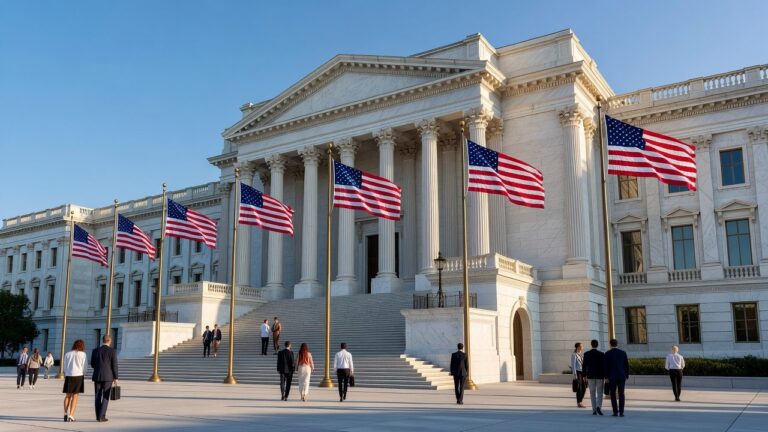

Federal regulatory agencies sit at the intersection of executive authority and voter priorities, with their rulemaking and enforcement decisions frequently surfacing in national polling as flashpoints that split along demographic and regional lines. Historical patterns show these bodies gaining prominence during periods of economic expansion, from the Interstate Commerce Commission in 1887 onward, as Congress delegated interpretive power through enabling statutes later formalized by the 1946 Administrative Procedure Act. That framework still shapes how agencies balance judicial oversight with White House appointments, a dynamic that resurfaces in every election cycle when candidates position regulatory reform as a differentiator for swing-state independents and suburban moderates.
When you model this electorally, the operational side of rulemaking—public comment periods, economic analyses, and Federal Register publications—often correlates with shifts in voter sentiment tracked by outlets like Pew and Gallup. Enforcement actions, including inspections and fines, draw congressional scrutiny that can elevate agency performance into campaign talking points, particularly in districts where small-business owners form a key demographic bloc. The polling data here paints a complicated picture: support for streamlined rules tends to run higher among working-age men in energy-producing states, while stricter environmental and health standards poll stronger among college-educated women in coastal metros.
To understand how federal regulatory agencies actually function, it’s essential to grasp the basic structure that governs them. Most agencies operate under specific congressional mandates outlined in enabling legislation, which grants them authority to create rules within defined parameters. The Administrative Procedure Act established baseline requirements for how agencies must operate: they must publish proposed rules in the Federal Register, allow public comment periods (typically 30 to 60 days), respond to significant comments, and justify their final decisions. This transparency requirement, while sometimes criticized as bureaucratic, creates a documented record that courts can review and that the public can access.
The relationship between agencies and the courts represents another critical dimension often overlooked in casual analysis. Courts don’t simply rubber-stamp agency decisions; they apply what’s known as the Chevron standard (or standards developed post-2024 judicial precedent) to determine whether agencies acted within their statutory authority and whether their interpretations are reasonable. This means that major regulatory battles often end up in federal appellate courts, particularly the D.C. Circuit Court of Appeals, which handles a disproportionate share of administrative law cases. These judicial decisions can invalidate years of work or require agencies to reconsider their approaches entirely.
Major agencies illustrate these divides clearly. The EPA’s emissions and water-quality mandates directly affect energy-producing regions, where exit polls from recent cycles reveal rural and manufacturing voters weighing regulatory costs against growth concerns. The FDA’s oversight of pharmaceuticals and devices registers in healthcare-cost surveys, often breaking along income and age lines, with older voters in Sun Belt states showing more sensitivity to approval timelines. OSHA workplace standards feed into labor-policy attitudes that historical data link to union households in Midwest battlegrounds. Parallel financial and market regulators—the SEC, FTC, and FCC—surface in consumer-protection polling, with net-neutrality and antitrust questions splitting along partisan and urban-rural axes that have proven durable since the 1990s.
Beyond these flagship agencies, the regulatory landscape includes specialized bodies whose influence often goes underappreciated outside their sectors. The Financial Crimes Enforcement Network (FinCEN) shapes anti-money-laundering compliance across banking and cryptocurrency sectors. The Nuclear Regulatory Commission manages licensing and safety oversight for nuclear power plants—an issue that has resurged in conversations about clean-energy infrastructure. The Federal Communications Commission handles spectrum allocation and broadband deployment, decisions with enormous implications for rural broadband access, a priority that now features prominently in infrastructure and election discourse. The Transportation Security Administration and Federal Motor Carrier Safety Administration operate in less visible but heavily consequential domains affecting logistics costs and supply-chain resilience.
The rulemaking process itself warrants closer examination, particularly the distinction between major and routine rules. Agencies must perform cost-benefit analyses for economically significant rules, a requirement that creates opportunities for legal challenge but also forces systematic consideration of impacts. OMB’s Office of Management and Budget reviews major rules before finalization, adding another layer of White House influence. Agencies can also issue guidance documents, interpretive rules, and policy statements that carry less legal weight than formal regulations but still shape behavior across industries. The distinction between these different rule types generates substantial litigation and congressional complaints about “regulatory overreach” through the back door.
White House leadership changes allow appointments to redirect priorities, a pattern that tracks with measurable drops or spikes in enforcement activity documented across administrations. Congressional oversight hearings, averaging more than 100 per session, amplify these shifts, feeding into voter accountability narratives that analysts track through approval ratings for specific agencies. Stakeholder comments on proposed rules, sometimes numbering in the tens of thousands, mirror advocacy-group mobilization that can move independent and suburban turnout in key Electoral College states.
The relationship between regulatory agencies and Congress deserves emphasis because it extends beyond oversight hearings. Congress controls agency budgets, and appropriations riders occasionally block specific rules or enforcement activities—a tactic that both parties have employed strategically. Congressional Review Act authority, created in 1996, allows Congress to overturn agency rules with a simple majority vote if done within 60 legislative days, though this power has been invoked only rarely. More commonly, Congress uses its appropriations power as leverage to slow agency action or demand specific statutory modifications. The tension between agency expertise and democratic accountability—between government officials making complex technical decisions and elected representatives answering to voters—remains unresolved and becomes particularly charged during election years.
Roughly 15 major independent agencies plus numerous departmental offices issue thousands of rules yearly, producing a Code of Federal Regulations that exceeds 180,000 pages. Combined budgets run into the billions, with the EPA alone managing over $9 billion in recent fiscal years. The sheer volume of regulatory activity creates a challenge for citizens trying to stay informed: most rules affecting daily life attract minimal media coverage, yet their cumulative impact on everything from workplace safety to product standards to environmental quality is profound. Election-year platforms have historically featured regulatory-reform planks, and enforcement data show consistent realignment after administration transitions.
Engaging with the regulatory process at the public level remains possible but requires initiative. Citizens and organizations can submit comments during public comment periods, attend agency advisory committee meetings (many are open to the public), and request documents under the Freedom of Information Act. Business groups, environmental organizations, labor unions, and public-interest advocates all maintain specialized staff who monitor Federal Register announcements and participate in rulemaking. The data suggests that comments from organized stakeholders carry more weight than random individual submissions, yet individual voices in the administrative record do create a foundation for subsequent legal challenges and public pressure.
Emerging questions around artificial-intelligence oversight will likely test the same demographic fault lines already visible in current surveys of government reach versus innovation. The nascent regulatory approach to AI—split across multiple agencies including the FTC, NIST, and sector-specific regulators—will reveal whether the post-World War II regulatory architecture can adapt to technologies that move faster than traditional rulemaking cycles. Similarly, climate-related regulations, cybersecurity mandates, and pandemic-response authorities continue to reshape voter expectations about what agencies should do and how they should operate.