
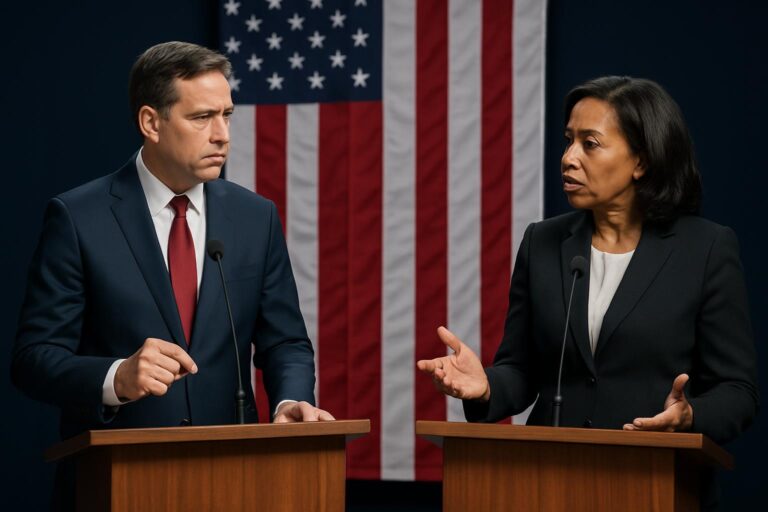
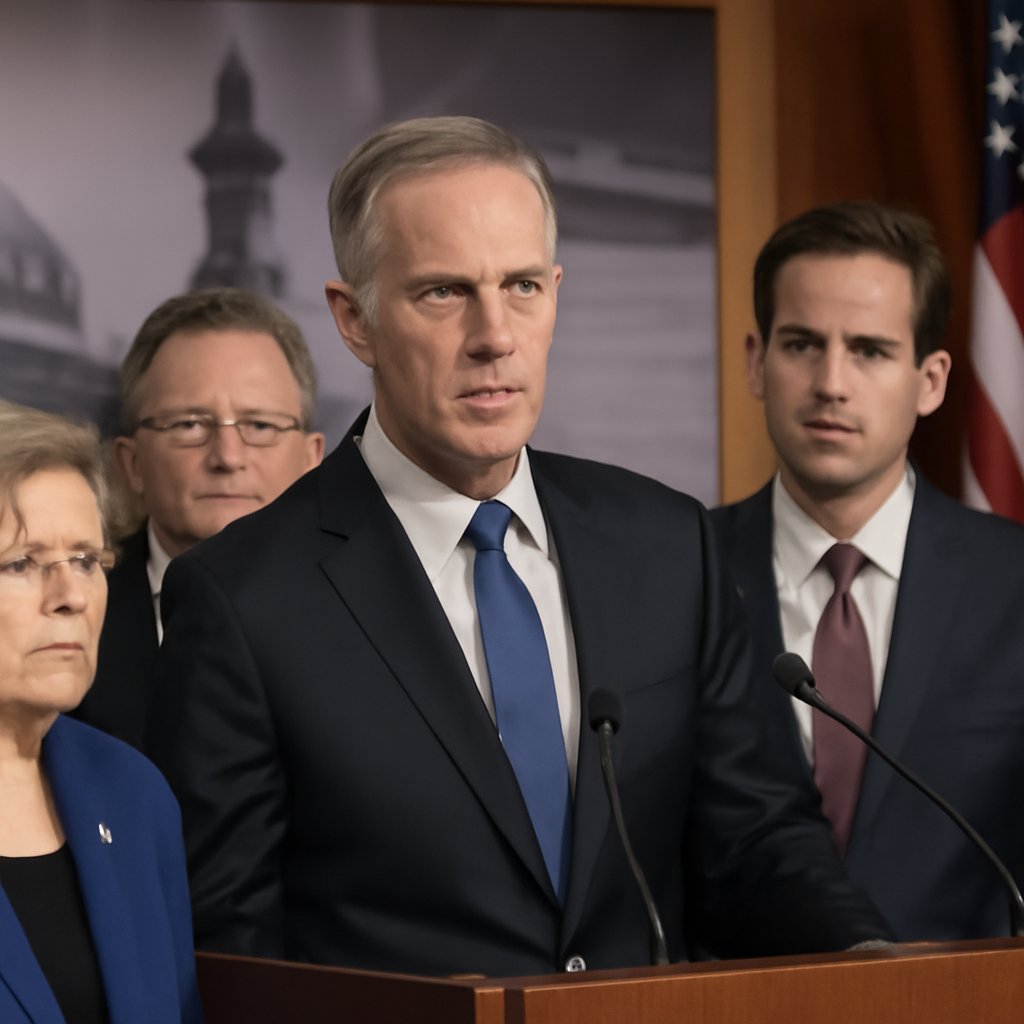
Looking ahead to the 2026 midterms, the Senate map reveals a structural tilt that favors Republicans from the outset. With Democrats defending 24 of the 34 Class 3 seats up for grabs and Republicans holding just 10, the baseline math already shapes expectations before any candidate files. When you model this electorally, that imbalance means even modest national headwinds could amplify GOP opportunities in states where the fundamentals already lean their way.
The Cook Political Report ratings, which draw on district-level voting history, candidate positioning, and early polling samples with margins of error typically around 3-4 points, classify Arizona as the lone toss-up. That open seat, following Kyrsten Sinema’s independent status and likely exit, sits at the center of any serious projection. The polling data here paints a complicated picture because Arizona’s suburban shifts and Hispanic population growth—now approaching 30 percent in key metro areas—have produced volatile results in recent cycles, much like the 2018 and 2022 patterns where turnout differentials decided narrow outcomes.
Further down the map, Nevada, Michigan, Pennsylvania, and Wisconsin all carry Lean Democratic ratings. Each features Democratic incumbents or open seats in states that have shown modest Democratic movement in presidential voting since 2016, yet remain sensitive to economic messaging and union strength. Ohio and Montana, by contrast, sit in the Lean Republican column for Sherrod Brown and Jon Tester. Both three-term Democrats have historically outperformed their party’s baseline through personal appeal and constituent service, but repeated rightward drifts in those states’ non-college-educated voter blocs test whether that advantage can hold again.
The 2026 Senate landscape also reflects broader patterns in how midterm electorates behave differently than presidential cycles. Midterm voters typically skew older, whiter, and more Republican-leaning than their presidential counterparts, a structural advantage that has historically benefited the party not holding the White House. This turnout dynamic becomes especially relevant when examining states like Wisconsin and Pennsylvania, where Democratic margins in 2020 presidential contests masked narrower performance in 2022 midterm elections. Understanding these cyclical patterns helps explain why seats that appear safely Democratic in a presidential context can shift into competitive territory when the electorate narrows in off-years.
Texas and Florida register as Likely Republican, reflecting the same methodological reliance on long-term partisan voting indices that Cook applies across the board. The historical midterm table underscores the broader context: the president’s party has lost Senate seats in seven of the last eight midterms, with the size of those losses tracking approval ratings in the low-to-mid 40s. 2022’s modest single-seat dip under Biden at 43 percent approval stands as the recent outlier, driven in part by unusually high opposition enthusiasm that could recur or fade depending on 2025-2026 conditions.
When examining the 2026 cycle through the lens of historical precedent, the dynamics of economic conditions deserve particular attention. Inflation pressures, interest rates, and wage growth will likely dominate voter messaging across competitive races. Incumbent Democratic senators have already begun laying groundwork around job creation narratives and infrastructure achievements, recognizing that voters in economically sensitive regions like the Rust Belt will weigh their electoral choices heavily on pocketbook issues. Meanwhile, Republican candidates across the map are preparing messaging around cost-of-living concerns and regulatory rollback, themes that consistently resonate in midterm environments.
Fundraising disclosures through late 2024 already show Democratic incumbents like Brown ($8.2 million raised) and Jacky Rosen ($7.5 million) outpacing most challengers, consistent with the early-cycle pattern where sitting senators leverage institutional networks. However, this fundraising advantage, while significant, has not always proven determinative in Senate races. The 2022 cycle demonstrated that quality candidates with strong messaging can compete effectively even when facing cash disadvantages, particularly in states where media markets are less expensive and grassroots organizing can compensate for lower ad spending. The Republican Party’s superior small-dollar fundraising infrastructure and traditional Super PAC support suggest that funding gaps may narrow considerably as the cycle progresses.
Demographic breakdowns add another layer: Hispanic voter concentration in Arizona and Nevada, manufacturing and union density across the Midwest, and suburban education splits in Pennsylvania all appear in the underlying survey crosstabs that inform these ratings. The education divide, particularly pronounced among suburban women, has reshaped electoral mathematics in states like Pennsylvania and Michigan. College-educated voters, especially women, have shifted decisively Democratic since 2016, while non-college-educated voters have moved Republican. These cross-cutting demographic trends mean that Senate candidates in purple states must carefully calibrate messaging to appeal across educational lines without alienating their base.
Regionally, Southwest contests will hinge on immigration and water issues, while Midwest races continue to turn on trade and labor messaging. Immigration policy will almost certainly dominate Arizona and Nevada campaigns, where border proximity and Hispanic voter preferences create distinct political imperatives compared to other regions. Water rights and drought management represent underappreciated but deeply salient issues in western states, where climate patterns directly affect agricultural and urban constituencies. Democratic candidates in these regions will need to balance progressive environmental positions with pragmatic resource management messaging that resonates with rural voters who depend on agricultural water allocation.
The Midwest narrative centers on manufacturing resilience and union power. States like Pennsylvania, Michigan, and Wisconsin contain substantial union membership concentrated in automotive, steel, and healthcare sectors. Candidates across the political spectrum will compete for these voters’ support by offering contrasting visions of trade policy, labor protections, and industrial policy. The Trump administration’s tariff policies and their effects on manufacturing employment will likely feature prominently in these contests, with each side framing the economic consequences through competing narratives.
Third-party candidacy potential also warrants consideration in 2026, particularly in states with open seats or vulnerable incumbents where dissatisfied voters might seek alternatives. Arizona’s recent history of independent and minor-party success suggests that unconventional candidates could influence dynamics in that contest. Similarly, in purple Midwest states, independent candidacies could theoretically fragment voting coalitions in consequential ways.
The polling methodology across these states consistently samples registered-voter models weighted by past turnout, producing the current lean ratings that remain subject to revision once full candidate fields and national economic data solidify. Early polling in Senate races often understates eventual Republican performance in midterm years, a historical pattern that suggests current Democratic-leaning ratings could compress as the cycle progresses and the electorate firms up. Conversely, national political conditions could shift substantially between now and 2026, potentially altering the entire competitive landscape if economic conditions improve or deteriorate sharply, or if major foreign policy crises emerge.
Sources
- Reuters Politics – Comprehensive US political news and election coverage
- AP News Elections Hub – Associated Press election tracking and analysis
- NPR Politics – National Public Radio political reporting and analysis
- Politico 2024 Election – In-depth campaign coverage and race rankings
- Federal Election Commission – Official US election data and filings