

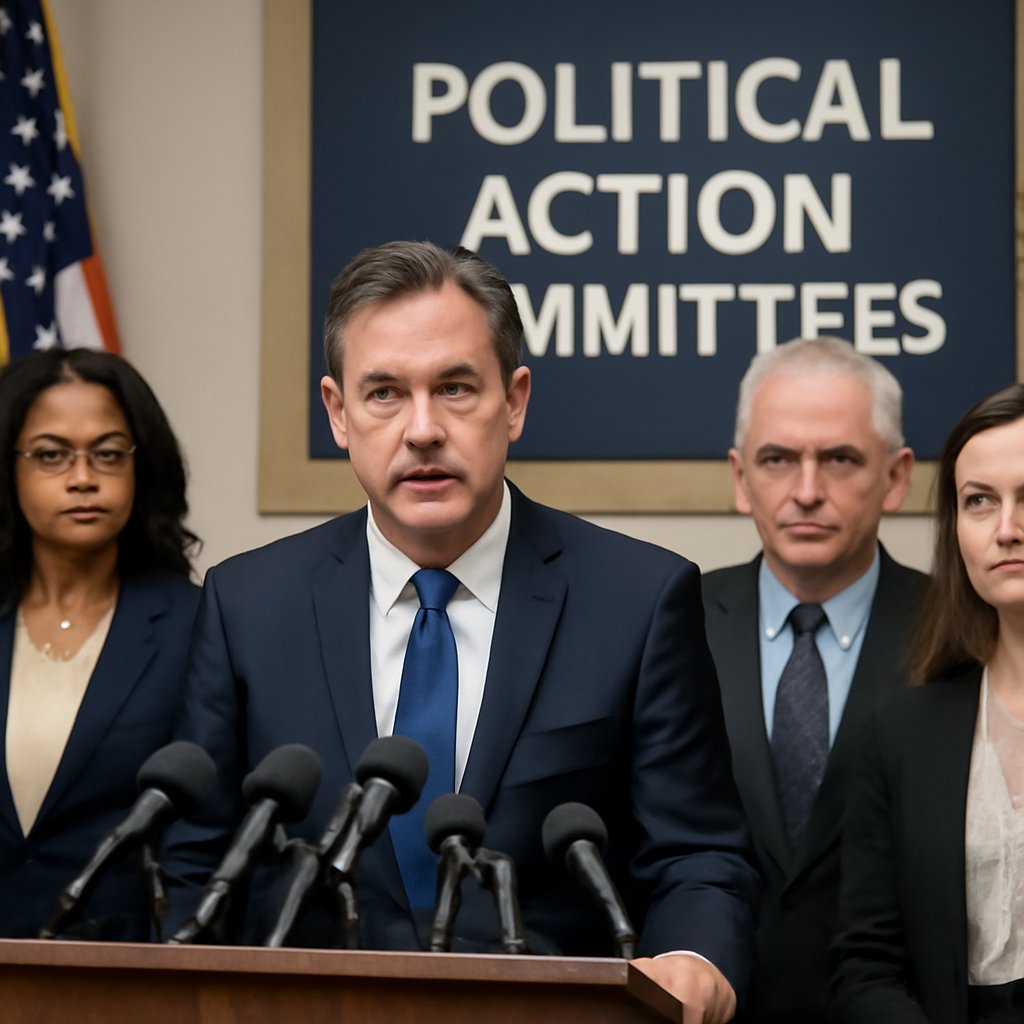
Political action committees remain a cornerstone of federal campaign finance, and when you model this electorally the distribution of their contributions maps onto familiar patterns from recent election cycles. Traditional PACs connected to corporations, unions, or trade associations register with the Federal Election Commission before raising or spending money, triggering regular disclosure filings that appear on the FEC site. Those filings let analysts track receipts and disbursements with the same granularity used in exit-poll methodology or demographic crosstabs.
Corporate PACs draw almost exclusively from executives and administrative employees through payroll deductions or personal checks, while union PACs rely on voluntary member contributions via dues check-off. Both approaches stay within legal bounds because they sidestep prohibited treasury funds. Leadership PACs tied to members of Congress operate under similar guardrails but can reach a wider donor universe, including other PACs, within the annual FEC caps. The polling data here paints a complicated picture: sectors that dominate traditional PAC giving, such as finance and real estate, tend to concentrate resources in districts where historical turnout models already favor one party over the other.
Super PACs, by contrast, accept unlimited sums from individuals, corporations, and unions precisely because they make only independent expenditures and avoid coordination. Hybrid structures that maintain both a limited traditional account and an unlimited super PAC account have grown more common, often supplemented by online platforms that capture small-dollar recurring gifts. In the 2022 cycle, traditional PACs directed more than $500 million to federal candidates while super PACs raised over $2.5 billion, underscoring the scale difference that shapes resource allocation on the electoral map. Corporate PACs accounted for roughly 40 percent of traditional contributions, with finance and real estate leading the totals.
FEC enforcement actions, including more than $1 million in fines for reporting violations in recent cycles, highlight the compliance risks that candidates and parties weigh when building their fundraising coalitions. More than 4,000 PACs were registered as of 2024. When these flows are overlaid on historical election patterns, the concentration of corporate and union money in competitive districts often tracks closely with polling margins that tighten or widen based on demographic shifts among suburban and working-class voters.
PACs that observe registration deadlines, contribution ceilings, and separate-account rules for hybrid entities continue to influence federal contests while remaining inside the regulatory perimeter. Ongoing public disclosure helps observers assess whether the resulting resource map tilts toward incumbents or challengers in any given cycle.
Understanding the specific contribution limits and regulations governing PACs is essential for anyone tracking campaign finance. Individual donors can contribute up to $5,000 per calendar year to a traditional PAC, while PACs themselves can give up to $5,000 to a candidate per election. However, these limits do not apply to super PACs, which can accept unlimited contributions from corporations, unions, and individuals. This fundamental distinction between traditional and super PAC structures explains much of the growth in super PAC spending over the past decade. The Citizens United v. FEC Supreme Court decision in 2010 essentially created the super PAC category by ruling that independent political spending is protected speech and cannot be capped by the government.
The mechanics of PAC fundraising involve careful compliance with FEC regulations at every step. When a corporation establishes a PAC, it must do so through a separate legal entity with its own bank account and financial records. The corporation cannot directly fund the PAC from its general treasury—instead, the PAC must solicit contributions from eligible individuals. For corporate PACs, this typically means soliciting from shareholders, executives, and administrative and professional employees. The corporation can pay the administrative costs of running the PAC, such as office space and staff salaries, but these operational costs cannot come from the PAC’s contribution accounts. Union PACs operate similarly, soliciting from union members rather than from union treasuries, though unions can pay certain administrative costs.
Leadership PACs present an interesting variation in the PAC landscape. Established by individual politicians, usually senior members of Congress, leadership PACs allow those politicians to raise funds beyond what they collect for their own campaigns and distribute those funds to other candidates they wish to support. This gives political leaders considerable influence within their party and has become a common tool for building support among junior lawmakers. A senator or representative might establish a leadership PAC that accepts contributions at the same $5,000-per-person limit as traditional PACs, then donate portions of those funds to preferred candidates in upcoming elections. This practice is legal and fully compliant with FEC rules.
The rise of online fundraising has transformed how PACs operate and reach potential donors. Many traditional PACs now maintain robust online giving platforms that allow small-dollar donors to contribute recurring monthly gifts through credit card charges. These recurring donations have become increasingly significant in overall PAC revenue, particularly for PACs aligned with issue-based causes or newer political movements. The ease of online giving has democratized PAC fundraising to some extent, allowing committees to build broader donor bases than they might have through traditional telephone solicitation or in-person events.
Disclosure requirements form the backbone of PAC regulation and public accountability. All PACs must file regular reports with the FEC detailing their receipts and expenditures. Traditional PACs file these reports quarterly during non-election years and more frequently during election years. Super PACs face similarly frequent disclosure requirements. These filings are public record and available on the FEC website, allowing journalists, watchdog groups, and citizens to monitor where money is coming from and where it is being spent. The itemization requirements mean that contributions above certain thresholds must be reported with the donor’s name, address, occupation, and employer, creating a detailed public record of PAC funding sources.
Different types of PACs have emerged to serve specific constituencies and interests. In addition to corporate and union PACs, there are trade association PACs, which represent industries or professions; membership PACs, which serve organizations like environmental groups or gun rights advocates; and ideological PACs, which support candidates based on their positions on particular issues. Some PACs are connected to particular members of Congress, while others operate independently. The diversity of PAC structures reflects the complexity of American political fundraising and the various ways that organized interests seek to influence elections within the legal framework.
Contribution bundling represents another legal fundraising strategy that PACs and their associated organizations sometimes employ. Rather than directly contributing to a candidate, bundlers collect contributions from multiple individuals and deliver them together to a candidate, often with a cover letter identifying the bundler. While bundling itself is legal and disclosed to the FEC, it creates a mechanism through which fundraisers can demonstrate their ability to mobilize support and potentially gain access or influence with elected officials. Some bundlers operate as formal fundraising committees, while others work informally within their professional or social networks.
The relationship between PAC giving and policy outcomes remains a subject of academic debate and journalistic scrutiny. While correlation between PAC contributions and voting patterns can sometimes be observed, establishing causation is considerably more complicated. Candidates who already support certain policies tend to attract PAC support from related industries, making it difficult to determine whether contributions influenced voting or whether candidates attracted contributions from like-minded interest groups. Transparency through disclosure requirements allows observers to examine these relationships and draw their own conclusions about the dynamics of campaign finance.
Looking at sector-specific PAC activity reveals important patterns in American political economy. The financial services industry, pharmaceuticals, defense contractors, and real estate developers consistently rank among the largest PAC contributors. Healthcare industry PACs have grown substantially in recent cycles as policy debates around drug pricing and insurance regulation have become more prominent. Technology sector PACs have increased their activity significantly, reflecting the growing economic and political importance of that industry. These sectoral patterns in PAC giving often reflect where significant policy decisions affecting corporate interests are being made.