

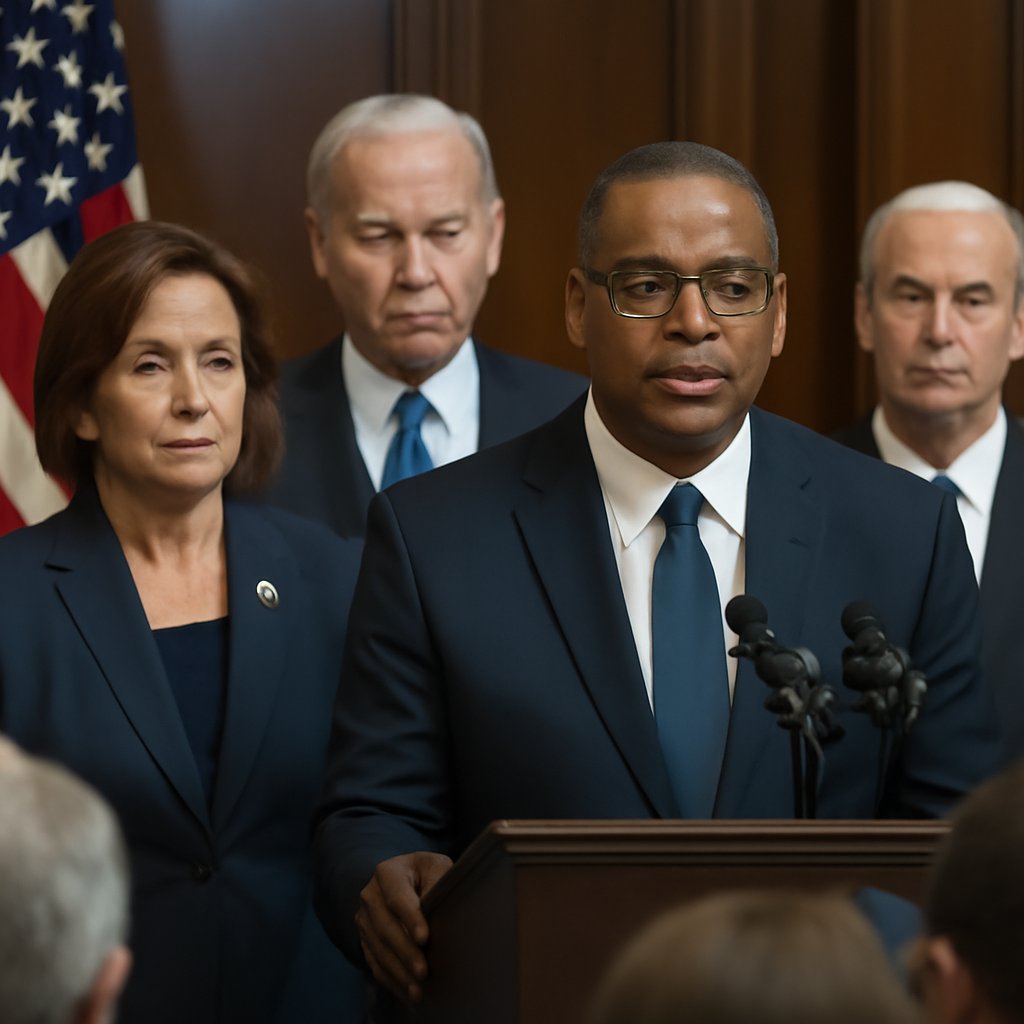
The Senate confirmation process for cabinet nominees stands as one of the more durable features of the constitutional order, shaped by elections that determine which party holds the majority and how state-level dynamics filter into the upper chamber. Article II’s advice-and-consent clause has produced only nine outright rejections since 1789, a remarkably high success rate that holds across both unified and divided government, though the data show confirmation rates fall noticeably when the opposing party controls the Senate.
Understanding the constitutional foundation helps clarify why this process matters beyond procedural technicality. The Framers deliberately placed the confirmation power in the Senate rather than the House of Representatives, reflecting their belief that an upper chamber with longer terms and smaller membership would exercise more deliberative scrutiny over executive appointments. This check remains one of the Senate’s most consequential powers, as cabinet officers directly shape policy implementation across federal agencies that touch nearly every aspect of American life—from national defense to economic regulation to public health.
Historical patterns reveal the shift from near-unanimous early confirmations under Washington to more contested votes amid 19th-century sectional divides, a trajectory that mirrors the gradual nationalization of Senate elections. When modeling this electorally, the post-1980s lengthening of the timeline—from under 30 days to more than 60 days on average—tracks closely with the rise of 24-hour media cycles and the expanded administrative state, both of which amplify the weight of individual state delegations. The transformation accelerated notably after the 1987 rejection of Robert Bork’s Supreme Court nomination, an event that fundamentally altered how both parties approach high-level confirmations by demonstrating the electoral salience of judicial and executive appointments.
The typical confirmation sequence follows a well-established pathway, though the timeline can vary considerably based on political circumstances. After a president announces a cabinet nominee, the Office of Government Ethics (OGE) begins preliminary vetting while the FBI initiates its background investigation. This period often lasts two to three weeks but can extend longer if complications arise. Once the FBI completes its work, the nominee’s paperwork moves to the relevant Senate committee—Treasury handles the Secretary of the Treasury, Defense handles the Secretary of Defense, State handles the Secretary of State, and so forth. Committee staff review financial disclosures, questionnaires, and prior statements, often requesting additional documents or clarifications that can add weeks to the schedule.
FBI background investigations, which routinely interview hundreds of references and review decades of financial records, serve as the initial filter before committee hearings begin in bodies such as Armed Services or Finance. These proceedings, now broadcast live, function as public tests of nominees’ records and often surface demographic trends: women and minorities have comprised a steadily rising share of confirmed members since the 1990s, reflecting broader changes in the electorate that supply Senate seats. The hearings themselves have evolved into carefully choreographed events where committee members pose questions designed partly for public messaging and partly for genuine vetting. Nominees typically receive prepared briefing books from their prospective departments and coaching from confirmation experts on how to navigate hostile questioning while avoiding statements that could box in their policy flexibility once in office.
Most rejections still occur at the committee stage rather than on the floor, underscoring how the 60-vote filibuster threshold, later adjusted, interacted with narrow majorities produced by closely contested map states. In 2013, the Senate majority eliminated the filibuster for most executive and judicial nominees (though not Supreme Court justices), a procedural change that reduced the threshold for cabinet confirmations from 60 votes to a simple majority. This rule change, known colloquially as the “nuclear option,” significantly altered confirmation dynamics by making it harder for the minority party to block nominees through procedural delay. Subsequent presidents have both benefited from and complained about this change depending on which party controlled the chamber.
Committee votes typically occur one to two weeks after hearings conclude, and if a nominee survives committee approval, they advance to a floor vote. Floor votes on cabinet nominees routinely occur within days of committee passage, making the chamber floor where most of the actual voting theater plays out. Senators often use their floor time before votes to explain their position for the record and their constituents, and occasionally swing votes by wavering members create genuine suspense about outcomes.
The polling data here paints a complicated picture of public attitudes toward nominees, frequently splitting along partisan lines that align with the same coalitions that decide Senate control. Contrary to public perception, individual cabinet nominees rarely generate sustained mass public attention, though nominations involving controversial figures or significant departures from party orthodoxy can spark broad engagement. Most Americans pay minimal attention to cabinet confirmations unless media coverage highlights ethical concerns, policy disagreements, or demographic milestones that align with broader political narratives.
Recess appointments, once a workaround that presidents used to install officials without Senate approval, were sharply limited by the 2014 Supreme Court decision in National Labor Relations Board v. Noel Canning, which narrowly defined when the Senate is in recess. This ruling effectively eliminated a president’s ability to make recess appointments when the Senate holds pro forma sessions—brief, perfunctory meetings convened specifically to prevent recess appointments. Further tying outcomes to election results that set the starting composition of the chamber, this legal constraint has made Senate confirmation the only viable path for cabinet and sub-cabinet positions.
Post-confirmation ethics agreements restricting future lobbying remain standard, yet reform proposals to accelerate vetting for lower-level posts continue to surface during transition periods when unified government offers the clearest path to swift confirmations. A common reform proposal involves pre-vetting potential cabinet candidates before an election concludes, allowing for faster-track confirmations during the transition period following a presidential victory. Proponents argue this speeds the installation of leadership teams at critical moments; critics worry it undermines the appearance that nominees are individually evaluated based on merit rather than pre-selected as part of a political team.
When you model this electorally, divided government introduces measurable friction that lengthens timelines and raises withdrawal risks, while unified control tends to preserve the high overall confirmation rate observed across more than two centuries. The process therefore remains a direct extension of electoral arithmetic rather than an independent bureaucratic exercise. Nominees who withdraw before a vote typically do so due to unforeseen ethical issues, financial complications, or statements that become liabilities—circumstances that occasionally surface precisely because the confirmation process itself intensifies media and opposition scrutiny.
Sources
- Reuters Politics – U.S. political news and cabinet confirmation coverage
- AP News – U.S. Politics – Associated Press reporting on government and cabinet matters
- NPR Politics – National Public Radio’s political news and analysis
- Politico – Political news and government coverage
- U.S. Senate – Official information on Senate voting and confirmation processes