
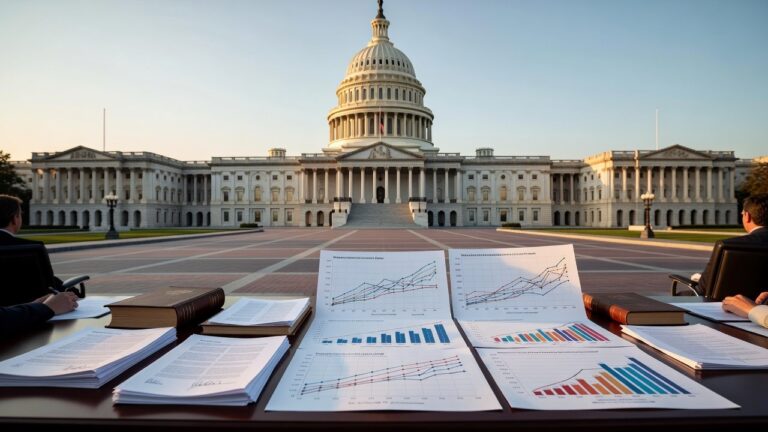
Executive orders have long functioned as a workaround when Congress stalls, and the data across administrations shows both parties leaning on them with increasing frequency in recent decades. From the early republic onward, presidents have invoked this authority to shape everything from foreign policy to domestic enforcement priorities, though the volume and targeting have shifted with partisan control and electoral pressures. When you model this electorally, the impact often registers most clearly in swing states where immigration enforcement or environmental rules hit different demographic blocs unevenly—think suburban independents in Pennsylvania versus working-class voters along the southern border.
The constitutional grounding traces back to the “faithful execution” clause, with George Washington’s 1793 Neutrality Proclamation marking an early precedent. Those initial uses stayed narrow, but the modern expansion began in earnest under Franklin D. Roosevelt, who issued more than 3,721 orders amid the New Deal and World War II. Subsequent presidents from both parties refined the approach, frequently targeting areas where legislation had deadlocked. Historical election patterns show this acceleration coinciding with periods of divided government, where the party out of power in Congress pushes the White House to act unilaterally.
The distinction between executive orders and other executive actions deserves clarification, as the term “executive order” is often used colloquially to encompass a broader range of presidential directives. Technically, executive orders are numbered documents that direct federal agencies and officials to carry out the law as the president interprets it. However, presidents also issue proclamations, memoranda, and notices that carry varying degrees of legal weight. Proclamations typically address ceremonial matters or invoke statutory authority—President Lincoln’s Emancipation Proclamation remains the most historically significant example. Presidential memoranda and administrative orders, while less formal than executive orders, can prove equally consequential in restructuring agency operations or shifting enforcement priorities. Understanding these distinctions matters when evaluating a president’s actual policy reach, as raw executive order counts can obscure the full scope of unilateral action.
Recent administrations illustrate the bipartisan continuity. Barack Obama signed 276 executive orders, many addressing climate rules and immigration after legislative setbacks; the Clean Power Plan and DACA stand out as examples that mobilized younger and minority voters in key Electoral College states while drawing court challenges. Donald Trump issued 220 orders, concentrating on border security, tariffs, and deregulation, moves that polled strongly among rural and non-college white voters in the Midwest but faced injunctions that slowed implementation. Joe Biden surpassed 100 orders in his first year alone, reversing several Trump-era policies on energy and immigration—actions that testing in battleground states revealed split approval along partisan lines.
The polling data here paints a complicated picture. Surveys from outlets tracking executive actions typically show public support hovering near 50 percent overall, with sharp demographic splits: Hispanic and Black respondents often favor orders expanding protections, while white working-class cohorts register higher skepticism toward rapid regulatory shifts. Methodology matters—live-caller polls versus online panels can shift the margins by four to six points on issues like DACA. When you break it down by state, orders touching immigration and the environment account for roughly 30 percent of recent activity, directly influencing turnout models in Arizona, Georgia, and Nevada.
The legal framework constraining executive orders has evolved considerably since the 1980s. The Administrative Procedure Act (APA) requires agencies to follow notice-and-comment rulemaking procedures when implementing substantial policy changes, meaning that even presidentially directed rules often face a period where the public can submit feedback before finalization. This procedural requirement can stretch implementation timelines by months or years, creating windows where new administrations can halt predecessor policies before they take full effect. The National Environmental Policy Act (NEPA) similarly imposes environmental review requirements on federal actions, opening additional litigation channels. Courts have grown more willing to scrutinize executive overreach in recent decades; the Supreme Court’s decisions in cases like Youngstown Sheet & Tube Co. v. Sawyer (1952) established that presidential power is at its lowest when acting contrary to congressional will, a principle that has constrained some executive initiatives.
The budgetary implications of executive orders warrant deeper examination. While orders cannot appropriate funds that Congress has not authorized, they can redirect existing appropriations, reprogram agency spending within congressionally approved budgets, or shift enforcement priorities in ways that alter de facto expenditure patterns. The Trump administration’s attempt to reprogram Department of Defense funds toward border wall construction illustrated this dynamic, leading to legal challenges and congressional backlash. Biden’s use of executive authority to pause deportations similarly shifts resources from enforcement to processing and administrative functions without explicit legislative approval. These budgetary reallocations generate fiscal uncertainty that affects state and local governments dependent on federal funding, from sanctuary cities facing reduced law enforcement grants to rural counties relying on federal land management revenue.
Agency discretion represents another crucial dimension often underexamined in executive order analysis. When Congress passes legislation with broad statutory language—such as directing the EPA to regulate “hazardous air pollutants” without specifying which compounds qualify—presidents and their appointees gain leverage to shape implementation through executive direction. The Clean Air Act’s vague standards gave the Obama administration room to tighten emissions rules, just as it permitted the Trump administration to relax them. This discretionary space expands during periods of legislative ambiguity and contracts when Congress legislates with greater specificity. Understanding where statutes grant agency discretion reveals where executive orders will likely carry the most weight versus where courts may find them constrained by statutory text.
Pushback has come from both courts and Congress. More than 50 orders faced legal challenges between 2017 and 2023, with courts striking portions on statutory grounds. Lawmakers have invoked the Congressional Review Act fewer than 20 times since 1996, underscoring its limited reach. Agencies such as the EPA and DHS absorb the directives, altering enforcement without new statutes—an approach that accelerates policy movement but creates uncertainty for businesses and state governments navigating successive administrations.
The economic impact of executive policy reversals extends across multiple sectors. In renewable energy, the Obama-era expansion of solar and wind subsidies through executive direction fueled industry growth and employment; Trump-era reversals created market uncertainty that dampened new investment in those sectors. Conversely, deregulatory executive orders targeting environmental and labor rules generated predictability for fossil fuel and manufacturing firms but prompted divestment from companies sensitive to regulatory risk. Small and medium-sized businesses often struggle most with rapid policy reversals, lacking the legal and compliance infrastructure of multinational corporations. Agricultural states present a particularly complex case: Trump’s tariffs and trade orders damaged commodity exports but attracted Farm Belt support through subsidy programs, illustrating how executive action can simultaneously impose and mitigate economic harm within the same geographic constituency.
Average annual orders have declined since the mid-20th century peak, reflecting greater scrutiny from courts and media. Yet the underlying dynamic persists: presidents use the tool to deliver on campaign promises when legislative majorities prove elusive, producing cycles of reversal that voters notice in successive elections. Tracking these patterns across administrations remains central to understanding how the branches interact in practice. As polarization deepens and divided government becomes more common, the political salience of executive action will likely intensify, making it an increasingly central battleground in presidential elections.
Sources
- The White House – Presidential Actions – Official repository of executive orders and proclamations
- Reuters Politics – Political news coverage and analysis
- AP News – U.S. Government – Associated Press coverage of federal government actions
- NPR Politics – National Public Radio political journalism and reporting
- Politico – White House – In-depth political reporting on executive branch activities