
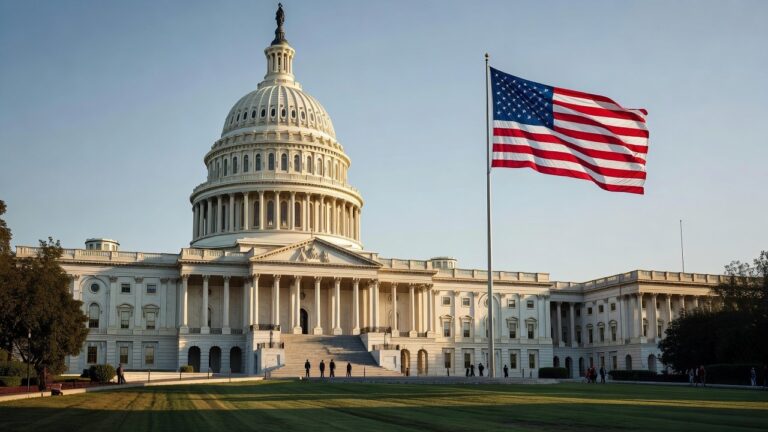
As a Latina journalist covering Washington accountability, I’ve learned that a political party is far more than an organized group of individuals united by shared ideologies—it’s a machine fueled by campaign finance records, lobbying disclosures, and the flow of money that often tells a different story than the platforms released to voters. In the United States, these organizations structure competition, mobilize support, and field candidates, yet their real power emerges when you trace the dollars through Federal Election Commission filings rather than press releases.
Political parties serve as intermediaries, but the financial disclosures tell a story the press releases don’t: they channel resources from wealthy donors, corporations, and unions into electoral contests while shaping policy agendas that align with those backers. The candidate recruitment process at every level—from federal to local—often hinges on who can tap into established fundraising networks, not just ideological fit.
Core functions include developing policy platforms on issues like healthcare and taxation, yet those platforms frequently reflect the priorities of major contributors revealed in lobbying reports. Mobilization efforts rely on grassroots work, but they also draw from coordinated spending by party committees and affiliated Super PACs that operate with fewer restrictions. Legislative coordination in Congress follows party lines, though whip systems and committee assignments can shift based on which members bring the most outside money to the table.
The Founding Fathers warned against factions, but parties emerged anyway, evolving from Federalists versus Democratic-Republicans into today’s Republican-Democratic duopoly that has held for over 150 years. That persistence owes much to electoral rules favoring two major players—and to the concentrated financial resources those players command through national committees and conventions.
Organizationally, parties operate at national, state, and local levels, with leadership structures that manage strategy. Allied interest groups—labor unions on one side, business associations on the other—provide volunteers and funds, a coalitional reality laid bare in campaign finance data showing how outside spending amplifies party influence.
America’s two-party system mathematically sidelines third parties through single-member districts and plurality voting. Democrats have emphasized government intervention and social programs, while Republicans have focused on limited government and strong defense, yet both now navigate a landscape where Super PACs and unlimited independent expenditures from high-dollar donors reshape nomination fights and general elections.
Party membership here remains informal—no dues, just primary voting or registration—yet identification has hardened into polarization. Voters increasingly sort along partisan lines, a trend that intersects with demographic shifts and geographic clustering, all while campaign finance reforms have scattered authority among official committees, Super PACs, and individual candidates.
Winning elections demands coordinated recruitment, positioning, and resource allocation, with parties pouring money into competitive districts. Nomination processes vary by state, from caucuses to primaries, but the underlying math often favors those with access to early money and donor networks. In governance, party caucuses and leadership enforce discipline, though district interests or donor pressures can create fractures visible in voting records.
Contemporary challenges include declining formal affiliation among younger voters, direct candidate outreach via social media that bypasses party infrastructure, and rising polarization that complicates compromise. Demographic changes continue to pressure both coalitions as they compete for shifting voter bases—all dynamics that lobbying disclosures and contribution patterns help explain more clearly than rhetoric alone.
The historical evolution of American political parties reveals how institutional frameworks have shaped competition over centuries. The first party system (1790s-1820s) pitted Federalists against Democratic-Republicans in debates over federal power and economic development. Andrew Jackson’s Democratic Party emerged as a mass-based organization in the 1830s, pioneering innovations like national nominating conventions that parties still use today. The Republican Party, founded in 1854, successfully positioned itself against slavery expansion and won the presidency with Abraham Lincoln in 1860. Since then, both major parties have undergone significant realignment. The “Solid South” Democratic coalition of the post-Reconstruction era gradually shifted rightward after the Civil Rights Act of 1964, when Southern conservative Democrats increasingly moved to the Republican Party. These realignments demonstrate that party identities reflect changing coalitions responding to economic conditions, demographic shifts, and moral questions rather than fixed ideological constants.
Understanding party structure requires recognizing multiple overlapping organizations operating under similar brands. The Democratic National Committee and Republican National Committee serve as official national bodies, but they share electoral space with state party committees, local county and precinct organizations, and affiliated entities like the Democratic Senatorial Campaign Committee or National Republican Congressional Committee. These entities maintain separate legal status and fundraising authority, creating a federated system where power distributes unevenly. Historically, state and local parties held greater autonomy, controlling ballot access and nomination processes. Reforms beginning in the 1970s shifted power toward national committees and primary voters, yet local organizations still control crucial ground operations and candidate recruitment in many communities.
The role of party platforms deserves examination beyond campaign messaging. These detailed documents, typically adopted every four years at national conventions, represent negotiated agreements among diverse party factions. The 2020 Democratic platform, for instance, reflected compromises between progressive and moderate wings on healthcare, environmental policy, and taxation. Platform drafting involves formal committees with representation based on state delegations, creating opportunities for activists to shape party direction. Yet platforms lack binding force—elected officials regularly deviate from platform language based on constituency pressures or personal conviction. The disconnect between platform promises and legislative outcomes frustrates voters expecting parties to function as unified teams, though party discipline varies significantly by chamber and issue. Senate parties operate with more fluid coalitions than House parties, reflecting senators’ statewide constituencies and six-year terms.
Party activists and volunteers represent the grassroots foundation that national committees depend upon, though their demographic composition has shifted considerably. Historically, patronage systems—where winning parties distributed government jobs to supporters—motivated party work. Civil service reforms gradually eliminated most patronage, forcing parties to rely on volunteer activists motivated by ideology, community ties, or candidate loyalty. Contemporary party activists tend to be more ideologically intense than average voters, a pattern that influences primary elections where activist participation exceeds general election turnout. The Tea Party movement of the 2010s demonstrated how organized activist networks can reshape Republican primary outcomes, while progressive activists’ mobilization efforts influenced Democratic nomination contests throughout the 2010s and 2020s.
The relationship between parties and interest groups creates another layer of power structures often invisible to casual observers. Business associations, labor unions, environmental organizations, and religious coalitions maintain informal relationships with parties while maintaining legal independence. These groups provide volunteers, contribute through Super PACs, and advocate on behalf of party-aligned candidates. The Chamber of Commerce and National Federation of Independent Business traditionally align with Republicans, while the AFL-CIO and Sierra Club align with Democrats, though individual unions or business groups sometimes break ranks. These alignments aren’t accidental—they reflect decades of policy development and electoral investment that bind interest groups to party success.
Third parties in America operate within a system structurally designed to prevent their success. The Electoral College magnifies two-party dominance at the presidential level, as winning requires 270 electoral votes, making it nearly impossible for a third-party candidate to accumulate sufficient state-level victories. In congressional races, single-member district plurality voting mathematically advantages the two largest vote-getters, creating a strategic incentive for voters to avoid “wasting” votes on non-viable third-party candidates. Some states require third parties to collect significant petition signatures to access general election ballots, imposing administrative barriers that two major parties avoid through established ballot access. The Libertarian Party and Green Party have achieved electoral success at local levels in some jurisdictions, but breaking into statewide or national prominence remains extraordinarily difficult. Debate access thresholds, fundraising disadvantages, and media coverage disparities further entrench two-party dominance despite voter interest in alternatives.
Ultimately, political parties aggregate interests into electoral and governing coalitions through stable networks at every level. Their dominance in American democracy makes understanding the money behind them essential, because elections only produce meaningful change when the financial incentives align with—or are checked by—public accountability.
Sources
- Reuters Politics – US political news and analysis
- AP News US Politics – Associated Press political coverage
- NPR Politics – National Public Radio political reporting
-
Related Articles
- Lee Vogler Political Party: Affiliation, Background, and Role in US Politics
- Political Machines in American Politics: History, Impact, and Modern Influence
- Political Party Definition: Structure, Purpose, and Role in American Democracy
- Lee Vogler Political Party: A Comprehensive Analysis of the Arizona Politician’s Affiliation
- Political Commentator Jen: Rising Voice in American Political Analysis