
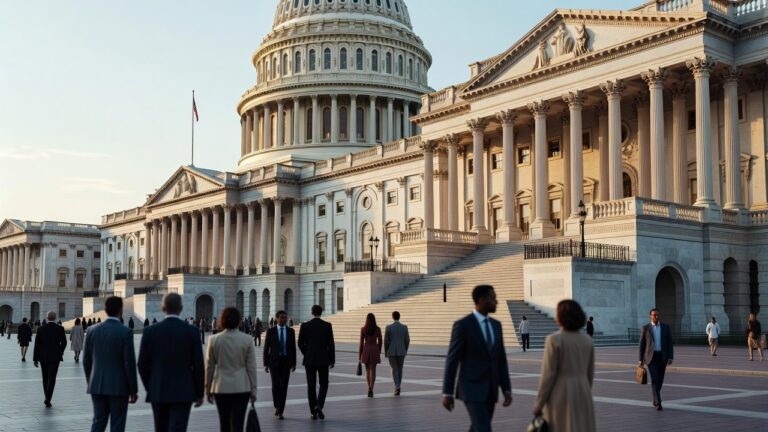
As a Latina journalist who’s spent years digging into the intersections of power, money, and oversight on Capitol Hill, the story of whistleblower protections in Congress isn’t just about rules on paper—it’s about who gets to expose the flow of influence from lobbyists and special interests without getting buried. These safeguards let congressional staff, intelligence employees, and federal workers flag misconduct, waste, or abuse, shining light on how lawmakers actually police the executive branch and their own operations.
The roots trace back to the Civil Service Reform Act of 1978, which laid down initial protections for federal workers disclosing legal violations. Congress later tailored them for the legislative environment through the Whistleblower Protection Act of 1989, which barred retaliation and stood up the Office of Special Counsel. The 2012 Whistleblower Protection Enhancement Act broadened disclosures and plugged gaps that had left many Hill staff exposed. The Congressional Accountability Act of 1995 brought some labor and civil rights rules to legislative employees, though its whistleblower pieces stay narrower than the executive branch’s. For intelligence issues, the 1998 Intelligence Community Whistleblower Protection Act routes urgent concerns to the intelligence committees with limited immunity, while recent Intelligence Authorization Act tweaks demand faster transmission of complaints to Congress. Internal House and Senate rules add layers against adverse actions for protected disclosures, aiming to surface ethics violations, financial improprieties, and policy abuses.
The financial disclosures tell a story the press releases don’t: when staffers report on lobbying scandals or misuse of office, campaign finance records often reveal the real stakes. House and Senate ethics committees have averaged 12 whistleblower referrals a year over the past decade, mostly tied to financial disclosure violations and office misuse.
Understanding the specific channels available to potential whistleblowers on Capitol Hill reveals how compartmentalized these protections actually are. Congressional staff members can report concerns to the Office of Congressional Workplace Rights, an independent entity created under the Congressional Accountability Act, which investigates complaints of retaliation and workplace violations. Intelligence community members working within Congress have access to the Inspector General of the Intelligence Community, though those reports must go through official channels before reaching Congress itself. Many staffers also report concerns directly to their chamber’s ethics committee, though this route requires navigating complex procedures and often involves lengthy delays. Additionally, the House and Senate have internal hotlines and ombudsman offices designed to receive anonymous complaints, yet awareness of these resources remains surprisingly low among junior staff and contract workers who may be most vulnerable to retaliation.
The practical mechanics of whistleblower protection also depend heavily on the type of disclosure being made. Protected disclosures generally fall into categories: reports of legal violations, gross waste of government funds, gross mismanagement, abuse of authority, and substantial dangers to public health or safety. Reports about personal workplace grievances, policy disagreements, or management decisions outside these categories typically don’t qualify for statutory protection, leaving staffers who raise such issues vulnerable. This distinction matters enormously because it means a congressional aide concerned about wasteful spending on a committee program has clear legal ground to stand on, while one questioning the strategic wisdom of that program does not. Intelligence-related disclosures operate under even tighter restrictions, with the law distinguishing between “urgent concerns” that can be reported to Congress and other classified matters that face steeper legal obstacles.
Yet implementation lags. Retaliation—demotions, isolation, firings—hits hard because proving it in a political workplace is tough, and legislative staff lack the appeal rights executive branch workers enjoy. Contractors and fellows slip through jurisdictional cracks, while classified disclosures risk Espionage Act exposure. Bipartisan finger-pointing over leaks stalls fixes, though recent hearings have pushed for better training and quicker reviews.
The burden of proof in retaliation cases illustrates why the protections often fail in practice. A congressional employee who files a whistleblower complaint and then faces termination must prove that their protected disclosure was a “contributing factor” in the adverse action—a standard that sounds straightforward but becomes murky in the political environment where turnover is constant and reasons for firing routinely include vague terms like “poor fit” or “office restructuring.” Congressional offices operate with minimal oversight compared to federal agencies; a member of Congress can dismiss staff at will, making causation nearly impossible to establish. The Office of Congressional Workplace Rights can investigate and find that retaliation occurred, but its remedies are limited—typically reinstatement, back pay, or modest damages—and the process takes years. By then, the whistleblower’s career on the Hill has often ended regardless of the outcome.
High-profile cases have forced incremental change. The 2019 CIA whistleblower complaint during the impeachment inquiry tested the Intelligence Community Whistleblower Protection Act’s channels to Congress. Earlier staff reports on lobbying scandals showed how ethics processes mesh with statutes, leading to better anonymity options and timelines. Success often hinges on media spotlight and legal help, exposing access gaps by office and seniority.
The role of outside legal support cannot be overstated. Congressional staff with access to experienced whistleblower attorneys or nonprofit organizations specializing in government accountability have dramatically better outcomes than those attempting to navigate the system alone. Groups like the Government Accountability Project and the Project on Government Oversight have helped educate Hill employees about their rights, yet resources remain concentrated in major metropolitan areas and large offices. A junior staffer working for a rural representative has far fewer resources than one in a well-staffed Washington office. This geographical and organizational variation creates a de facto two-tiered system where protection depends partly on circumstance and access rather than pure legal standing.
Data underscores the gaps. Between 2015 and 2022, the Office of Congressional Workplace Rights logged over 300 whistleblower complaints from legislative employees, with just 15 percent yielding settlements or fixes. The Intelligence Community Whistleblower Protection Act has handled more than 50 urgent concern submissions since 2018, many on foreign policy and national security. Government Accountability Office studies show legislative employees fear retaliation at rates 25 percent higher than executive counterparts due to weak appeals. Post-2012 enhancements, successful claims rose nearly 40 percent in five years.
Recent legislative efforts have attempted to address these persistent vulnerabilities. Proposals to extend the Civil Service protections more broadly to all congressional employees, strengthen appeal procedures, and reduce reporting timelines have gained bipartisan rhetorical support, though actual reforms move slowly through a Congress reluctant to regulate itself. Some proposals would establish clearer definitions of protected disclosures specific to legislative work, while others focus on improving anonymity and reducing the risk that a whistleblower will be identified through process of elimination. The challenge remains that those who would benefit most from stronger protections—current congressional employees—rarely lobby for them, while those who might push for change have already left Capitol Hill.
As Congress wrestles with trust deficits and complex oversight, these mechanisms remain vital for accountability—especially when whistleblowers surface ties between lobbying dollars and policy decisions that campaign finance records alone can’t always capture. The system’s effectiveness ultimately depends not just on statutory language but on organizational culture, institutional commitment, and the willingness of congressional leadership to protect those who speak up about wrongdoing rather than treating such disclosures as career-ending acts of disloyalty.
Sources
- Reuters Politics – Comprehensive US political news coverage
- AP News US Politics – Associated Press national political reporting
- NPR Politics – National Public Radio political analysis
- Politico Congress – Legislative news and reporting
- US State Department Office of Inspector General – Official whistleblower procedures