
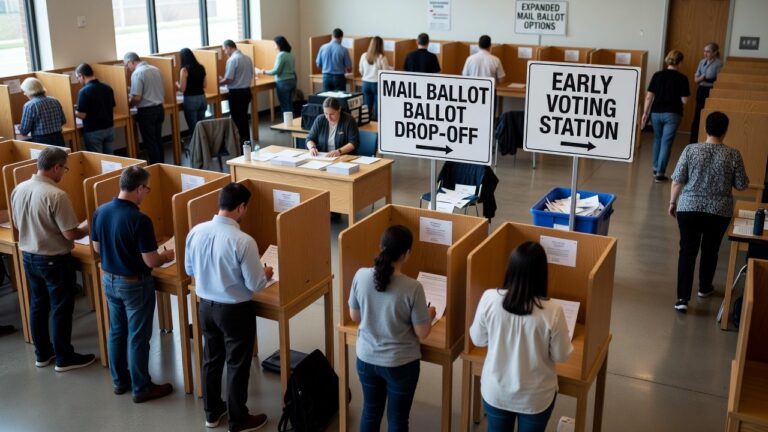
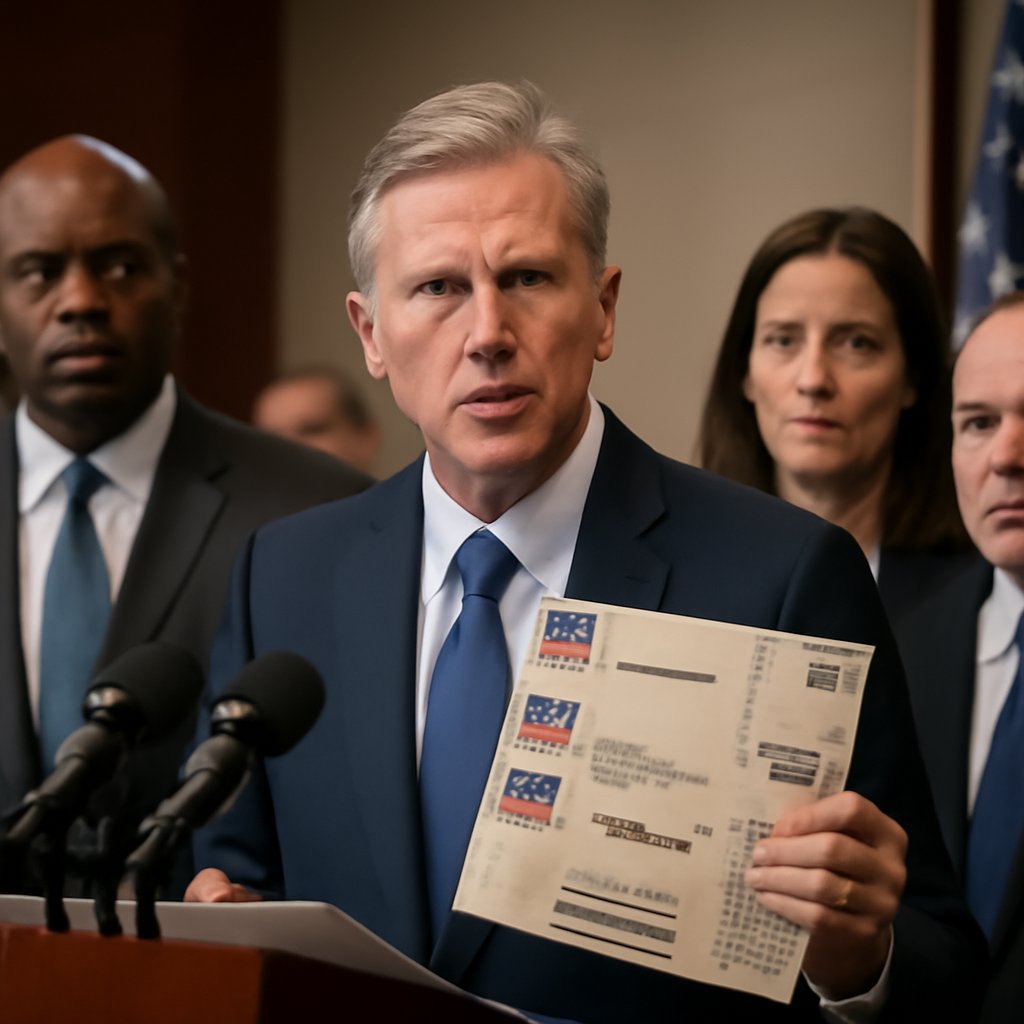
States across the country have been tweaking mail ballot rules in ways that are starting to show up in early voting data, with measurable upticks in participation that vary sharply by region and demographic. Election administration filings and turnout statistics reveal that expansions in no-excuse absentee options often lift overall early voting shares from under 20 percent to above 35 percent in adopting states, though the effects concentrate unevenly. The polling data here paints a complicated picture, especially when broken down by age and race using standard exit-poll methodologies that weight respondents by validated vote history.
When you model this electorally, the geographic skew matters most. Urban counties with denser populations have driven the bulk of the gains, mirroring patterns seen in the 2018 and 2020 cycles where mail access correlated with higher Democratic-leaning turnout in metropolitan swing areas. Rural jurisdictions, by contrast, show slower uptake, frequently linked to postal-service concerns and limited online tracking—factors that echo long-standing divides in historical midterm data from states like Pennsylvania and Georgia.
Demographic breakdowns underscore the shifts. Voters aged 18-29 register the steepest increases in mail-ballot usage after policy changes, consistent with longitudinal surveys that track this cohort across multiple cycles. Older voters already leaned toward mail options and add only modest increments even with permanent lists. Minority populations in states with automatic applications post 4-7 percent turnout gains in midterms, though these figures come with the usual caveats around sample sizes in state-level polling and the need for multi-cycle confirmation.
The policy landscape driving these changes reflects a fundamental reshuffling of election administration priorities. As of 2025, roughly half of U.S. states now offer no-excuse mail voting, either through universal mail-in systems or broad absentee provisions. California, Colorado, Nevada, Oregon, and Washington operate full vote-by-mail systems where registered voters receive ballots automatically. Meanwhile, swing states like Arizona, Georgia, and Pennsylvania have expanded absentee eligibility while maintaining a mixed model that preserves in-person voting options. This patchwork approach has created distinct regional voting cultures that candidates and parties must navigate differently depending on state-specific rules and voter behavior patterns.
Early voting windows have expanded alongside mail availability, with most states now opening in-person early voting between two and four weeks before Election Day. This extended timeline has fundamentally altered campaign scheduling and resource allocation. Rather than a single Election Day surge, campaigns now track rolling waves of early voting data that shift messaging in real time. Political consultants monitor county-level early vote counts to gauge turnout among key constituencies and adjust digital advertising, field operations, and public events accordingly. This granular approach requires sophisticated data infrastructure that smaller campaigns and rural areas sometimes lack, potentially widening the resource gap between well-funded and under-resourced efforts.
The logistics of mail ballot distribution have become increasingly sophisticated. Ballot tracking systems, similar to package tracking for mail orders, now allow voters to receive notifications when their ballot is mailed, when it’s received, and when it’s counted. States like Colorado and Florida have implemented robust tracking platforms accessible through phone apps and text alerts, reducing voter anxiety about whether their ballot will arrive in time. These systems have proven particularly valuable in addressing concerns about lost or delayed mail, historically a source of confusion and frustration in jurisdictions with less transparent processes.
Verification protocols have kept pace with volume. Signature checks remain the core safeguard, augmented by tracking barcodes and occasional ID rules for new applicants, producing stable rejection rates of 0.8-1.5 percent once curing windows allow fixes. Administrative costs run $2.50-$4.75 per ballot depending on scale and tech investment, with online portals trimming call-center loads by about 25 percent. Campaigns have responded by reallocating resources away from traditional door-knocking in high-adoption zones toward digital reminders and registration drives in areas with historically elevated rejection risks—tactics that flatten the classic Election Day surge observed in pre-2016 maps.
County election offices have reported significant operational changes as mail voting volumes climb. Processing centers must expand capacity during peak periods, requiring temporary staffing and additional equipment. Some counties have invested in high-speed ballot scanning machines and automated signature verification systems to handle increased throughput without sacrificing accuracy. The upfront capital costs for these systems range from $50,000 to over $500,000 depending on scale, creating budget pressures in smaller jurisdictions. Federal and state grants have partially offset these expenses, but disparities in funding availability have created a two-tiered system where well-resourced urban counties can deploy cutting-edge technology while rural areas struggle with manual processing that remains labor-intensive and slower.
The impact on voter confidence varies by state experience and media narratives. Surveys show that in states with established mail voting systems and transparent counting processes, voter confidence in election integrity remains relatively stable. Conversely, states with newer mail systems or those where election disputes have received significant media coverage sometimes report lower confidence levels, even when empirical fraud rates remain negligible. This psychological dimension has real electoral consequences, as voter perception shapes turnout and engagement regardless of underlying security metrics.
Postal service reliability has emerged as an unexpected political flashpoint. Rural voters and election officials in remote areas have cited mail delivery delays and service cuts as legitimate obstacles to mail voting, concerns that transcend typical partisan divides. The Postal Service’s ongoing financial challenges and route consolidations have coincided with expanded mail voting periods, creating a supply-and-demand mismatch in some regions. Election officials have responded by extending deadlines, implementing ballot drop boxes as alternatives to mail delivery, and coordinating directly with postal management to prioritize election mail during peak periods.
Ballot drop boxes represent one of the most visible innovations reshaping the early voting ecosystem. Originally adopted as a security measure in a few states, drop boxes have proliferated across the country, offering voters a mail-alternative that eliminates postal delays. Most states now allow early and mail-in voters to deposit ballots in secure, monitored drop boxes located at libraries, county offices, and community centers. This hybrid approach has attracted support across ideological lines by providing convenience while maintaining chain-of-custody accountability. Some rural counties, however, have limited drop box access due to geographic spread and resource constraints, recreating familiar inequities in voting accessibility.
Election administration costs have stabilized somewhat as states move beyond initial implementation phases. Early adopters of expanded mail voting systems initially experienced budget overruns, but standardized processes and economies of scale have gradually reduced per-ballot processing costs. Economies of scale mean that large-population states can process mail ballots more efficiently than smaller states, creating incentives for resource sharing across county lines and regional collaboration on equipment purchasing.
Policy durability will hinge on whether expansions are locked in by statute rather than temporary orders, a distinction that has produced steadier usage patterns across recent cycles. States where legislatures have codified mail voting expansions into permanent law have seen more consistent participation patterns, while states relying on emergency orders or executive actions have experienced volatility as legal challenges and political shifts alter rules between elections. This statutory versus discretionary divide has emerged as a crucial variable in predicting whether mail voting gains will endure or revert to pre-expansion levels.
Ongoing collection from federal and state canvassing sources should clarify whether these changes settle into durable turnout baselines or remain sensitive to future legislative and court interventions. Election researchers continue monitoring cross-cycle trends to distinguish between permanent behavioral shifts and temporary fluctuations driven by specific election contexts or external events. Understanding this distinction is critical for campaigns, election officials, and policymakers attempting to plan for future cycles in an increasingly complex voting environment.
Sources
- Reuters Politics – U.S. political news and analysis
- AP News Elections Hub – Election coverage and voting information
- NPR Elections – In-depth election reporting and analysis
- Politico Elections – Political news and voting coverage
- U.S. Election Assistance Commission – Official election administration