
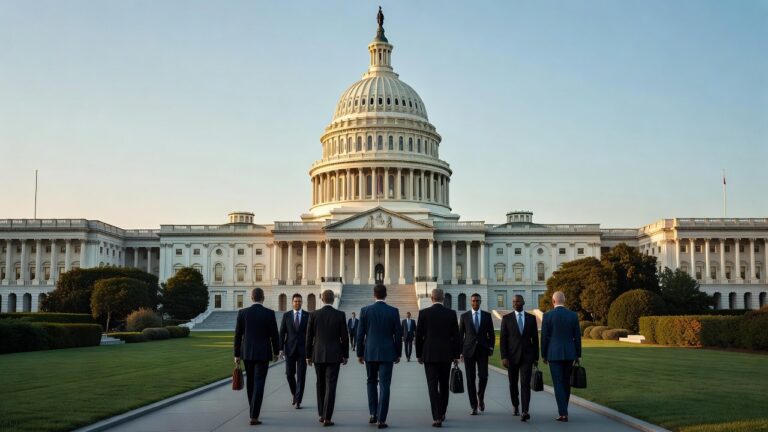
In the corridors of Capitol Hill, where campaign cash and K Street retainers shape which bills even reach a vote, the Congressional Budget Office’s scoring process remains one of the few truly nonpartisan guardrails left in federal budgeting. Created by the 1974 Congressional Budget and Impoundment Control Act precisely to give lawmakers an independent check on executive-branch estimates, the agency now fields roughly 250 analysts who produce more than 700 formal cost estimates every year. Those numbers, covering mandatory spending, revenues, and deficits across a ten-year window, still dictate whether legislation lives or dies before it ever hits the floor.
As a Latina journalist who has spent years tracking how lobbying disclosures and campaign-finance filings intersect with policy outcomes, I’ve seen the same pattern repeatedly: a favorable CBO score becomes a talking point for the very interest groups whose PACs and dark-money vehicles bankrolled the underlying provisions. The financial disclosures tell a story the press releases never will.
When a committee formally requests a score, CBO staff dissect every line for direct spending effects, tax expenditures, and interactions with current law. They layer in economic variables from the Bureau of Economic Analysis and elsewhere, then circulate draft estimates for technical feedback before releasing the final product. In recent cycles, Congress has sometimes insisted on dynamic scoring that tries to capture macroeconomic feedback—changes in GDP, labor supply, or investment. Those runs have been applied to major tax packages since the 2017 Tax Cuts and Jobs Act, yet they still carry wide uncertainty bands that lobbyists conveniently downplay when courting donors.
The CBO’s organizational structure reflects its commitment to independence. The agency operates under a bipartisan board of directors and is headed by a director selected jointly by the House and Senate Budget Committee chairs. Staff economists and policy analysts come from diverse backgrounds and are insulated from direct political pressure through career service protections. This institutional design has proven resilient across four decades and multiple administrations, allowing the agency to maintain credibility even when its findings contradict the preferences of the party in power. However, the very nature of budget analysis means that methodological choices—how to model behavioral responses, what discount rates to apply, which economic assumptions to anchor—inevitably reflect judgment calls that reasonable analysts might dispute.
Baseline assumptions matter enormously. Every score starts from the agency’s twice-yearly ten-year projections of current-law revenues and outlays. Legislation that alters those baselines triggers the incremental calculation. Healthcare bills routinely generate the longest, most complex analyses because of their entanglement with Medicare and Medicaid—programs that also happen to attract some of the heaviest lobbying expenditures tracked by the Clerk of the House and Secretary of the Senate. When the Affordable Care Act was scored in 2010, for instance, the CBO’s projection that it would reduce long-term deficits became central to both supporters’ and critics’ arguments, even though uncertainty in healthcare cost trajectories is notoriously wide.
Committee chairs from both parties request roughly equal numbers of preliminary and final scores each Congress, yet the downstream political use of those numbers is anything but neutral. A projection showing deficit reduction of hundreds of billions can unlock bipartisan support and fresh campaign contributions; one showing large cost increases often triggers opposition funded by the same industries that would bear the new burden. Staff economists review more than one hundred economic variables when building macroeconomic feedback estimates, and the agency’s long-term track record since 1975 shows most projections landing within reasonable error margins compared with actual outcomes.
Understanding the different types of CBO scores helps clarify how they function in practice. Preliminary scores, issued quickly for bills in early stages, are based on less detailed information and typically carry broader uncertainty ranges. Final scores, released after more thorough analysis, reflect detailed legislative text and can span dozens of pages for complex bills. Supplemental scores update previous estimates when legislation changes significantly. Each type serves a different purpose in the legislative calendar, and savvy observers track not just the bottom-line numbers but also how the agency’s confidence in its estimates changes across revisions.
The interaction between CBO scores and the legislative timeline creates natural pressure points. Committees often request scores days before markups or floor votes, compressing the analysis window. This can lead to preliminary or incomplete estimates that still carry political weight. Conversely, early scores on bills in conceptual form sometimes fail to capture how provisions change during drafting, creating a gap between the analyzed language and the final text. These timing dynamics are rarely discussed in media coverage, yet they significantly affect which numbers dominate public debate.
Dynamic scoring represents one of the most contentious methodological debates in contemporary budget analysis. By attempting to model how behavioral responses and macroeconomic effects feed back into revenues and spending, dynamic scoring can substantially change cost estimates compared to static scoring that assumes current behavior patterns hold constant. A tax rate reduction, for example, might lower revenues by less under dynamic scoring if the higher after-tax income incentivizes additional work and investment. Republicans have generally favored dynamic scoring as more realistic, while Democrats have emphasized the wide uncertainty bands and potential for political manipulation. The CBO now produces both static and dynamic estimates for major legislation, allowing different audiences to cite the methodology supporting their preferred conclusion.
Still, the process cannot police what happens after the score is released. That is where the campaign-finance records and lobbying filings become essential reading. They reveal which outside groups spent millions framing the CBO’s work to their advantage—efforts that continue long after the agency has moved on to the next request. Industry coalitions routinely commission their own analyses challenging CBO methodology or highlighting favorable aspects of estimates. Think tanks aligned with particular ideological perspectives publish rapid-response critiques. None of this is inherently improper, but it does mean that the CBO’s authoritative-sounding numbers are quickly filtered through competing partisan and interest-group narratives.
The agency faces persistent resource constraints that shape its capacity to update and refine analyses. While Congress appropriates funding for CBO operations, the amount has not kept pace with the complexity of modern legislation or the volume of scoring requests. This creates tradeoffs: deeper analysis of fewer bills versus faster turnaround on more bills. During major legislative pushes, like the recent debt-ceiling negotiations or reconciliation packages, the agency is often swamped with concurrent requests that strain analytical capacity.
In an era of rising fiscal pressure, those independent estimates remain indispensable, but they are only as effective as the public scrutiny that follows them. Citizens, policymakers, and journalists who understand the CBO’s methods, limitations, and political ecology are better equipped to evaluate both the agency’s work and the surrounding advocacy landscape. The scores themselves are tools—powerful ones—but their meaning emerges only when interpreted against the interests, assumptions, and evidence that frame their reception.