

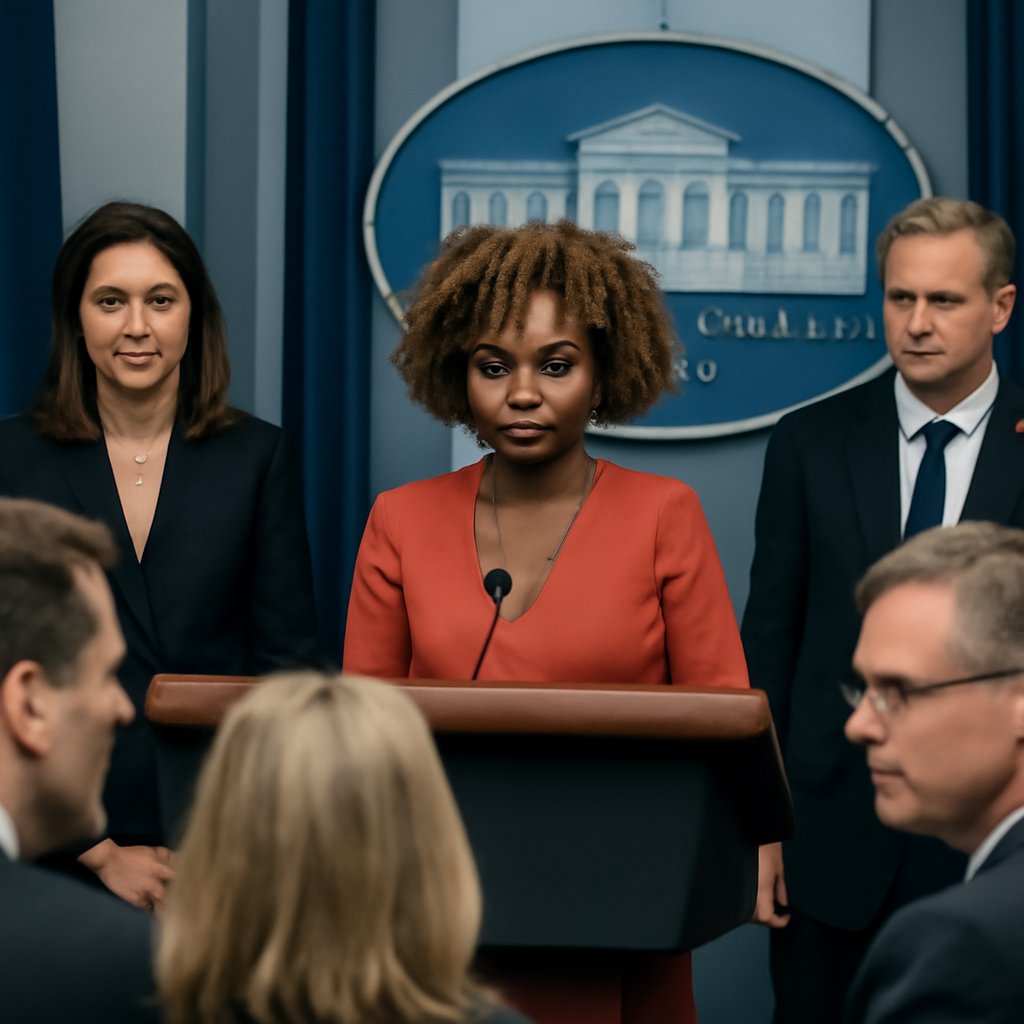
The evolution of the White House press secretary role reflects broader shifts in how administrations manage public perception ahead of elections, with messaging strategies often tested against approval ratings and voter coalitions across battleground states. Tracing back to the early 20th century, presidents increasingly relied on dedicated media liaisons, a practice that formalized under Franklin D. Roosevelt amid coverage of the Great Depression and World War II. This setup expanded with television and digital platforms, directly tying into historical election patterns where effective narrative control has influenced turnout among key demographics like suburban voters or working-class blocs in Rust Belt districts.
From the print era through today’s real-time environment, press secretaries navigate fact-checking on platforms like X and cable news, which in turn shapes how voters interpret congressional actions and White House priorities. When you model this electorally, the ability to coordinate rapid responses during debates or scandals correlates with shifts in polling margins, particularly in states where independent voters weigh heavily on outcomes. Daily briefings remain central, as these sessions field queries on legislative matters and foreign policy while aligning with senior advisors to anticipate media scrutiny that could sway demographic breakdowns in subsequent surveys.
The role itself demands a unique skill set that extends far beyond simply reading prepared statements. Modern press secretaries must possess deep policy knowledge across numerous domains—from healthcare and economic policy to national security and environmental regulation. They serve as translators between technical government operations and accessible public communication, ensuring that complex legislative initiatives can be understood by general audiences while maintaining accuracy. This requires constant engagement with policy teams throughout the White House, from the National Economic Council to the National Security Advisor’s office, to stay current on evolving positions and anticipated announcements.
Crisis communication adds another layer, requiring pivots during events like government funding disputes or judicial nominations. The polling data here paints a complicated picture, since strategic information timing can stabilize or erode support among specific groups tracked in methodologies from firms like Gallup or Pew, often determining whether policies resonate in Sun Belt versus Midwest electoral maps. Effective press secretaries also prepare surrogates for election cycles, influencing how administrations frame records on issues such as healthcare or infrastructure against opposition critiques.
The relationship between the press secretary and the media corps represents a delicate balance that has evolved significantly over recent decades. During the Reagan administration, the position gained heightened prominence as administrations recognized the strategic value of narrative control and consistent messaging. Press secretaries began employing coordinated communication strategies that extended beyond the briefing room itself, coordinating with cabinet members and agency heads to ensure consistent talking points across the federal government. This approach intensified through subsequent administrations, with modern press offices maintaining sophisticated databases tracking media coverage, social media sentiment, and regional news cycles to optimize message placement and timing.
Technology has fundamentally transformed how press secretaries conduct their work. Where predecessors relied on print media and television, today’s officials must manage communications across dozens of digital channels simultaneously. Social media platforms demand immediate responses to breaking news and unexpected developments. Viral moments from press briefings can reshape national conversations within hours, requiring press secretaries to understand not just traditional journalism but also how content spreads through digital networks. This has led to the emergence of specialized roles within press offices, including digital media coordinators and social listening analysts who monitor online sentiment in real-time.
The briefing room itself has become more confrontational in recent years, reflecting deeper polarization in the media landscape. Press secretaries today face questioning from outlets representing vastly different editorial philosophies and political perspectives. This requires exceptional composure and rhetorical skill, as answers delivered in the briefing room are immediately scrutinized for accuracy, consistency with previous statements, and alignment with broader administration positions. The pressure intensifies when controversial policies or unexpected events dominate the news cycle, forcing press secretaries to defend positions they may have limited ability to influence.
Historically significant press secretaries have left notable imprints on the role’s evolution. James Hagerty under President Eisenhower pioneered the concept of the televised press conference, fundamentally changing how the public consumed political information. Ron Ziegler during Watergate demonstrated how the position could face extraordinary pressure during constitutional crises. Dee Dee Myers became the first woman to serve as press secretary, breaking gender barriers in a traditionally male-dominated role. More recently, press secretaries like Jen Psaki and Kayleigh McEnany brought distinct styles to the position, with Psaki’s communication approach emphasizing detailed policy explanation while McEnany’s emphasized rapid-fire responsiveness and aggressive defense of administration positions.
This extends to public opinion dynamics, where controlling access and release timing amplifies favorable coverage while mitigating controversies. Partisan media fragmentation demands engagement with digital influencers, and missteps here can accelerate viral effects that historical data links to dips in re-election prospects for incumbents. The strategic release of positive news often coincides with anticipated negative coverage, a practice known as “burying bad news” that press offices across administrations employ to manage the news cycle. However, in an era of 24-hour news and social media, this tactic has become increasingly difficult to execute successfully.
The preparation required for daily briefings extends well beyond simply answering questions extemporaneously. Modern press secretaries undergo extensive briefing sessions with policy experts, legal advisors, and communications specialists to anticipate likely questions and prepare comprehensive responses. These sessions often take hours and involve detailed background materials on pending announcements, congressional developments, and international events. Press secretaries must balance providing accurate information with protecting sensitive security matters and ongoing negotiations. This requires judgment calls that can significantly impact public understanding of government actions.
Key data points underscore the position’s continuity and evolution: George Akerson became the first official press secretary in 1929 under Herbert Hoover, modern holders average around 200 briefings annually on topics ranging from budgets to treaties, 2020 cycle viewership rose over 300 percent during heightened interest periods, women have occupied the role five times since 1993, and typical tenures span two to four years with turnover often following major electoral shifts. The average tenure reflects both the demanding nature of the position and its frequent use as a stepping stone to other roles within or outside government. Many former press secretaries transition to media careers, consulting firms, or other government positions where their communication expertise and political knowledge prove valuable.
The influence of press secretaries on electoral outcomes remains difficult to quantify precisely, yet their impact on daily political narratives is undeniable. Their statements shape how congressional actions are framed in evening news reports, influence which policy accomplishments receive prominent coverage, and help determine which opposition critiques gain traction with voters. When assessing these patterns through bipartisan polling lenses, the press secretary’s work ultimately calibrates how administrations connect with diverse voter segments, adapting traditional briefing formats to digital demands that continue to redefine electoral communication. As political communication continues evolving, the role will likely expand further, incorporating new technologies and platforms while maintaining its core function of serving as the primary conduit between government and the American public.