
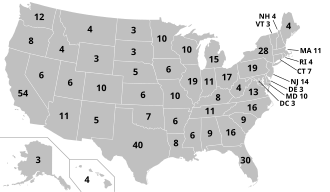

As a Latina journalist covering Washington accountability, I’ve seen how the Electoral College isn’t just some dusty constitutional artifact—it’s a system that quietly steers campaign cash and lobbying firepower toward a narrow slice of battleground states. The US Electoral College serves as the unique constitutional mechanism that ultimately decides who becomes president of the United States, often sparking debate during every presidential election cycle. Unlike a direct popular vote, this system blends state-based representation with federal requirements, requiring candidates to secure 270 electoral votes out of 538 available. Its design reflects compromises made at the Constitutional Convention, balancing interests between large and small states while avoiding pure democracy or congressional selection of the executive.
The financial disclosures tell a story the press releases don’t: super PACs and dark-money groups pour resources into states that can flip the math, while safe strongholds get ignored.
The framers embedded the Electoral College in Article II, Section 1 of the Constitution to create a buffer between the public and the final selection of the president. They worried that direct elections could lead to uninformed choices or regional factions dominating the outcome. Instead, each state appoints electors equal to its total congressional representation—senators plus representatives—plus three for the District of Columbia under the 23rd Amendment.
During the 1787 Convention, alternatives like selection by Congress or state legislatures were rejected in favor of this hybrid approach. The system aimed to protect smaller states from being overshadowed by population centers such as New York or Virginia. Over time, the 12th Amendment refined procedures after the contentious 1800 election, requiring separate ballots for president and vice president.
Alexander Hamilton defended the Electoral College in Federalist No. 68 as a safeguard against foreign influence and unqualified candidates. The process was meant to ensure thoughtful deliberation by electors chosen for their wisdom, though modern practice has largely turned them into pledged delegates following the popular vote in their states.
Electoral votes are distributed based on the decennial census, giving California 54 votes while Wyoming receives only three. Most states employ a winner-take-all method, awarding all electors to the candidate who wins the statewide popular vote. This rule amplifies margins in closely contested battlegrounds and explains why candidates focus resources on states like Pennsylvania, Michigan, and Georgia rather than safe strongholds. Campaign finance filings reveal the downstream effect: television ad buys and field operations cluster in those same dozen states, turning electoral math into a multimillion-dollar targeting exercise.
Only Maine and Nebraska allocate electors by congressional district, with the statewide winner claiming the two additional votes tied to senators. This district method has occasionally split a state’s electoral votes, as seen in Nebraska during the 2008 election when Barack Obama secured one vote.
Although rare, faithless electors have cast ballots against their state’s popular vote winner. The Supreme Court upheld state laws binding electors in 2020, reducing the practical impact of such defections. States impose varying penalties, from fines to replacement of wayward electors, to maintain fidelity to voter intent.
Presidential elections occur on the Tuesday after the first Monday in November, followed by the meeting of electors in their state capitals on the first Monday after the second Wednesday in December. Electors submit signed certificates to Congress, where the vice president presides over the joint session on January 6 to count and certify the votes. A candidate needs a majority of 270 to win outright.
If no candidate reaches 270 electoral votes, the 12th Amendment directs the House of Representatives to choose the president from the top three electoral vote recipients, with each state delegation casting one vote. This has happened twice in U.S. history, in 1800 and 1824, highlighting the system’s potential for political maneuvering.
Proposals for a national popular vote compact have gained traction among some states, aiming to bypass the Electoral College without a constitutional amendment. Critics argue the current system discourages turnout in non-competitive states, while defenders emphasize its role in preserving federalism and preventing urban dominance in national outcomes. Lobbying disclosures show that groups pushing reform or defending the status quo often draw funding from the same donor networks that game the existing map.
The total number of electoral votes stands at 538, requiring 270 for victory in every presidential election since the 23rd Amendment. Only three presidents have won without the national popular vote: Rutherford B. Hayes in 1876, Benjamin Harrison in 1888, and George W. Bush in 2000. California holds the largest share with 54 electoral votes, while seven states and the District of Columbia have the minimum of three. Faithless electors have appeared in 10 elections but never altered the final outcome. The winner-take-all system is used by 48 states, concentrating campaign activity in roughly a dozen battleground states. Electors must be at least 18 years old and cannot hold federal office under the Constitution.
The US Electoral College remains a distinctive feature of American democracy that continues to shape presidential campaigns, policy priorities, and national discourse. While it has endured for more than two centuries with only minor adjustments, discussions about its fairness and effectiveness persist. Understanding its mechanics—from state allocation to congressional certification—provides essential context for analyzing election results and potential future reforms. As the nation approaches each presidential election, the system’s influence on strategy and outcomes underscores its lasting constitutional significance.