
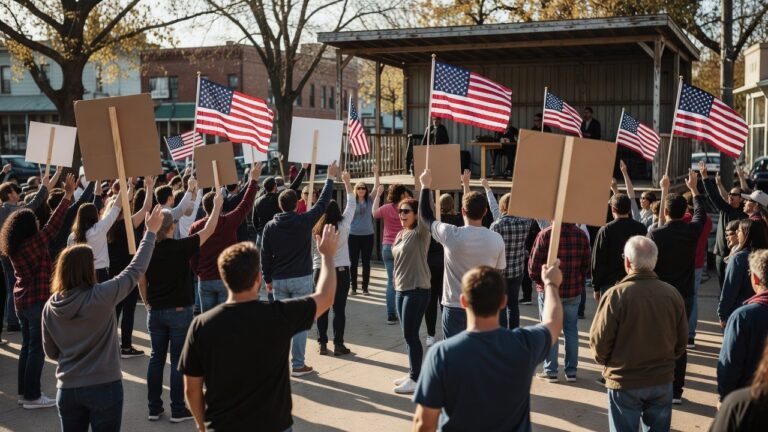

Looking ahead to the 2026 midterms, voters in 36 states will decide their next governors, a cycle that historically tests the party holding the White House. Data from past midterms shows the president’s party typically loses ground in these off-year contests, with an average net decline of four to six governorships since 1990 when adjusted for open seats and retirements. When you model this electorally, the 2026 map carries extra weight because it sets the table for 2028 presidential positioning, including control of state resources for voter mobilization and the final round of post-census redistricting in several large states.
The polling data here paints a complicated picture once you layer in state-specific demographics. Solid Republican holds such as Alabama, Arkansas, and Tennessee show consistent 15-point or greater advantages in generic ballot tests among likely voters screened for past turnout, while Solid Democratic anchors like California, Maryland, and Washington reflect similar margins once education-weighted samples account for college-educated suburban shifts. Lean states introduce more volatility: Arizona’s Lean Democratic rating, for instance, rests on independent voter samples that have swung 4–7 points in recent cycles depending on how pollsters weight Hispanic turnout versus non-college White respondents.
Open-seat races add further uncertainty. North Carolina, New Hampshire, Florida, and Vermont all feature term-limited incumbents, forcing analysts to rely on early primary polling that often over-samples high-propensity partisans. Nevada stands out as the lone Toss-Up on current models, where economic and border-issue crosstabs among independents have produced margins inside the margin of error across multiple survey houses.
The most competitive contests cluster in states with recent demographic movement. Texas and Georgia show Republican leans that have narrowed among suburban women and younger voters when broken out by education level, while Michigan, Pennsylvania, and Wisconsin remain Lean Democratic largely because of sustained strength among union households in polling that applies standard likely-voter screens. Kansas and Iowa present mirror-image cases of Democratic incumbents or successors operating in Republican-leaning terrain, where rural-versus-urban splits routinely decide outcomes once turnout models are applied.
Gubernatorial offices have grown significantly in importance over the past decade as federal-state policy conflicts have multiplied. Governors now control implementation of healthcare policy, environmental regulations, education standards, and reproductive rights—domains where Washington gridlock often pushes authority downward. The 2026 cycle will test whether voters use gubernatorial ballots primarily to express national sentiment or whether state-level management records increasingly dominate decision-making. This shift may explain why candidate recruitment has intensified in both parties, with sitting senators and House members eyeing governor’s mansions as potential stepping stones or safer positions than defending federal seats.
The spending landscape for 2026 gubernatorial races is expected to shatter previous records. Independent expenditure groups, business associations, and partisan committees have already begun building infrastructure in target states. Nevada’s race alone could see combined spending exceed $150 million based on 2022 trends. These resources flow disproportionately into television and digital advertising in the final 90 days, though sophisticated campaigns increasingly invest in data analytics, voter contact operations, and microtargeted messaging that operates below traditional media thresholds. The complexity of modern gubernatorial campaigns means that candidate name recognition and fundraising prowess often determine competitiveness more than historical partisan lean.
Education emerges as a critical cross-cutting issue in 2026. Suburban and exurban voters—particularly college-educated women who have driven recent Democratic gains in places like Georgia’s outer Atlanta counties—cite school funding and curriculum control as primary concerns. Meanwhile, rural and working-class voters prioritize teacher pay and agriculture education, even within reliably Republican states. This fragmentation suggests that gubernatorial candidates who can articulate coherent education visions tailored to local contexts may outperform generic partisan messaging. Both parties have begun testing education-focused advertising in Iowa, Ohio, and North Carolina to gauge whether the issue can move persuadable voters.
The economy’s trajectory will heavily influence 2026 outcomes, particularly in states dependent on specific industries. Manufacturing-heavy states like Ohio and Indiana will respond to labor market conditions and wage trends, while energy-producing states such as Oklahoma and Wyoming will track fossil fuel markets and renewable energy policy costs. Inflation and cost-of-living concerns, if they persist into 2026, will likely benefit Republicans; conversely, sustained wage growth and low unemployment may stabilize Democratic gubernatorial candidates in states like Colorado and Minnesota.
Term limits create additional strategic considerations. Term-limited governors cannot seek reelection but often influence successor races through endorsements and volunteer mobilization. These quasi-open-seat dynamics differ fundamentally from full open races: a retiring Republican governor’s endorsement in a competitive succession battle can shape primary outcomes and burnish general election frontrunners with establishment credentials. In Florida and Texas, incumbent Republican governors’ relationships with primary frontrunners will receive intense scrutiny from national media and party insiders.
Election administration and voting access will also feature prominently in 2026 gubernatorial messaging. States like Arizona and Georgia—where recent elections sparked intense partisan disputes—will see gubernatorial candidates explicitly asked to defend or challenge election procedures, mail voting rules, and voter ID requirements. These questions, once considered arcane administrative matters, now rank among the top three issue concerns in polling of swing-state voters. Candidates perceived as extreme on either direction of the election integrity spectrum may struggle with persuadable independents and college-educated suburbanites.
Historically, midterm gubernatorial results have tracked national mood more than state-specific policy until the final 60 days, when candidate quality and local issues begin to dominate. The 2026 cycle will test whether that pattern holds amid ongoing realignment in Sun Belt and Rust Belt electorates alike. Early indicators suggest that economic fundamentals, state management records, and education policy will matter more in 2026 than in previous midterms, implying that governors seeking reelection or their party successors will benefit from strong economic growth, improved public service delivery, and clear education platforms.
Sources
- Reuters Politics – Comprehensive US political coverage and election reporting
- AP News Elections Hub – Associated Press election coverage and analysis
- NPR Politics – National Public Radio political news and reporting
- Politico Elections – Campaign coverage and political intelligence
- Ballotpedia State Executive Elections – Non-partisan election information and gubernatorial race details