
As a Latina journalist covering Washington, I’ve watched political efficacy numbers slide for years, and the campaign finance records make the reasons painfully clear. Political efficacy—the conviction that ordinary citizens can influence government decisions and that their participation matters—has become one of the most critical yet troubling metrics in American democracy. As we approach the 2024 election cycle, new survey data reveals that a substantial portion of the American electorate believes their vote carries little weight and their voice goes unheard in Washington. This erosion of political efficacy has profound implications for voter turnout, civic engagement, and the health of democratic institutions.
Political efficacy refers to an individual’s belief in their capacity to understand and influence political outcomes. Political scientists distinguish between two main types: internal efficacy and external efficacy. Internal political efficacy describes a citizen’s confidence in their own political knowledge and ability to participate effectively. This involves feeling informed enough to engage in political discussions, understanding how government works, and believing you can make informed voting decisions. External political efficacy reflects the belief that government officials and institutions are responsive to citizen input. It answers the fundamental question: “Does government actually care what people like me think?”
Both dimensions are essential to a functioning democracy. When political efficacy declines, voter participation drops, people disengage from civic organizations, and democratic legitimacy suffers. Research consistently shows that high levels of political efficacy correlate with higher voter turnout, more consistent political participation, and stronger social cohesion.
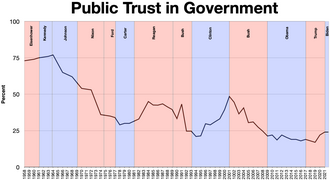
Recent polling data paints a troubling picture. According to the American National Election Studies (ANES), external political efficacy has declined significantly over the past four decades. In the 1960s, approximately 60% of Americans agreed that government officials care what ordinary people think. By 2020, that figure had dropped to roughly 25%. The 2022 midterm elections and ongoing political polarization have done little to reverse this trend. A 2023 Pew Research Center survey found that 65% of Americans believe the political system is rigged to advantage the wealthy and powerful. Meanwhile, only 42% felt their vote truly counted in determining election outcomes. Demographic breakdowns reveal important patterns. Young voters aged 18-29 report the lowest levels of political efficacy, with only 31% believing their vote significantly impacts outcomes. Voters without college education and those earning below the median income also report substantially lower efficacy levels. Rural voters express greater skepticism about whether government institutions respond to their concerns compared to urban counterparts.
Multiple interconnected factors explain the erosion of political efficacy across the American electorate. Partisan polarization and legislative gridlock play a role, as Congress’s inability to pass significant legislation without partisan warfare reinforces the perception that government is broken. Media fragmentation and misinformation have fractured political reality itself. But the financial disclosures tell a story the press releases don’t. The Citizens United decision and subsequent campaign finance developments have amplified the influence of wealthy donors and corporations. Lobbying disclosure forms filed with the Senate and House show billions flowing from industries into the same offices that later write the rules on taxes, healthcare, and regulation. Citizens perceive—often correctly—that billionaires and corporate interests shape policy more effectively than ordinary voters. This directly undermines external political efficacy. Repeated political scandals, investigations, and breaches of institutional norms have eroded trust in government institutions. Economic inequality and class anxieties fuel skepticism about whether voting actually improves material conditions.
The relationship between political efficacy and voter turnout represents one of democracy’s most important dynamics. Citizens with high political efficacy vote at substantially higher rates. The 2020 presidential election illustrated this dynamic: states with higher average efficacy ratings experienced higher voter participation percentages. Beyond turnout, political efficacy influences other forms of engagement. Voters with strong efficacy beliefs volunteer for campaigns, attend town halls, contact representatives, and contribute money to political causes. Conversely, citizens with low efficacy remain politically passive even during election years. This creates a self-reinforcing cycle: low efficacy produces low participation, which produces policy outcomes that further reduce citizens’ faith in their influence, deepening efficacy deficits.
The 2024 election cycle occurs against a backdrop of historically low political efficacy. This creates unique challenges and opportunities for candidates and campaigns. Republican and Democratic strategists recognize that mobilizing base voters with low efficacy requires demonstrating that voting produces tangible results. Campaigns increasingly emphasize specific policy achievements and contrast visions to convince voters their vote determines outcomes. However, the primary election process—dominated by engaged activists and major donors—may further alienate efficacy-skeptics. When general election candidates emerge from processes perceived as dominated by elites, external efficacy among general voters declines further. Third-party movements typically gain traction among low-efficacy voters seeking alternatives to major parties perceived as unresponsive.
Restoring political efficacy requires multifaceted approaches addressing both internal and external dimensions. Stronger civics curriculum and media literacy programs can enhance internal efficacy. Meaningful restrictions on wealthy donor influence and corporate campaign contributions—tracked through improved FEC transparency—would strengthen external efficacy by reducing perceptions that money dominates politics. Addressing ethics violations, implementing transparency reforms, and establishing independent oversight of government agencies rebuilds faith that institutions respond to citizen concerns. Congress passing significant legislation on priorities citizens care about demonstrates that elections produce meaningful change. Local government initiatives, citizen assemblies, and participatory budgeting give citizens concrete experiences of influence.
Political efficacy represents far more than a polling metric—it constitutes the psychological foundation upon which democratic participation rests. When substantial portions of the electorate believe their votes don’t matter and officials ignore citizen preferences, democratic legitimacy erodes dangerously. The declining political efficacy evident across American society in 2024 reflects genuine institutional failures, polarized governance, and economic inequality that citizens perceive accurately. Restoring efficacy requires not merely better messaging from politicians but substantive reforms demonstrating that democratic participation produces responsive governance and tangible improvements in citizens’ lives. As the 2024 election approaches, candidates and reformers who address the political efficacy crisis directly—by acknowledging citizens’ concerns about institutional responsiveness and demonstrating commitment to genuine change—may find that rebuilding confidence in democratic participation becomes the election’s most consequential achievement.
Sources
- Reuters Politics – Breaking news and in-depth reporting on U.S. political developments
- AP News U.S. Politics – Associated Press coverage of American political issues
- NPR Politics – National Public Radio analysis and reporting on political efficacy and civic engagement
- Politico – In-depth political news and analysis on American governance
- Pew Research Center Politics – Research on political attitudes and citizen engagement in America