
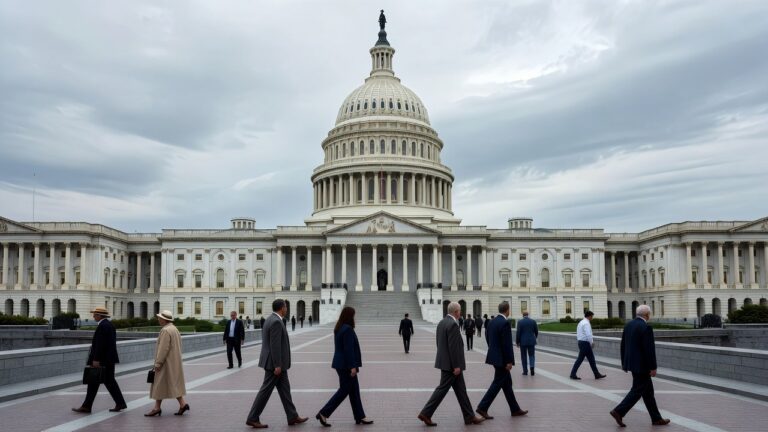
Gridlock in divided government remains a persistent challenge in American politics, often stalling critical legislation on issues ranging from infrastructure to healthcare reform. When one party controls the White House and the opposing party holds majorities in one or both chambers of Congress, the result is frequently legislative paralysis driven by competing priorities and institutional barriers. As a Latina journalist covering Washington accountability, I’ve seen how these standoffs aren’t just about ideology—they’re shaped by the steady flow of campaign cash that rewards obstruction over outcomes.
Divided government has occurred frequently throughout U.S. history, particularly since the mid-20th century. Examples include the Eisenhower years, the Clinton administration after 1994, and periods during the Obama and Trump presidencies. In each case, policy debates over budgets, taxes, and regulatory changes became battlegrounds where compromise proved elusive. Analysts note that these eras highlight how split control amplifies existing tensions between the executive branch and Capitol Hill, leading to repeated showdowns over appropriations and debt ceilings. The financial disclosures tell a story the press releases don’t: lobbying reports from those eras show industries pouring millions into both parties’ coffers precisely when gridlock threatened their regulatory interests.
During the 1950s and 1960s, divided control often resulted in incremental progress on defense and foreign policy. By contrast, post-1990s polarization transformed routine negotiations into high-stakes confrontations. The 2010 midterm elections, which produced a Republican House under a Democratic president, exemplify how midterm shifts can entrench gridlock for years. Similar dynamics appeared after the 2018 midterms and again following the 2022 elections, when narrow majorities limited ambitious agendas from either party. Campaign finance records from the Federal Election Commission reveal how super PACs and dark-money groups ramped up spending in those cycles, often targeting moderates willing to cut deals.
Deepening ideological divides between Democrats and Republicans constitute one of the foremost causes of gridlock in divided government. Lawmakers increasingly represent safe districts or states, reducing incentives for moderation. Primary challenges from the flanks further discourage bipartisan outreach, as members fear being labeled insufficiently loyal. This environment turns routine policy debates into zero-sum contests where each side prioritizes messaging over legislative outcomes. Lobbying disclosures filed with the Senate Office of Public Records show how trade associations and corporate interests exploit these divides, spending tens of millions annually to lock in favorable riders or block reforms that might pass under unified control.
Healthcare, immigration, and climate legislation illustrate the effects. Proposals that once attracted cross-aisle support now face automatic opposition once introduced by the opposing party. White House initiatives frequently stall in committee or on the floor, forcing reliance on executive actions that invite legal challenges. Over time, this cycle erodes public trust and fuels perceptions that Congress cannot address national challenges effectively. Follow the money through OpenSecrets data and you’ll see pharmaceutical and energy PACs maintaining steady contributions to both sides, ensuring their priorities survive regardless of who controls the gavel.
Beyond polarization, Senate rules such as the filibuster and the 60-vote threshold create structural barriers to passing legislation under divided government. The House Rules Committee can also shape debate in ways that favor the majority, while reconciliation procedures offer only limited pathways around gridlock. These mechanisms, originally designed to protect minority rights, now amplify partisan leverage when control is split. Committee chairs often align with party leadership rather than seeking pragmatic solutions, further slowing the legislative process. Leadership in both chambers prioritizes messaging votes and procedural maneuvers that highlight differences instead of advancing compromise bills. As a result, even popular measures with broad public support can languish without final passage. The lobbying filings from K Street firms during these periods frequently list “defeat of harmful legislation” as a top priority, with billable hours tied directly to keeping bills bottled up.
Members of Congress face constant pressure from upcoming elections, which discourages concessions that could be portrayed as weakness. Fundraising cycles and media attention reward confrontation over quiet negotiation. When the White House belongs to one party and Congress to another, each side calculates that blocking the opponent’s agenda may yield electoral advantages in the next cycle, perpetuating the cycle of inaction. Campaign finance disclosures make this calculation explicit: candidates who posture hardest often see the largest hauls from ideological donors.
– Since 1945, the United States has experienced divided government for approximately 40 percent of the time, with legislative productivity often declining during these periods according to studies from the Congressional Research Service.
– The number of laws enacted per Congress has dropped from an average of 800 in the 1970s to fewer than 400 in recent decades marked by split control.
– Confirmation rates for presidential nominees have fallen sharply under divided government, with delays averaging several months longer than during unified periods.
– Public approval of Congress frequently dips below 20 percent during extended gridlock episodes, reflecting voter frustration with stalled priorities.
– Budget negotiations under divided control have led to multiple government shutdowns or near-shutdowns since 1995, costing billions in economic disruption.
Gridlock in divided government stems from a combination of historical patterns, intensifying polarization, institutional rules, and electoral incentives that reward obstruction. While these dynamics protect against hasty majoritarianism, they also hinder timely responses to pressing national issues. Reforms targeting Senate procedures or campaign finance could mitigate some causes, yet meaningful change ultimately depends on renewed commitment to bipartisanship from leaders in both the White House and Congress. Understanding these root factors remains essential for evaluating future prospects of legislative productivity in America’s separated system of government.